
Last updated November 2, 2026
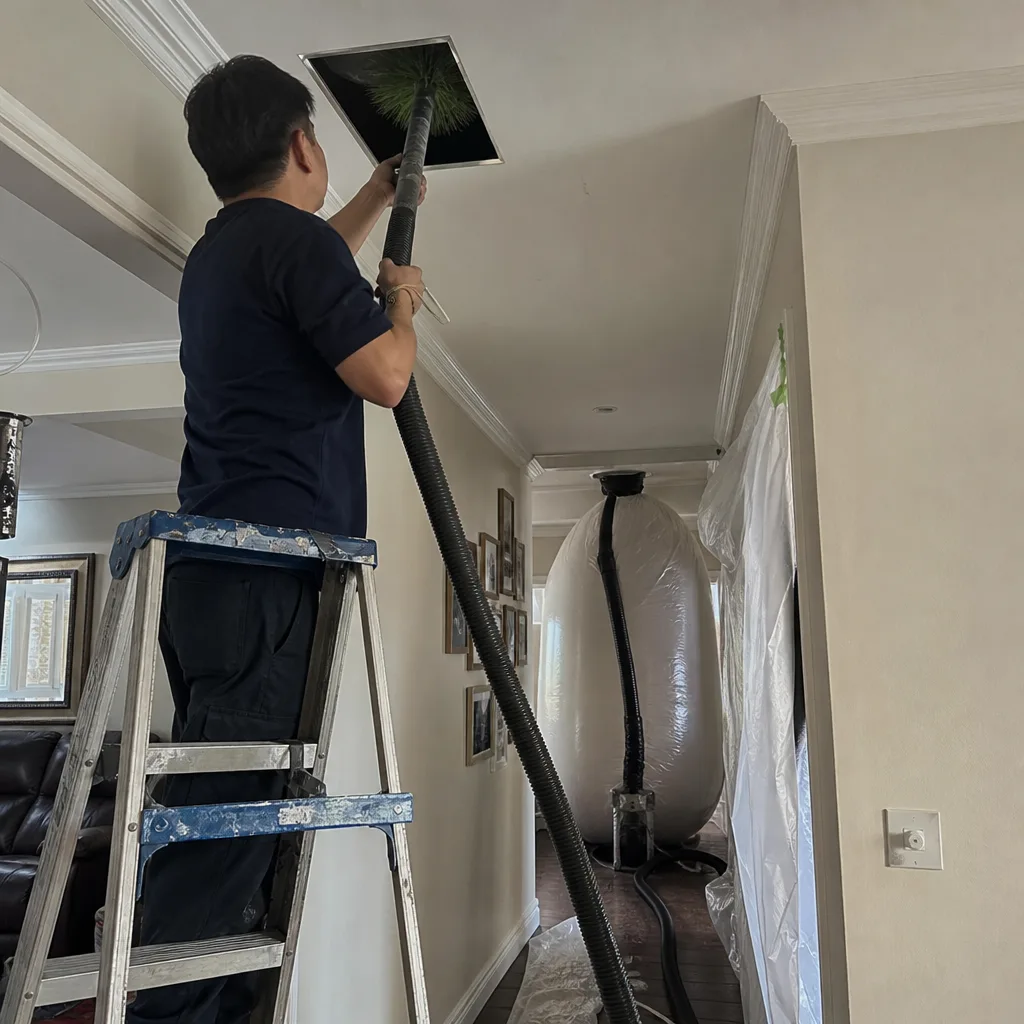
 Whole-home duct cleaning
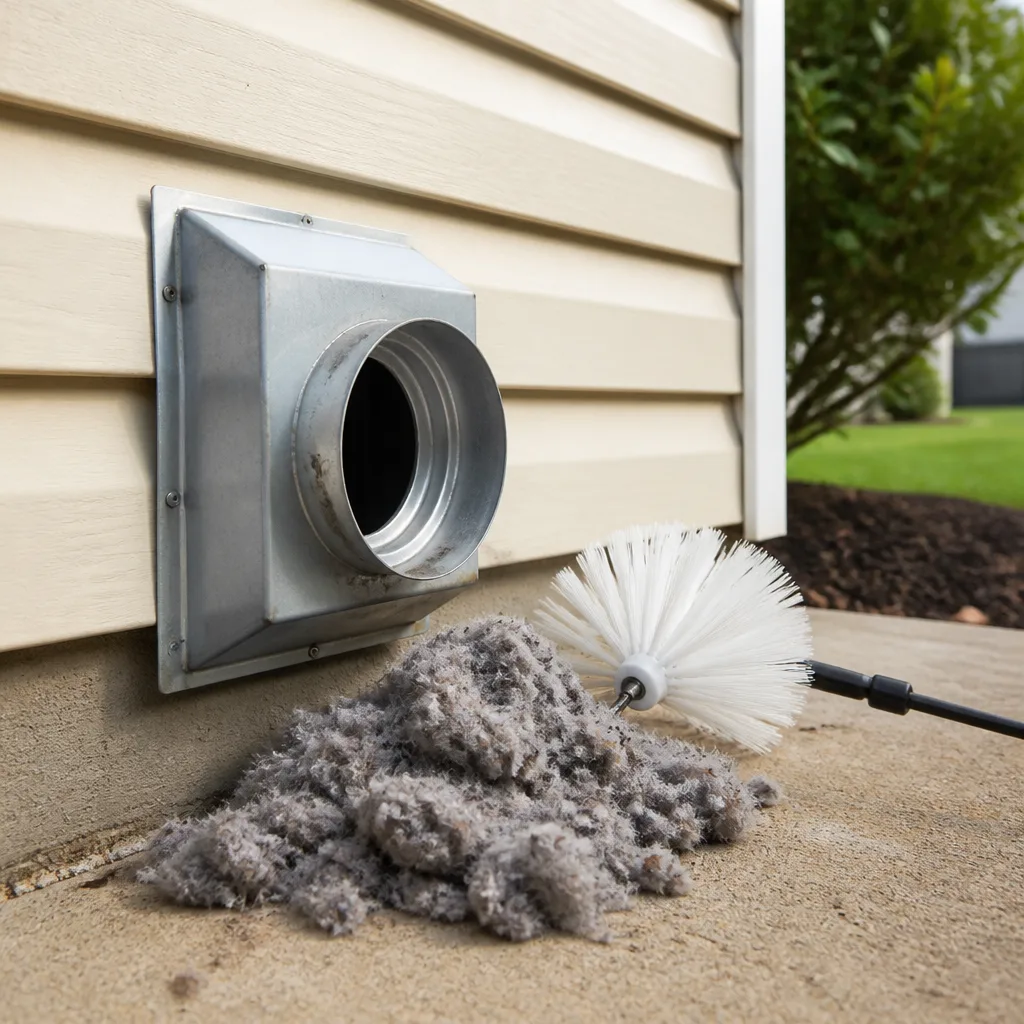 Dryer vent cleaning
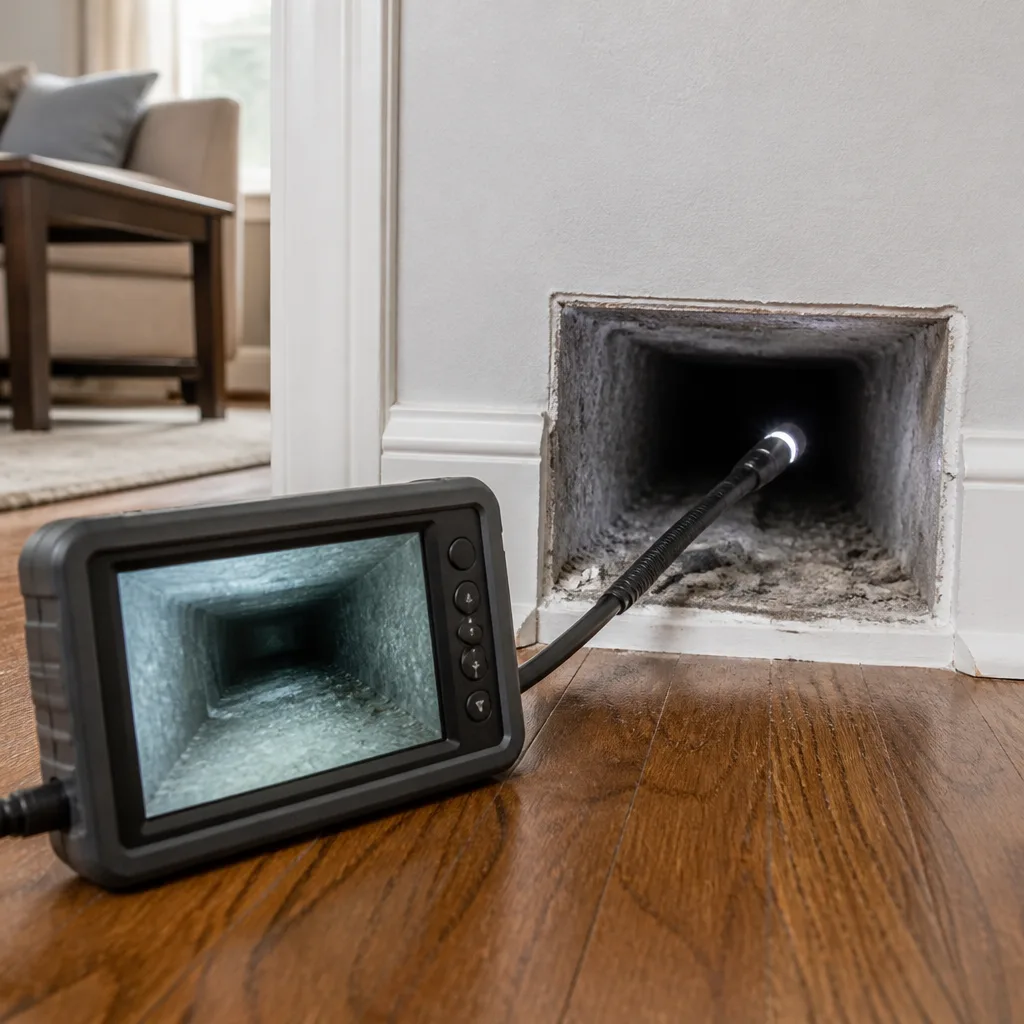 Camera inspection
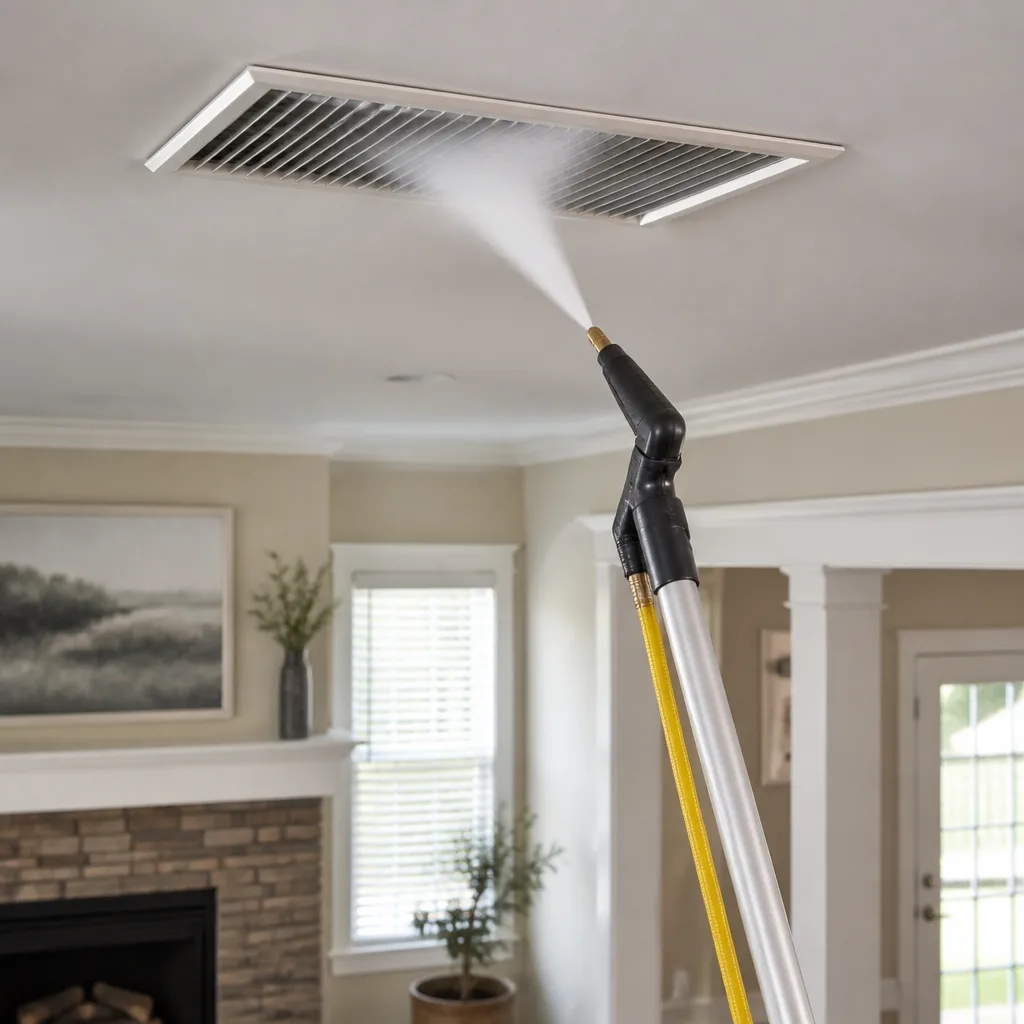 Sanitizing & deodorizing
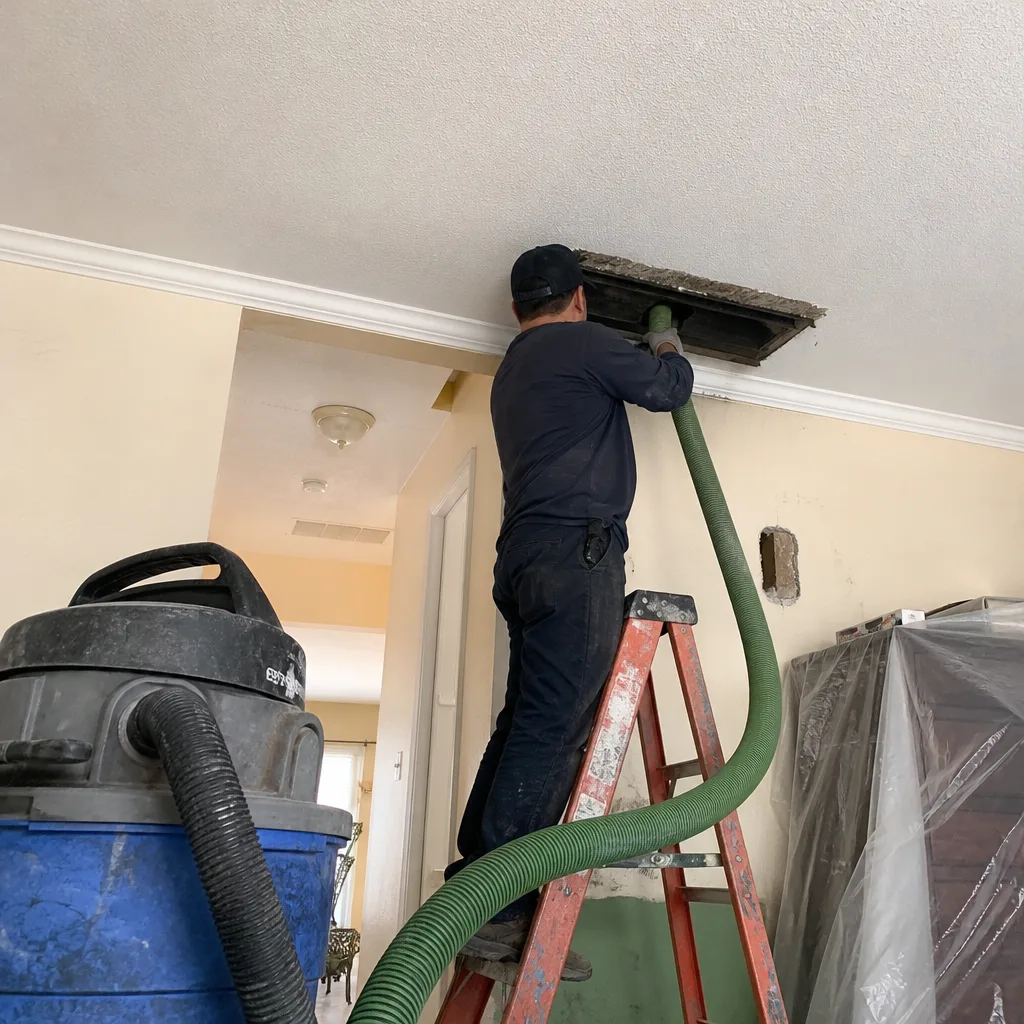
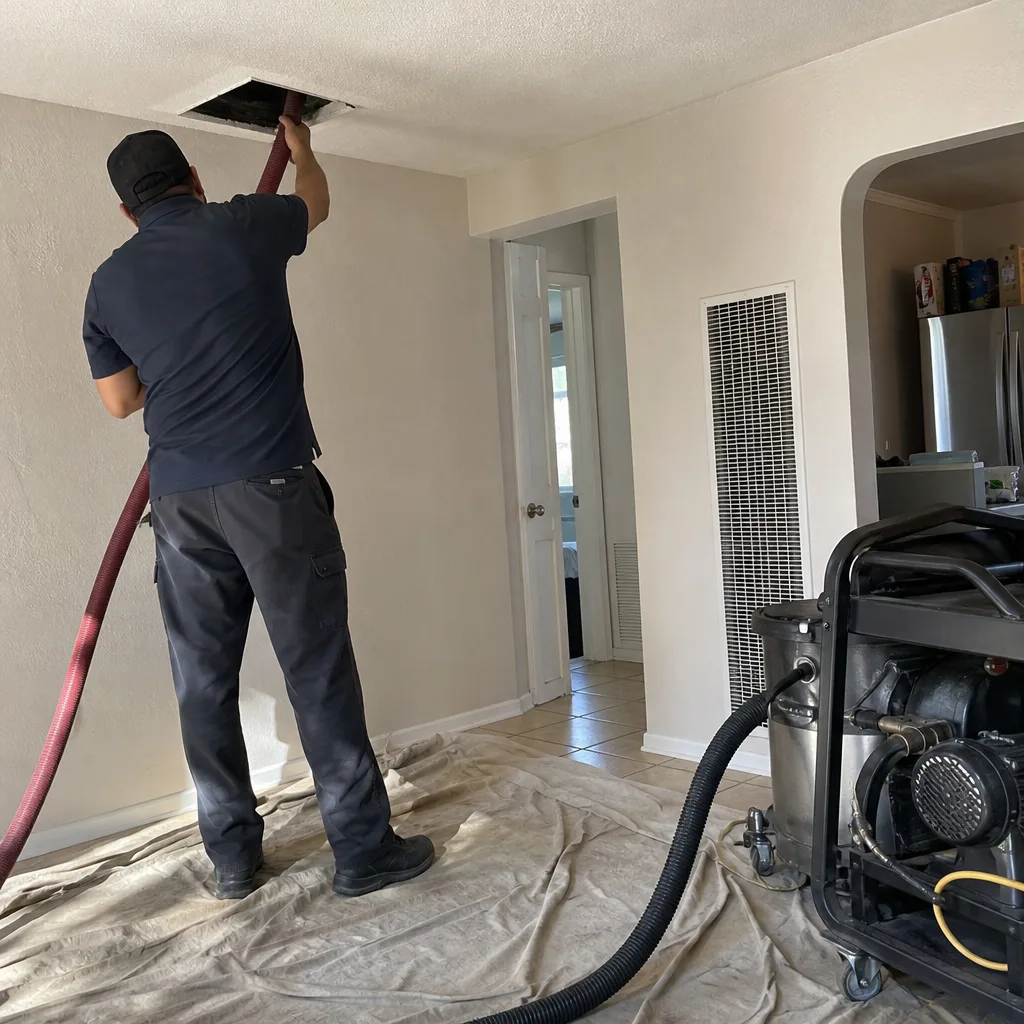
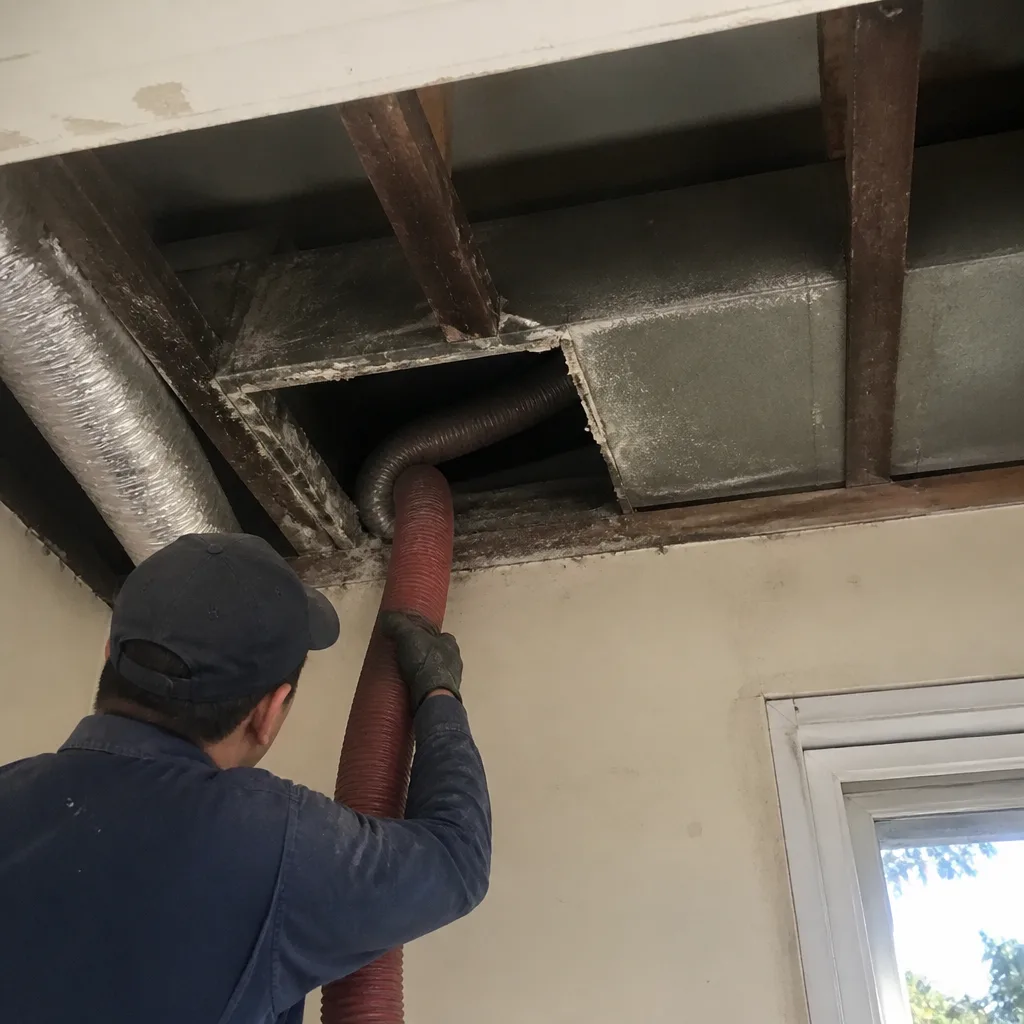
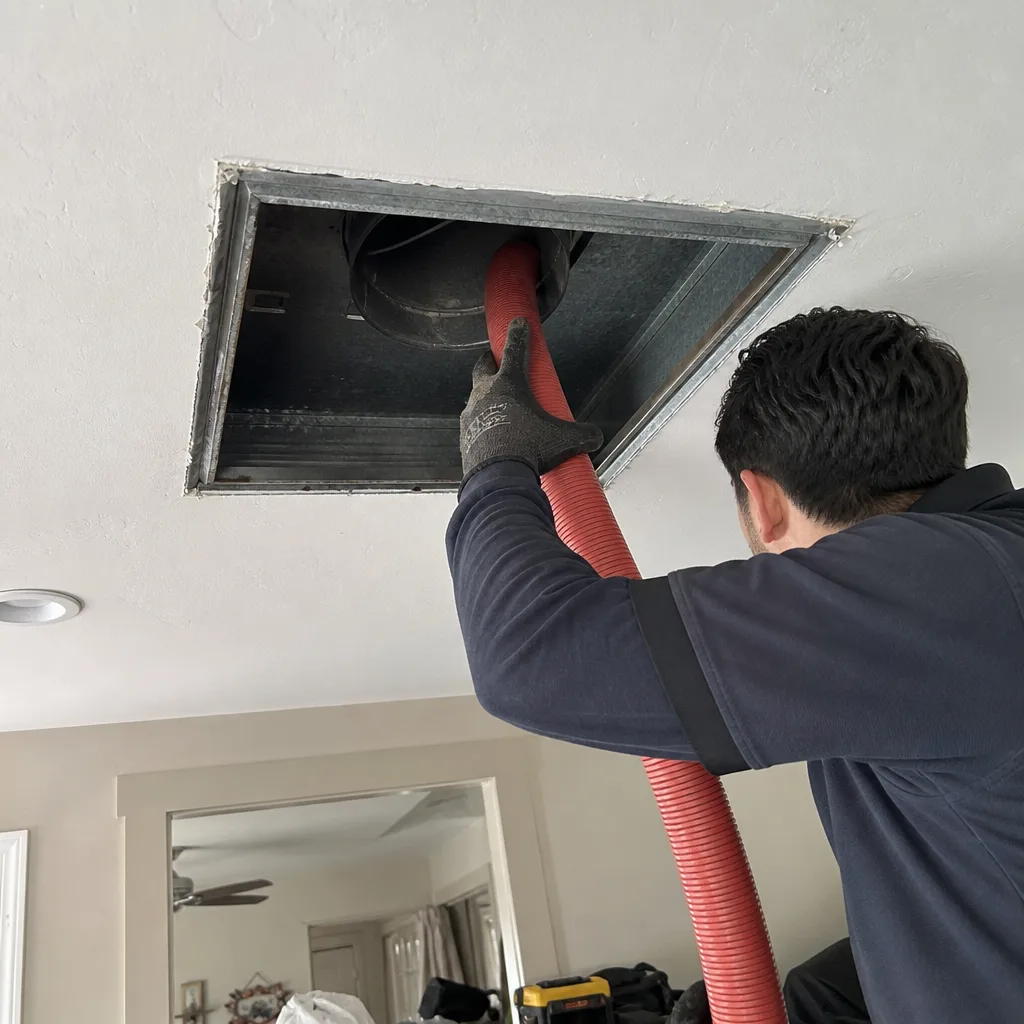
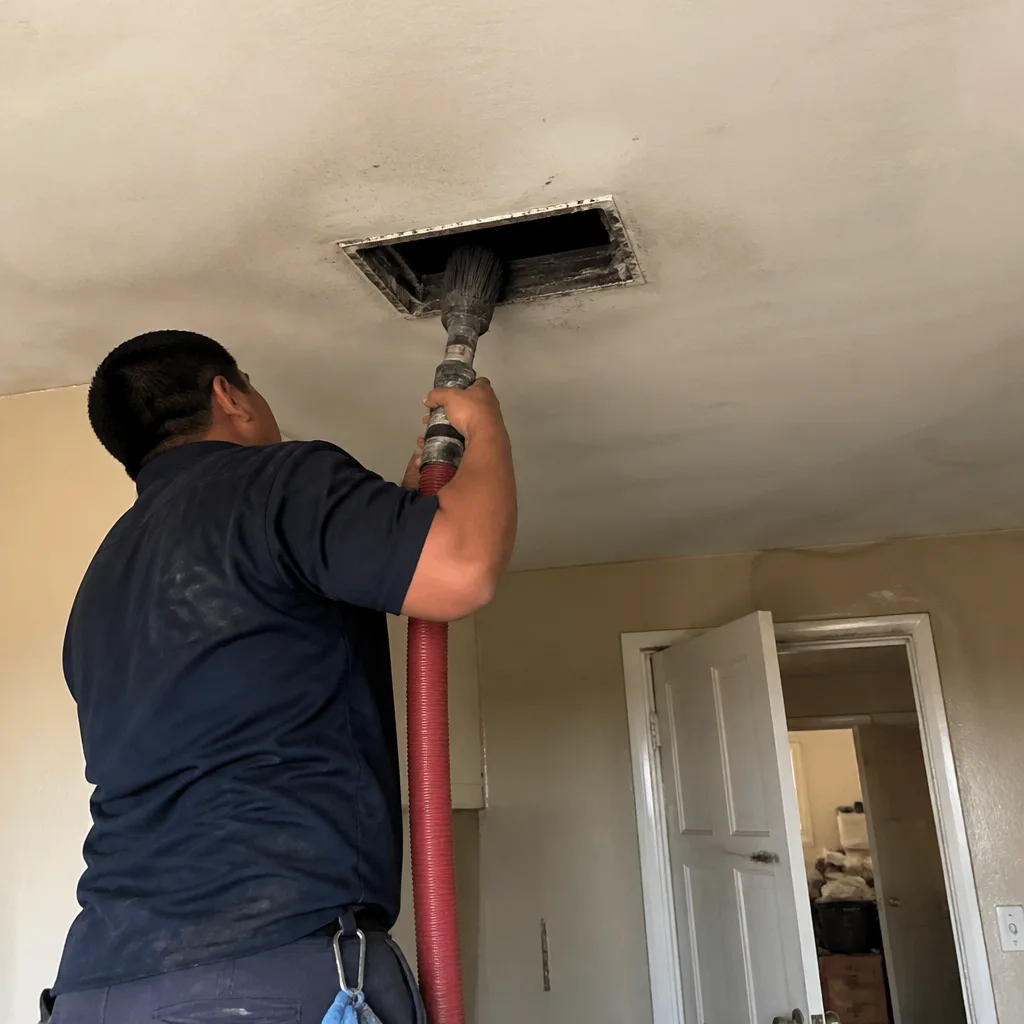
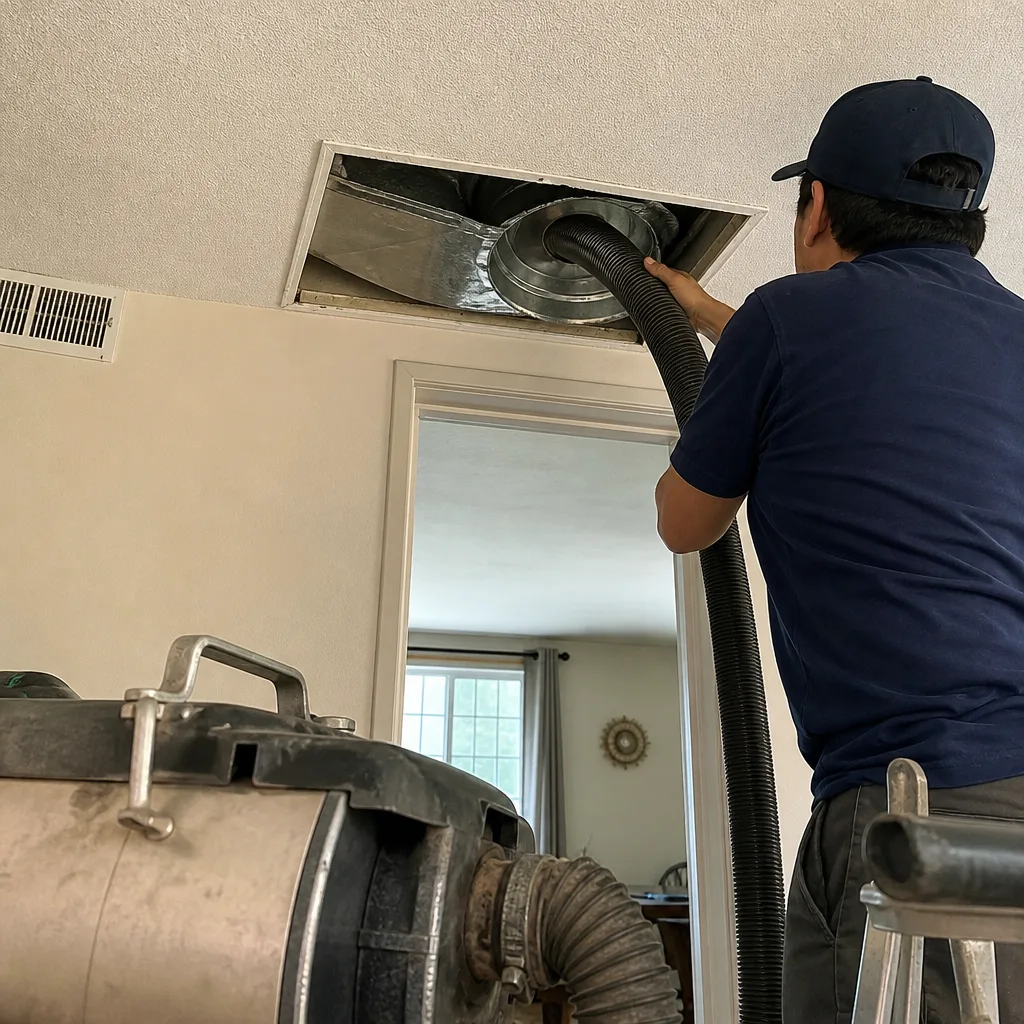
Whole-system duct and dryer vent check with before-and-after photos - you see exactly what came out of your vents
That "$99 whole-house special" is a bait ad - the real number appears once they are in your hallway, or the "clean" is a shop-vac at the register. We photograph the inside of your ducts before and after instead.
Choosing the Right Air Duct Cleaning Brand: A Buyer’s Guide for Monterey Park
Here’s something most homeowners in Monterey Park don’t realize until they’re ankle-deep in conflicting quotes: there is no consumer review site that rates duct cleaning equipment brands the way Wirecutter rates vacuums. No YouTube teardown channel. No Reddit megathread comparing rotary brush systems by CFM. That information gap is exactly what underequipped operators rely on. They show up with a portable shop vac, run a spinning brush through a few registers, charge a commercial invoice, and leave. By the time you notice the dust still settling on your furniture three weeks later, they’re working another zip code. This guide closes that gap. We’ll walk through what the leading equipment and air quality brands in the trade actually do, why the difference matters for your HVAC system and indoor air, and how to ask questions that get straight answers. You’ll finish knowing more about duct cleaning equipment than most contractors expect you to know, which is precisely the point. Get the facts first, then compare your options.
Styles & brands we work with
- Whole-home duct cleaning
- Dryer vent cleaning
- Camera inspection
- Sanitizing & deodorizing
Quick Answer
Choosing the right air duct cleaning company in Monterey Park comes down to equipment, not marketing. The best contractors run professional-grade vacuum collection units from brands like Rotobrush and Nikro, use rotary agitation tools built for source removal, and can name the air quality brands they work with, like Honeywell or Aprilaire, without hesitating. When a company references specific equipment by name and model, that’s a technical commitment you can verify. When they won’t or can’t, that’s your signal to call someone else.
Table of Contents
- Why Equipment Brands Matter More Than You Think
- Vacuum Collection Systems: Truck-Mounted vs. Portable vs. Shop-Vac
- Rotary Brush and Agitation Equipment: What Source Removal Actually Requires
- Air Quality Testing and Verification: Brands That Give You a Documented Result
- Dryer Vent Equipment: Why Auger Systems Are Categorically Different
- How to Cross-Reference a Contractor’s Equipment Claims
- Monterey Park-Specific Considerations: Climate, Housing Stock, and Code
- Common Mistakes to Avoid
- When to Call a Professional
- Frequently Asked Questions
- The Bottom Line
Why Equipment Brands Matter More Than You Think
When a duct cleaning company references specific equipment and air quality brands by name and model, that’s not marketing. It’s a technical commitment you can verify. Think about it the way you’d evaluate any trade professional. A mechanic who tells you they use a specific diagnostic scanner and names the manufacturer is telling you something real about their investment in the work. A detailer who mentions the exact polishing compound and orbital buffer they use has skin in the game. The same logic applies to duct cleaning, but with a crucial difference: the equipment is the service. Duct cleaning is not a labor-only trade. The tools doing the work determine whether the job actually removes contaminants or just relocates them inside your walls.
In Monterey Park, where homes range from 1950s ranch-style builds in the northern hills to newer construction near Garfield Avenue, duct systems vary widely in age, material, and condition. Some have rigid sheet metal ducts. Others have flexible insulated runs. A few have a mix of both plus decades of retrofit patches. The equipment that cleans a 1958 rigid system properly is the same equipment that cleans a 2005 flex system properly, provided it’s professional-grade. But the reverse is not true. Consumer-grade equipment fails on both, and it fails in ways you can’t see from the register opening.
Professional-grade systems from manufacturers like Rotobrush and Nikro are designed specifically for HVAC source removal. They’re built to maintain negative pressure throughout the cleaning process, which means contaminants are pulled out of the duct and into a sealed collection unit, not blown around the home. They’re also built to handle the physical demands of agitation: stiff nylon or polypropylene brushes that spin at controlled speeds to dislodge caked-on debris without damaging duct walls. That’s a specific engineering problem, and it’s not one a consumer vacuum manufacturer has any reason to solve.
The brand conversation also matters because it’s a filter. In our experience, when you ask an underequipped operator what vacuum collection unit they use, you get one of two responses: a vague “commercial-grade” answer with no specifics, or a brand name you’ve seen in a home improvement store. The first response tells you they’re evading. The second tells you they’re using equipment that was never built for this job. Either way, you’ve just saved yourself a bad invoice and a wasted afternoon.
For a deeper look at what a proper cleaning involves from the homeowner’s perspective, see our Air Duct Cleaning in Monterey Park page.
Vacuum Collection Systems: Truck-Mounted vs. Portable vs. Shop-Vac
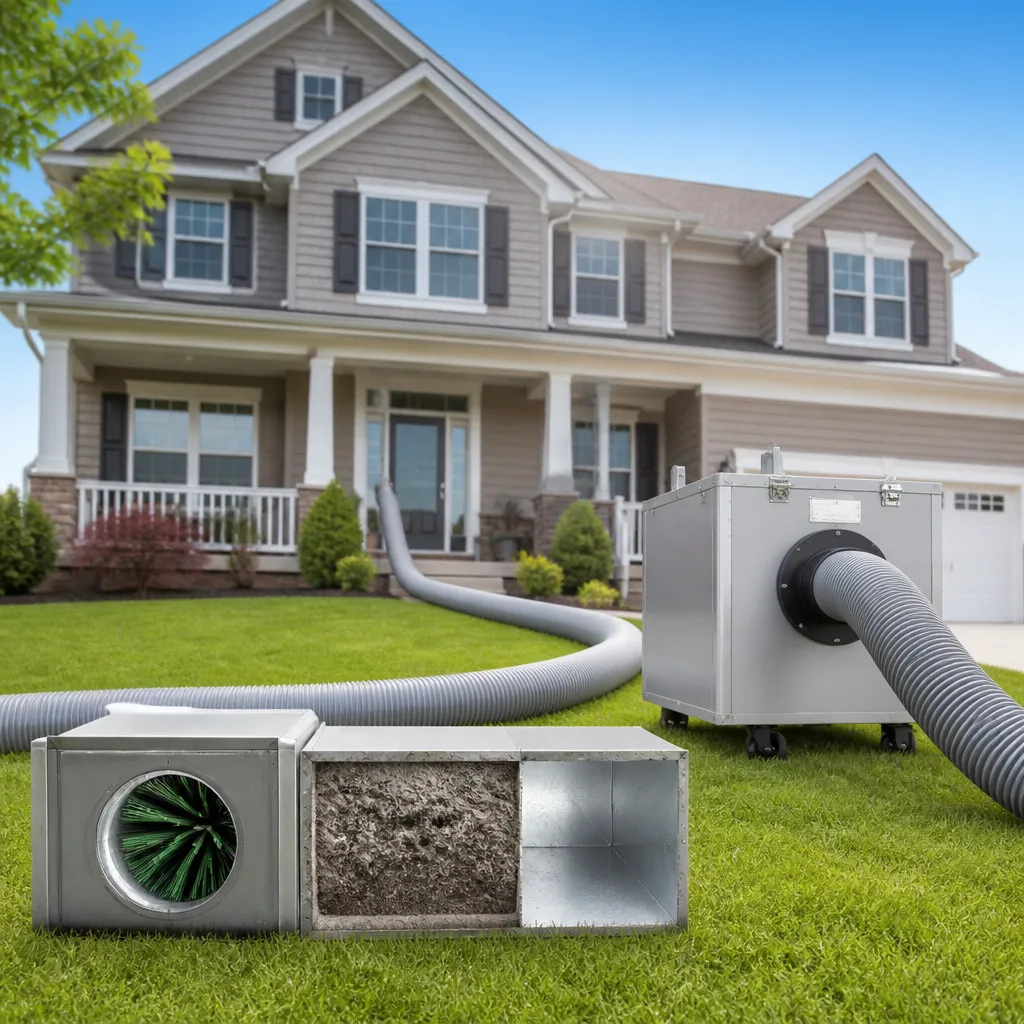
The single most important piece of equipment on any duct cleaning job is the vacuum collection unit. It’s the thing that creates negative pressure, pulls loosened debris out of your ductwork, and contains it for disposal. When you understand what separates a real collection system from a portable shop-vac class machine, you can disqualify most bad operators in one question.
What CFM Actually Means
CFM stands for cubic feet per minute, and it measures airflow volume. Professional duct cleaning systems typically run between 2,000 and 5,000 CFM. That airflow is what creates the negative pressure needed to pull debris from deep inside branch runs back toward the collection point. A consumer shop vac, even a large one marketed for “contractor use,” typically moves between 100 and 300 CFM. That’s enough to pick up sawdust from a workshop floor. It is not enough to pull a column of air through a 25-foot duct run with enough velocity to dislodge and transport caked-on dust, hair, and debris.
The CFM gap matters for another reason. Duct cleaning is not a localized activity. When a technician cleans one register, the negative pressure at the collection unit needs to influence the entire duct system. Professional systems are designed to create that system-wide draw. A shop vac connected to a single opening creates localized suction at best, and at worst, it pulls debris toward the opening but doesn’t have the velocity to capture it before it settles back down further in the run.
HEPA Filtration and What It Protects
The second critical spec is filtration. Professional collection units use HEPA filters rated at 99.97% efficiency for particles at 0.3 microns. That matters because the air exhausted from the collection unit re-enters your home. If the filtration is inadequate, the cleaning process becomes a contamination event: debris pulled from your ducts gets aerosolized and blown back into your living space. HEPA filtration on a professional system captures that particulate before it leaves the unit.
This is where the brand differentiation becomes concrete. Rotobrush’s truck-mounted and trailer-mounted systems, like their Predator series, are built around high-CFM collection with multi-stage HEPA filtration. Nikro builds negative air machines and HEPA-filtered collection systems used in restoration and remediation environments where air quality is not a nice-to-have, it’s a safety standard. Both manufacturers build equipment for the commercial market, which means the engineering standards are set by professionals who use the machines every day. Abatement Technologies is another name in this category. Their equipment is used in healthcare, education, and environmental remediation settings where documented air quality is a compliance requirement. When a duct cleaning company carries Abatement Technologies equipment, it’s a signal that they understand air quality as a measurable, documentable outcome, not just a visual one.
Here’s the direct question to ask any contractor during an estimate: “What vacuum collection unit do you use, and what’s its CFM and filtration rating?” A legitimate operator answers without hesitation. You’ll hear a specific model, a CFM figure, and a HEPA rating. An under-equipped operator will deflect, generalize, or change the subject to price. That answer, or non-answer, tells you more than any review site.
Rotary Brush and Agitation Equipment: What Source Removal Actually Requires
NADCA, the National Air Duct Cleaners Association, is the governing body that sets standards for the duct cleaning industry. Their core principle is source removal: physically dislodging and extracting the debris that’s adhered to duct surfaces. That requires two things working together: mechanical agitation to break debris loose, and the vacuum collection system we just covered to capture and remove it. One without the other is incomplete. This is where rotary brush equipment matters.
A rotary brush is exactly what it sounds like: a motor-driven brush head that spins inside the duct to scrub the interior walls. Professional systems like Rotobrush’s use stiff nylon or polypropylene bristles sized to the duct diameter. The brush rotates at a controlled speed to scour debris without gouging the duct material. In a rigid sheet metal duct, that’s straightforward. In a flexible duct with a plastic inner liner, it requires more finesse. Rotate too aggressively and you tear the liner. Rotate too gently and you leave the debris film intact. Professional rotary systems are designed with that balance in mind, and the technicians running them are trained to assess duct material before they start.
Contrast that with what a budget operator runs. Many use a basic spinning brush attachment on a drill, which has no speed control and no sizing calibration for different duct diameters. Others skip mechanical agitation entirely and rely on the vacuum alone, which leaves the adherent film of dust and debris in place. The duct looks cleaner at the register opening, but the surface area where dust actually accumulates remains untouched.
Nikro’s agitation equipment takes this a step further with air-powered systems that combine high-pressure air currents with brush agitation. That dual-action approach is common in remediation-grade cleaning, where the goal is not just to knock debris loose but to aerosolize it just enough for the negative pressure to capture it thoroughly. For Monterey Park homeowners with older duct systems, this matters. Decades of accumulated dust, pet dander, and construction debris from past remodels create a layer that’s physically adhered to the duct interior. Weekend-grade agitation equipment won’t remove it. The brush will spin, the vacuum will run, and the layer will stay.
When you’re comparing quotes, ask specifically: “What agitation equipment do you use, and how do you match it to duct material?” A professional contractor will talk about brush sizing, rotational speed control, and assessing whether your runs are rigid or lined flex. That conversation alone tells you whether you’re hiring a technician or a guy with a drill attachment.
Air Quality Testing and Verification: Brands That Give You a Documented Result
Here’s a question few homeowners think to ask: how do you know the cleaning actually worked? Most companies answer with a verbal assurance. “Looks clean.” “You should notice the difference.” That’s not verification. That’s hand-waving. The companies that take documentation seriously use particulate counters and air quality monitors from brands that were built for measurement, not for comfort.
Honeywell and Aprilaire are the two brands most homeowners in Monterey Park recognize, and that recognition is warranted. Honeywell builds commercial-grade indoor air quality monitors used in HVAC systems, schools, and commercial buildings. Aprilaire builds whole-home air quality systems that integrate with existing HVAC infrastructure, including filtration and humidity control. When a duct cleaning company works with these brands, it signals something specific: they’re thinking about air quality as an ongoing, measurable condition, not just a one-time cleaning outcome.
In practical terms, a company that integrates Honeywell and Aprilaire into its service ecosystem can often provide a before-and-after comparison based on particulate measurement. That means you’re not relying on a verbal promise. You’re seeing a number drop: particle count before cleaning at 1.2 million particles per cubic foot, particle count after cleaning at 180,000. That’s a documented result. It’s also a way to verify that the cleaning removed what it claimed to remove.
Abatement Technologies equipment reinforces this same principle. Their air quality verification tools are used in environments where particulate counts are regulated. When a technician shows up with measurement equipment from a manufacturer like that, it’s a reasonable signal that the company takes documentation seriously.
The practical takeaway for your estimate process: ask whether the company provides before-and-after air quality measurements as part of the service. You’ll quickly see who has the capability and who doesn’t. The answer also tells you something about the company’s standard of proof. A company that documents its work is a company that expects to be judged on results. Air quality you can measure, not just feel, is a different standard entirely.
If you want to understand more about how a full-service duct cleaning company approaches the whole system, including verification, start with our Duct Cleaning Monterey Park home page.
Dryer Vent Equipment: Why Auger Systems Are Categorically Different
Dryer vent cleaning is often treated as an add-on service, but the equipment differences are stark. A dedicated dryer vent cleaning system uses an auger-style cable with a brush head, driven by a variable-speed motor, designed to travel through the vent run and break apart accumulated lint and debris. The auger action pulls the brush forward while it rotates, scouring the vent walls from the dryer connection point all the way to the exterior termination. That’s the entire run, not just the first few feet.
Running a duct brush through a lint trap is categorically different. The brush reaches what it can reach, which is typically the first two to three feet of vent. But lint accumulation in dryer vents tends to concentrate at two points: the transition area behind the dryer and the exterior termination point, where lint meets the outside air and compacts against the vent cap. Neither of those points is accessible from the lint trap opening. An auger system reaches both, because it travels the full length of the run.
The fire safety context matters here. The National Fire Protection Association consistently identifies dryer vent fires as a leading cause of residential house fires. Lint is highly combustible, and the airflow restriction caused by a partially clogged vent raises dryer operating temperatures. A dedicated auger cleaning system removes the lint that creates that condition. A brush through the trap removes what it can see and leaves the rest in place.
For Monterey Park homeowners, this has a compounding factor. Many of the city’s older homes have longer dryer vent runs than modern construction, because the laundry areas in 1950s and 1960s builds were often placed in interior hallways or garage conversions, with the vent run extended to reach an exterior wall. Longer runs mean more surface area for lint accumulation and more resistance if the vent is not perfectly clear. A professional auger system is built to clear those longer runs completely.
We handle dryer vent cleaning as a core service at Dryer Vent Cleaning in Monterey Park, using dedicated auger-style equipment that travels the full vent run. It’s the same approach we’d recommend to anyone evaluating a company for this work: ask what equipment they use, and listen for the word “auger.” If you don’t hear it, ask why not.
How to Cross-Reference a Contractor’s Equipment Claims
A company can say anything in a marketing email. The verifying is on you. Here’s the process we recommend to any Monterey Park homeowner evaluating duct cleaning companies, step by step:
- Ask for the specific equipment brands and models during the estimate. Write them down. Note the vacuum collection unit manufacturer, the agitation equipment, and whether they mention a brand for air quality measurement or filtration. A professional technician knows their equipment by name because they use it daily.
- Visit the manufacturer’s website. Rotobrush, Nikro, and Abatement Technologies all maintain public-facing sites with detailed equipment specifications. Look up the model you were told. Confirm it exists, confirm it’s rated for duct cleaning, and confirm it matches the description you were given. This takes ten minutes and eliminates any company that invented an equipment claim.
- Check the NADCA member directory. NADCA maintains a searchable directory of member companies. Membership is not a guarantee of quality, but it is a baseline signal that the company operates under the industry’s recognized standards organization. Companies that have invested in NADCA membership and the training that comes with it are also more likely to have invested in the equipment that NADCA standards require.
- Ask what the technician will show you on-site without being asked. A legitimate operator will offer to show you the collection unit before or during setup. They’ll point out the HEPA filter. They’ll explain what the agitation equipment does. They may show you before-and-after photos from previous jobs, or walk you through what they’re seeing in your specific ducts. An operator with something to hide will avoid this by staying vague.
- Ask for documentation of results. Whether it’s a particulate count, photographic evidence, or a written summary of what was found and what was done, a professional company can document its work. A company that cannot document its work is telling you something about its standard of proof.
None of these steps requires special expertise. They require asking the question and paying attention to the answer. The homeowner who does this sounds informed enough that underequipped operators will often self-select out of the conversation. That’s not a bug; it’s the point.
Monterey Park-Specific Considerations: Climate, Housing Stock, and Code
Monterey Park sits in the San Gabriel Valley, which means its air quality context is shaped by specific factors that influence what’s in your ducts. The valley’s geography tends to trap particulate matter, especially during warm, stagnant weather patterns. Wildfire smoke from the nearby San Gabriel Mountains is an increasingly common seasonal factor. Vehicle emissions from the I-10 and the 710 corridors contribute particulate load. What that means for your ductwork is that particulate accumulates in ways you may not notice until you have a reason to look.
The housing stock adds another layer. Monterey Park’s residential development peaked in two waves: the post-war boom from the late 1940s through the 1960s, and a later infill wave from the 1980s through early 2000s. The older homes, particularly those north of Garvey Avenue and east of Atlantic Boulevard, tend to have original or early-replacement duct systems with decades of accumulated debris. Many have been retrofitted multiple times as homes expanded, meaning the duct system is a patchwork of original rigid runs, newer flexible sections, and transitions that were never designed as a unified system. Those transitions are exactly where debris accumulates and where aggressive, improperly sized cleaning equipment can do damage.
We regularly see spring failures and airflow restrictions in the older Monterey Park housing stock that trace back to decades of unfiltered intake air and deferred maintenance. That’s not a criticism of the homes; it’s simply what happens over 50-plus years. The relevant point is that these systems need a technician who understands the difference between cleaning a 1962 rigid duct system and a 2003 flex system. The equipment choices change, the brush sizing changes, and the approach to agitation changes. Companies that bring one-drill-fits-all equipment to every home won’t adjust for that.
Local code enforcement in Monterey Park generally follows California Building Standards Code requirements for duct replacement and repair, with specific provisions for sealing, insulation, and material standards. When a cleaning reveals structural issues, those issues need to be repaired to code, not patched over. That’s why our Air Duct Repair in Monterey Park service exists as a standalone offering. We repair what we find, because a clean duct with a hole in it is still leaking conditioned air into your attic.
Common Mistakes to Avoid
- Hiring on price before equipment. The cheapest quote in Monterey Park is often the cheapest because the company is running consumer-grade equipment and cutting corners on time. Duct cleaning is not a commodity service where all outcomes are equal. The equipment determines the outcome, and the equipment costs money to own and maintain. Ask about equipment before you ask for the discount.
- Accepting a per-vent price without a whole-system scope. Per-vent pricing is a bait-and-switch structure that lets a contractor inflate the invoice based on a vent count you never verified. A professional quote gives you one flat price per system, agreed before work starts.
- Skipping the dryer vent because the lint trap looks clean. The lint trap catches what the trap catches. The vent run behind it accumulates what the trap misses, and that’s the portion that creates the fire risk. A dedicated dryer vent cleaning with auger equipment addresses the full run, not just the visible length.
- Treating duct repair as a separate, later conversation. When a cleaning reveals a disconnected section, a crushed run, or a leaking plenum, the problem doesn’t wait. A company that offers Air Duct Repair in Monterey Park as a standalone service can address the structural issue on the spot. A cleaning-only company cannot, which means you’re hiring a second contractor and coordinating a second visit.
- Assuming all rotary brushes are the same. The difference between a professional rotary brush system and a drill attachment is not cosmetic. It’s the difference between controlled agitation sized to your duct material and uncontrolled spinning that can damage flex duct liners or simply fail to dislodge adherent debris.
- Not asking for documentation of results. If a company cannot show you before-and-after evidence of the work, whether photographic or particulate measurement, you’re accepting a verbal assurance with no basis. The work was either done properly or it wasn’t, and documentation is how you tell the difference.
- Ignoring the equipment question entirely. This is the most common mistake and the easiest to fix. One question about vacuum collection equipment, asked during the estimate, eliminates most underequipped operators before you ever get to pricing. That single question saves you from the most common bad outcome in this industry.
When to Call a Professional
Duct cleaning is not a DIY job, and duct repair is categorically not a DIY job. If you’re seeing visible dust accumulation around registers, noticing uneven airflow between rooms, or reacting to indoor allergens that worsen when the HVAC runs, a professional assessment is the right next step. If you’ve been in your Monterey Park home for three or more years and have no documentation of prior duct cleaning, the system is due for evaluation. If your dryer is taking two cycles to dry a load that used to take one, or you notice a burning smell during operation, that’s a dryer vent issue that needs professional equipment to resolve safely. Duct Cleaning Monterey Park offers free estimates in Monterey Park. Call (866) 413-8552 and we’ll assess your system honestly, show you what we’re seeing, and give you a flat price per system before any work begins. Clean ducts, sealed ducts, safe vents: one call for the full system.
Frequently Asked Questions
Whole-system air duct cleaning in Monterey Park typically ranges from $450 to $900 depending on home size, number of systems, and the condition of the ductwork. The range accounts for the fact that a 1,200-square-foot single-story home with one HVAC system and a 3,000-square-foot two-story home with two systems are different jobs. The key is to get one flat price per system agreed before work starts, not a per-vent quote that can change once the technician is in your home. Call (866) 413-8552 for an exact quote on your Monterey Park home; estimates are free.
Cheaper quotes usually mean cheaper equipment, less time on the job, or both. A company running portable consumer-grade vacuums has lower overhead than one running truck-mounted HEPA-rated collection systems from Rotobrush or Nikro. They also tend to spend less time per register, which means less source removal and a superficially cleaned system. The price difference is not a discount; it’s a scope reduction you discover later.
Ask for before-and-after documentation. A professional company can provide photographs from inside the ducts, particulate count measurements, or both. If the company cannot show you evidence of the work, you have no way to verify it was performed beyond their verbal assurance. Companies that work with Honeywell, Aprilaire, or Abatement Technologies measurement equipment are typically better positioned to provide that documentation because they’ve invested in the capability.
Most homes are well served by professional duct cleaning every three to five years. In Monterey Park, factors like wildfire smoke, valley air inversion patterns, and the age of the duct system may shorten that interval. Homes with pets, smokers, or recent renovations should be evaluated more frequently because those factors introduce more particulate into the system.
Yes. Lint accumulation in dryer vents is a leading cause of residential house fires, according to the National Fire Protection Association. A clogged vent also forces your dryer to work harder, which shortens its lifespan and increases energy use. Dedicated auger-style cleaning equipment removes lint from the full vent run, which a brush through the lint trap cannot reach. Call (866) 413-8552 to schedule a professional dryer vent assessment.
The company should be able to explain what they found and offer a repair plan. Our Air Duct Repair in Monterey Park service handles structural issues that cleaning alone cannot fix: disconnected runs, crushed sections, leaking plenums, and worn seals. We repair what we find, which means the system is sealed and efficient after the work is done, not just cleaner on the surface.
The Bottom Line
Choosing the right air duct cleaning company in Monterey Park is a decision about equipment and approach, not price. The companies worth hiring can name their vacuum collection system, explain their agitation equipment, and document their results. They work with air quality brands like Honeywell, Aprilaire, and Abatement Technologies because they treat indoor air as a measurable condition, not a vague feeling. They clean ducts, seal ducts, and clear dryer vents with the full scope covered under one company. Ask the equipment questions. Verify the answers. Call (866) 413-8552 for a free estimate, and compare what you hear against what this guide has taught you. The informed homeowner makes the better decision every time.
Written by the team at Duct Cleaning Monterey Park, serving Monterey Park since 2013.
See the difference
 Before
 After
 Before
 After
 Before
 After