
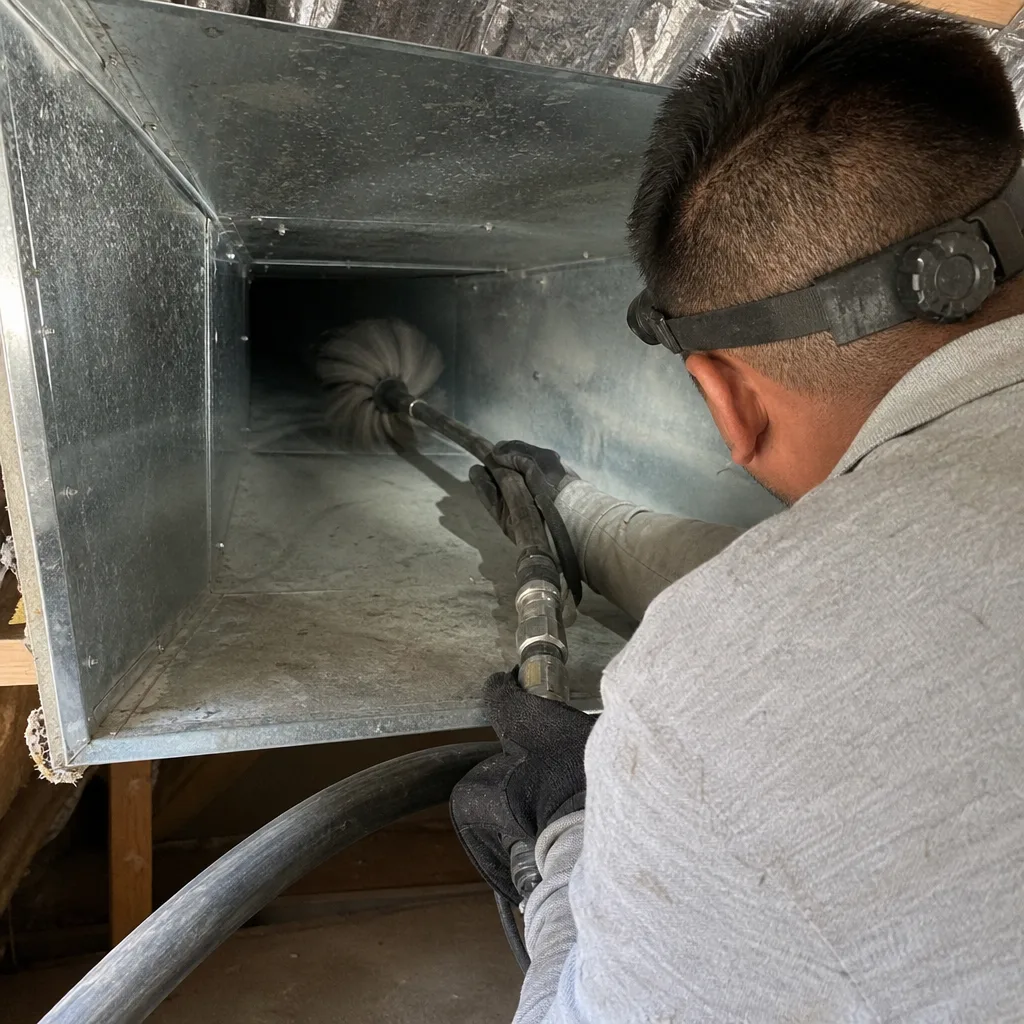
Last updated November 2, 2026
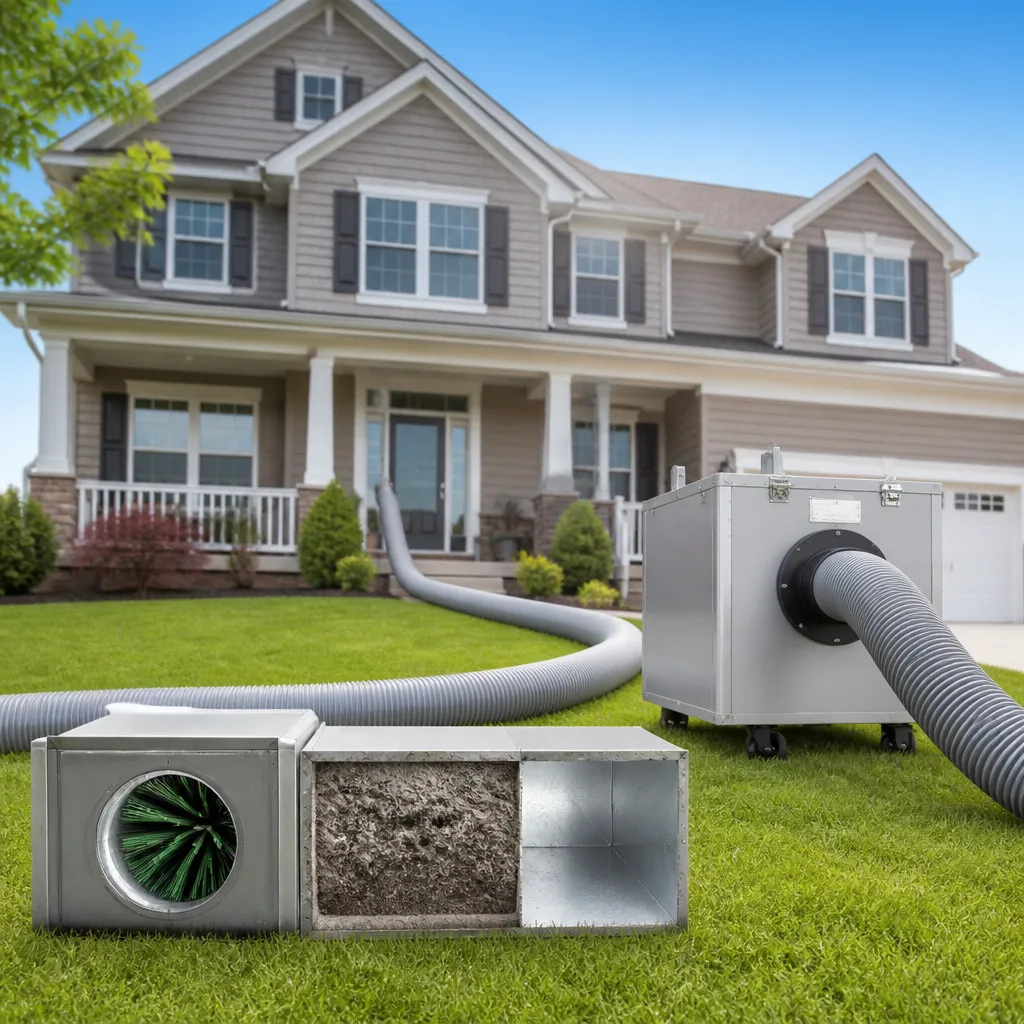 Whole-home duct cleaning
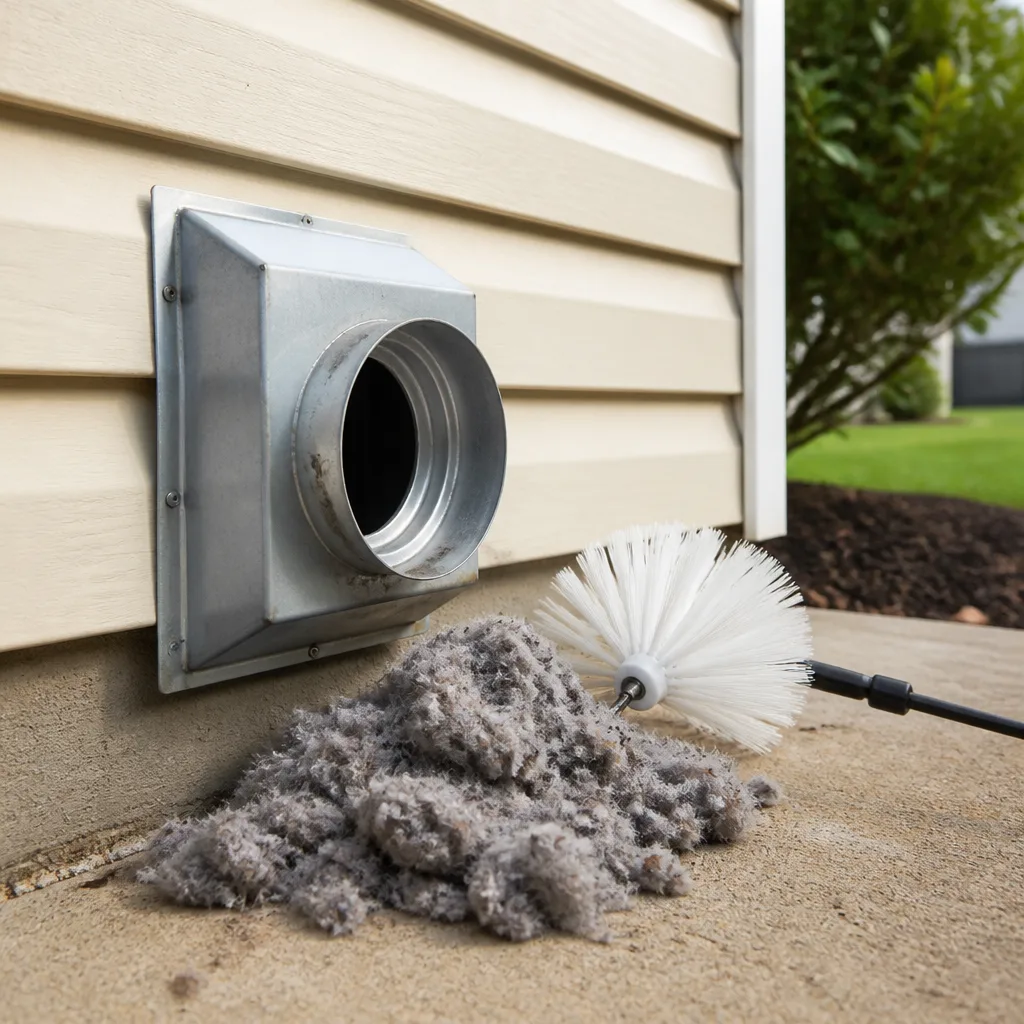 Dryer vent cleaning
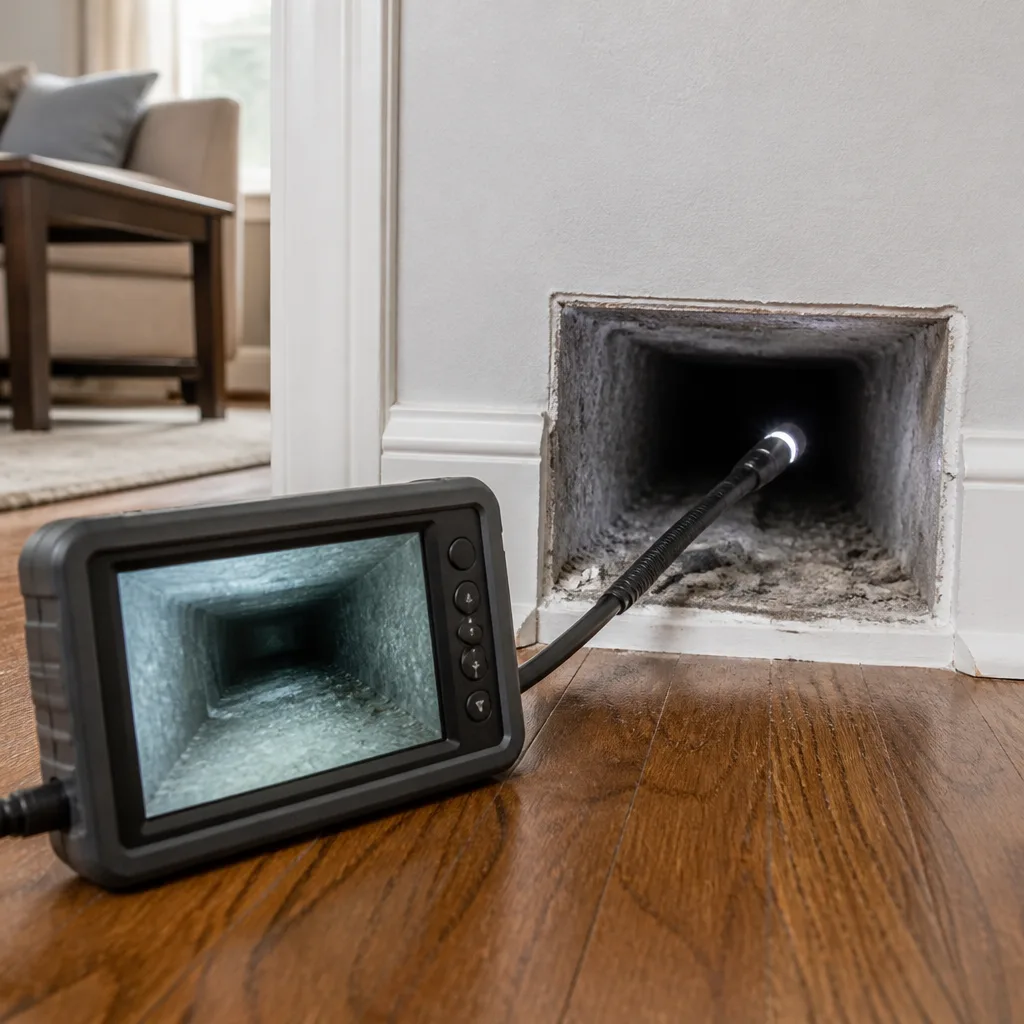 Camera inspection
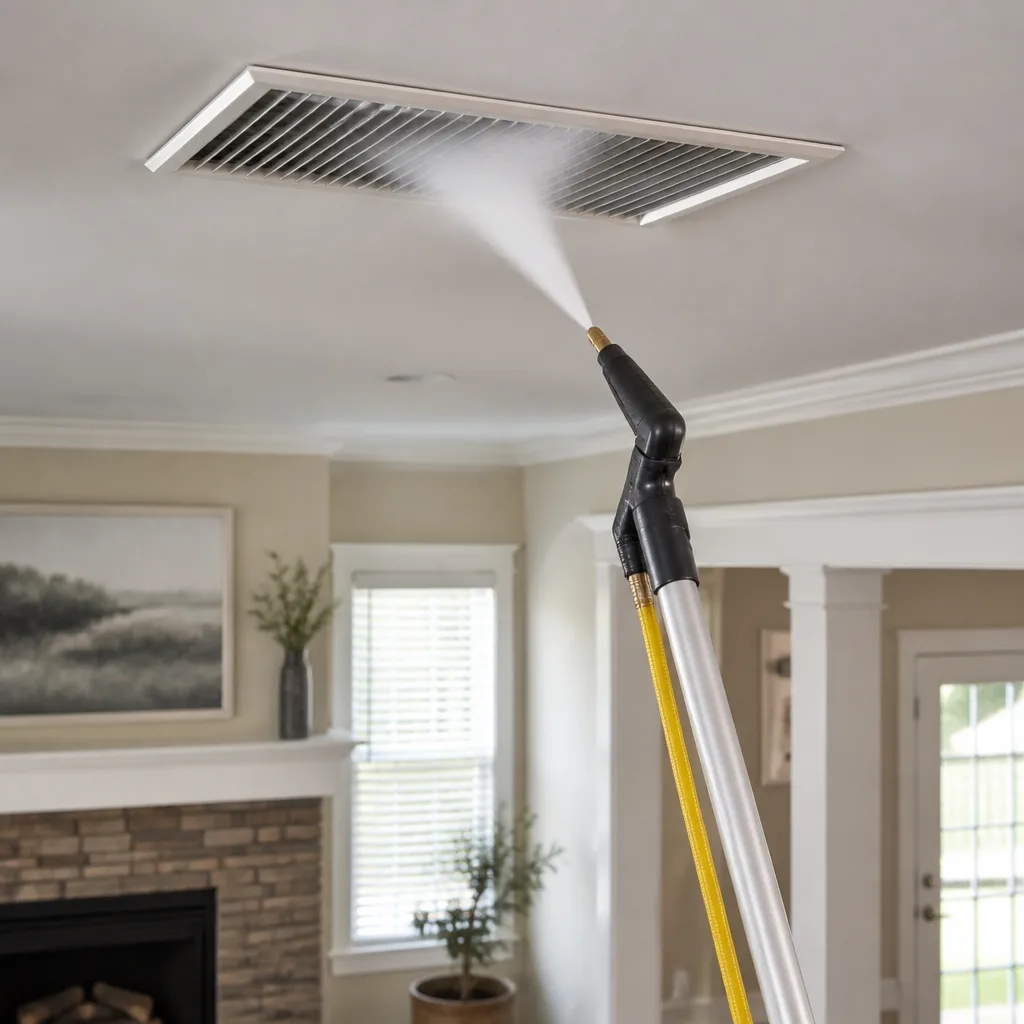 Sanitizing & deodorizing
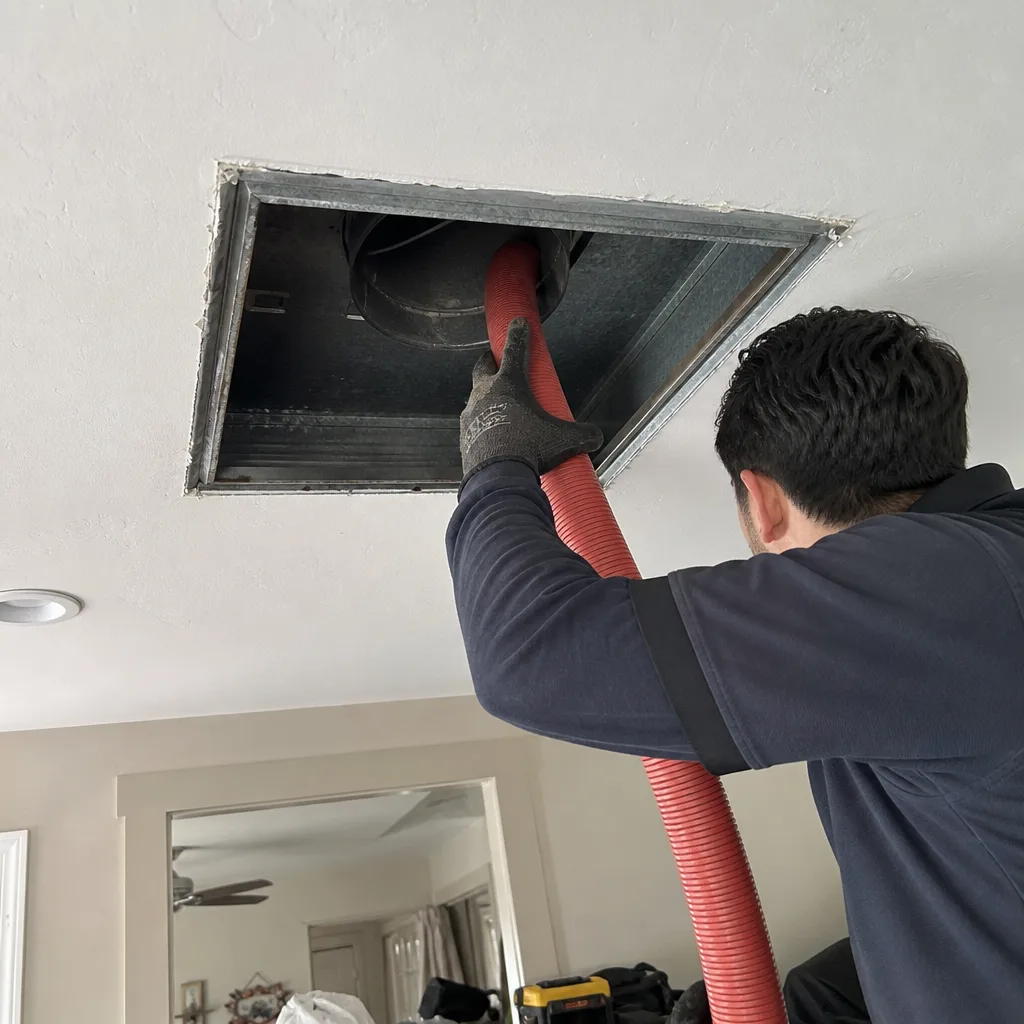
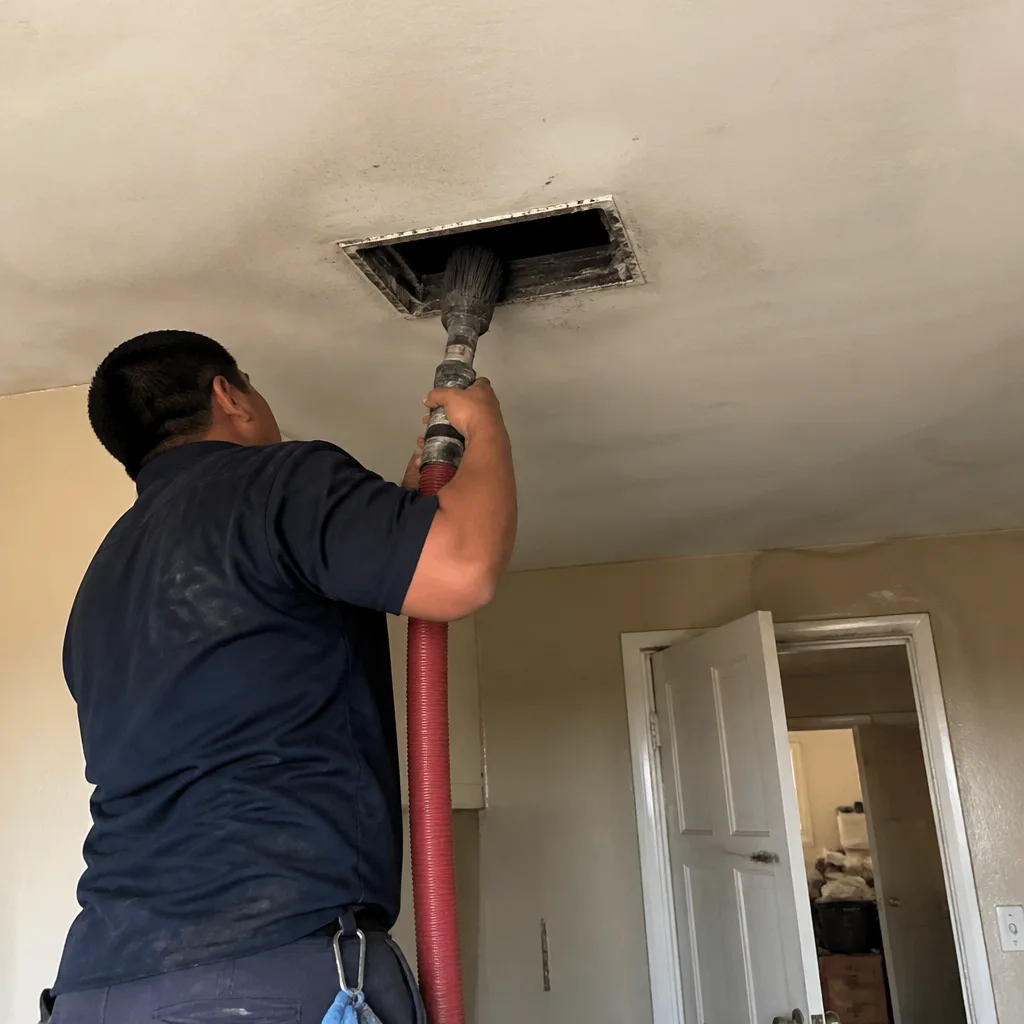
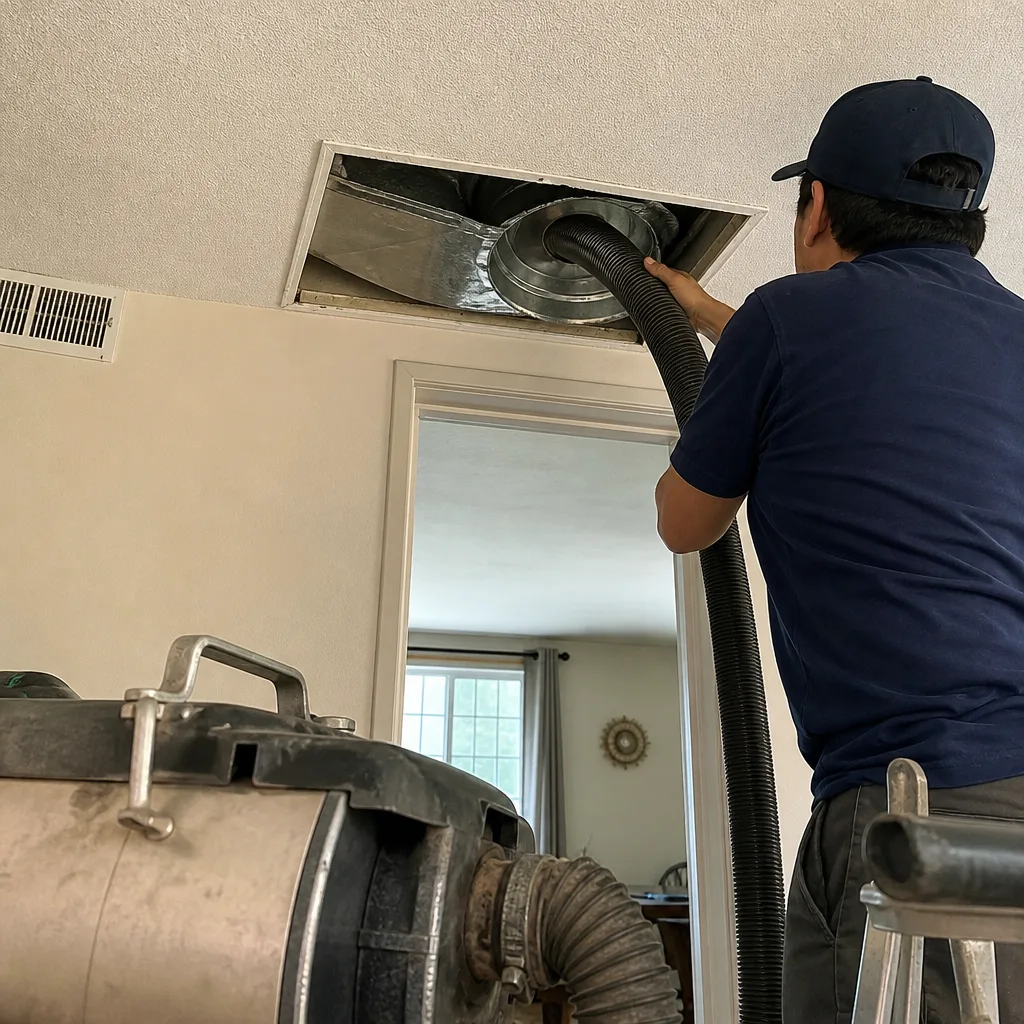
Whole-system duct and dryer vent check with before-and-after photos - you see exactly what came out of your vents
That "$99 whole-house special" is a bait ad - the real number appears once they are in your hallway, or the "clean" is a shop-vac at the register. We photograph the inside of your ducts before and after instead.
DIY vs Professional Air Duct Cleaning: The Monterey Park Homeowner’s Decision Guide
Here’s a counterintuitive fact most homeowners in Monterey Park don’t realize until it’s too late: your home’s HVAC system moves roughly 1,200 to 1,800 cubic feet of air per minute through ductwork you cannot fully see, and every cubic foot carries whatever settled inside those ducts. Attaching a leaf blower to a supply register and blowing debris toward the return is a real technique you’ll find in DIY videos, and it does move dust. It also deposits that dust directly into your air handler blower motor and evaporator coil, turning a $400 duct cleaning into a $900 equipment problem. This guide explains exactly where homeowner maintenance ends and professional equipment becomes non-negotiable, using the specific conditions we encounter in Monterey Park homes every week.
Styles & brands we work with
- Whole-home duct cleaning
- Dryer vent cleaning
- Camera inspection
- Sanitizing & deodorizing
Quick Answer
Professional air duct cleaning in Monterey Park is worth the cost over DIY when your system has visible dust buildup, has not been cleaned in 5+ years, or serves a home with allergy sufferers or pets. DIY duct cleaning cannot work because no consumer-available tool creates the sustained negative pressure required to capture dislodged debris from a full duct system, so DIY attempts redistribute contamination rather than remove it. Homeowners can legitimately handle register cleaning, filter replacement, and dryer vent exterior cap inspection themselves. For everything inside the ductwork, call a professional.
Table of Contents
- The Equipment Physics Problem: Why Suction Power Decides Everything
- What Homeowners Can Legitimately Do Themselves
- Where DIY Attempts Cause Measurable Damage
- Cost Comparison: The Price of Doing It Wrong vs. Doing It Right
- The Middle Ground: Homeowner-Assisted Access
- Monterey Park Specifics: Climate, Code, and Housing Stock
- Common Mistakes to Avoid
- When to Call a Professional
- Frequently Asked Questions
- The Bottom Line
The Equipment Physics Problem: Why Suction Power Decides Everything
Duct cleaning is not a scrubbing job. It is a containment job. The entire point of cleaning ducts is to agitate debris from duct walls and then immediately capture that debris before it enters living space or settles into HVAC equipment. This requires sustained negative pressure: air being pulled out of the duct system faster than the agitation process releases debris into it.
Professional truck-mounted duct cleaning systems pull between 2,000 and 4,000 cubic feet per minute (CFM) of suction. That number matters because it is what creates the pressure differential that keeps dislodged dust from floating backward into your bedrooms. A typical shop vacuum pulls 100 to 180 CFM. A consumer-grade vacuum attached to a register pulls maybe 80 to 120 CFM through the long hose run from your garage. That is roughly 2 to 4% of what a professional Rotobrush or Nikro system generates.
Here is what that gap means in practice:
- Debris capture: At 2,500+ CFM, agitation tools can push debris into the airstream and the airstream carries it to the collection unit. At 100 CFM, agitation just pushes debris down the duct where it settles in the next low-airflow bend.
- Containment: Professional systems maintain negative pressure throughout the entire duct run during the whole process. This means dust never escapes into your home. A DIY vacuum cannot maintain negative pressure across a full duct system, so every register you leave open becomes an exit point for dust.
- Reach: The static pressure loss across a 25-foot flexible vacuum hose reduces effective suction at the tool head dramatically. Professional equipment compensates for this with design and raw power. Consumer tools simply do not have margin to spare.
- Collection volume: Truck-mounted units and professional portable units like the Rotobrush aiR+ have collection bags or filters designed for the cubic feet of debris a full duct system holds. A shop vac fills up after one or two return drops in a Monterey Park home with years of accumulated dust, pet dander, and the fine silt that blows in from the San Gabriel Valley foothills.
The physics conclusion is blunt: if the tool cannot pull more air than the duct run loses to static pressure, it cannot clean the duct. It can only move dirt around. This is not a skill issue for the homeowner. It is an equipment constraint. In our experience, the homeowners in Monterey Park who understand this distinction stop trying to DIY the duct interior and focus their energy on the maintenance tasks that actually produce results, which we cover next.
What Homeowners Can Legitimately Do Themselves
There is a real, legitimate DIY maintenance category for Monterey Park homeowners. These tasks are safe, require no specialized equipment, and produce measurable improvements in HVAC performance and indoor air quality when done consistently. Do these. They matter.
- Register and grille cleaning. Remove supply registers and return grilles with a screwdriver. Wash them in warm soapy water. Wipe down the visible interior surface of the boot (the metal box behind the register) with a damp microfiber cloth. This removes the dust you actually see and prevents it from re-entering the airstream.
- Filter replacement on a schedule. In Monterey Park, the combination of dry summer heat, seasonal Santa Ana winds, and older housing stock with single-pane windows means most systems benefit from filter replacement every 60 to 90 days. Homes with pets, smokers, or proximity to the 10 or 60 freeway should consider 30 to 60 days. Write the install date on the filter frame with a marker.
- Dryer vent exterior cap inspection. Go outside while the dryer runs. Air should exit the vent cap with reasonable force. If airflow is weak or if the cap flap is stuck, the vent needs attention. This 60-second check is one of the simplest fire-risk reductions any homeowner can perform. Dryer Vent Cleaning in Monterey Park handles the interior run when that exterior check reveals problems.
- Visual boot checks during filter changes. When you change your filter, look into the return plenum with a flashlight. If you see a thick layer of gray fuzzy material, significant dust accumulation, or anything that looks like construction debris from a prior remodel, that is a sign the duct system needs professional attention. Write down what you see. The record helps a technician prioritize.
- Furniture and register access preparation. Before any professional cleaning, you can move furniture away from supply registers, clear closet access panels, and identify every register location in the home. This is the homeowner-assisted access model we describe later in this guide, and it directly reduces labor time.
None of these tasks touch the inside of your ductwork. That is the line. Everything listed above operates at the visible boundary of the system. The moment you are reaching more than six inches past a register into a duct run, you are in professional territory, and the reasons are covered in the next section.
Where DIY Attempts Cause Measurable Damage
We get called to Monterey Park homes where a well-intentioned DIY duct cleaning attempt has gone wrong. The patterns are consistent, and they are not the homeowner’s fault. The DIY community simply does not communicate the risks of working inside duct systems that were not designed for amateur access. Here are the specific failure modes we see.
Flex Duct Puncture
A significant portion of Monterey Park homes built before 1990 have had their rigid metal ducting partially or fully replaced with flexible insulated duct, or flex. Flex has an inner liner thickness of roughly 1 to 2 mils, similar to a heavy trash bag. A rotary brush designed for rigid metal duct, or even a vent-cleaning brush attached to a drill, can catch an interior seam or bend and tear through the liner in under a second. The result is a duct that draws attic air instead of conditioned air. The homeowner often does not notice until their energy bill rises or a room stops holding temperature. Repairing one punctured flex run costs more than a professional cleaning of the full system would have.
AHU Contamination from Uncontained Agitation
This is the most expensive DIY failure we encounter. The scenario goes like this: a homeowner or a cheap cleaning service agitates dust from ductwork without establishing negative pressure containment at the air handler. The dislodged dust travels down the return side and settles directly into the air handler unit: the blower wheel, the evaporator coil, the condensate pan. An evaporator coil fouled with compacted dust loses its ability to transfer heat. The system runs longer cycles. Energy use climbs. Eventually the coil needs professional cleaning, which requires disassembly of the air handler and costs $600 to $1,200 depending on access. The original DIY duct cleaning saved maybe $300. The coil cleaning cost three to four times that number.
Damaged Dampers and Mixing Boxes
Many Monterey Park homes have zone dampers in the ductwork, small metal plates that regulate airflow to different areas of the house. Homeowners poking improvised tools into registers can bend or dislodge these dampers without ever seeing them. A jammed damper means a room that cannot be cooled or heated properly. Diagnosis and repair requires opening the duct, finding the damper, and fixing or replacing it, which is Air Duct Repair in Monterey Park work, not a cleaning task.
Wet Cleaning Residue
Some DIY sources recommend spraying water or a cleaning solution into ducts. Inside a dark, humid duct system, that moisture does not dry quickly. It mixes with dust to create a slurry that cures into a concrete-like layer on duct walls. Worse, it creates conditions for biological growth in a system that was previously just dusty. The fix is either aggressive mechanical cleaning or duct replacement. The original problem was just dust, which is what cleaning was supposed to fix.
Cost Comparison: The Price of Doing It Wrong vs. Doing It Right
Monterey Park homeowners evaluating DIY duct cleaning are usually comparing the cost of a shop vac attachment and a weekend of labor against a professional service quote. That comparison is incomplete. The honest comparison includes the cost of the mistakes DIY frequently causes, and the cost picture changes completely.
Here is a structured cost comparison for a typical single-family home in Monterey Park, roughly 1,800 to 2,400 square feet, with 8 to 14 supply runs:
- Professional whole-home air duct cleaning: $350 to $600, depending on system size, number of returns, accessibility, and whether the home has never been cleaned or was last cleaned within a few years. This is a one-day job with professional equipment.
- DIY attempt with consumer tools: $75 to $150 for a vent brush kit, a shop vac filter upgrade, and cleaning supplies. Results are partial at best. Debris in the middle and return-side duct runs remains untouched. The homeowner has spent a weekend and achieved what register cleaning would have achieved for free.
- Evaporator coil cleaning after uncontained DIY agitation: $600 to $1,200, depending on air handler accessibility in the attic or closet. This is the most common expensive consequence of DIY duct cleaning gone wrong.
- Flex duct repair or replacement after brush puncture: $250 to $700 per run, depending on length and accessibility. A punctured flex run in an attic with limited access space can approach the high end.
- Dryer vent interior cleaning, if left unaddressed: The fire-safety risk is the real cost. The lint that accumulates behind the wall and inside the vent run is not visible from the exterior cap. When that lint layer restricts airflow, dryer efficiency drops, drying times lengthen, and the lint becomes a fire load. Interior dryer vent cleaning runs $125 to $200 in Monterey Park, a modest cost against the risk.
- Duct sealing and repair after cleaning reveals damaged runs: $150 to $400 per access point, depending on the repair scope. This is why we repair what we find. If a professional cleaning reveals a disconnected or torn run, the same technician can seal it before the system is reassembled.
The pattern is clear. The professional service cost is bounded: you pay the quote, the work is done, the debris is removed in a controlled process. The DIY cost is unbounded: the tools are cheaper, but the downside risk includes coil cleaning, duct repair, and continued poor air quality. In Monterey Park, where the housing stock includes everything from 1940s bungalows to 1990s tract homes with aging flex runs, the downside risk is real, not hypothetical.
For a full breakdown of what professional cleaning includes and what it should cost, see our guide to Air Duct Cleaning in Monterey Park.
The Middle Ground: Homeowner-Assisted Access
There is a legitimate way to reduce professional cleaning costs without compromising the technical work: you handle access. We call this homeowner-assisted access, and it works like this:
- Move furniture and floor coverings. Supply registers are often under beds, behind couches, or under area rugs. Moving these items before the technician arrives means the technician spends time cleaning ducts, not rearranging furniture.
- Clear attic access panels and closet doors. On many Monterey Park homes, the air handler or a key portion of the ductwork is behind an attic hatch in a hallway ceiling or a closet. Clearing the area beneath that hatch and ensuring the ladder can reach it saves 15 to 30 minutes of labor.
- Photograph and label. Walk the home and photograph each register and return. Note any rooms with weak airflow, any musty smells, any visible dust at registers. Share these with the technician when they arrive. This is free information that improves the cleaning outcome.
- Schedule wisely. Duct cleaning is loud and the system is off during the work. Planning for the work during a time when the home can be empty or when occupants can be in a different part of the house makes the day smoother. If you are working from home, choose the day and communicate your schedule.
This model lets the homeowner contribute labor where it saves real money, while the technical cleaning, agitation, and containment work uses professional tools and training. You save on labor without touching the duct interior.
Monterey Park Specifics: Climate, Code, and Housing Stock
Duct cleaning is not identical in every city, and Monterey Park has conditions that shape how often ductwork needs attention and what professional cleaning must address. The specific factors in our city:
San Gabriel Valley Particulate Load
Monterey Park sits at the western edge of the San Gabriel Valley. The combination of freeway proximity (the 10, the 60, the 710 corridor just west), seasonal Santa Ana winds that push dust from the inland valleys, and the natural aridity of the region means a constant fine particulate load in outdoor air. That outdoor dust enters homes through open windows, on shoes and clothing, and through the fresh air intake on the HVAC system. Ducts in Monterey Park accumulate that fine silt faster than ducts in coastal cities with higher humidity and less airborne dust. This is why filter replacement schedules and duct inspection intervals that work for a home in Long Beach or Orange County are often too lenient for a home in Monterey Park.
Older Housing Stock with Mixed Duct Materials
Monterey Park’s housing stock includes a significant number of homes built before 1980: post-war bungalows, mid-century ranch-style homes, and the hillside homes north of Garvey Avenue with vaulted ceilings and long duct runs. Many of these homes have had partial HVAC retrofits over the decades, which means a mix of rigid metal duct, flex duct, and improvised transitions. Mixed-material systems are exactly the ones where DIY vent brushes cause damage, because the homeowner cannot know what material lies behind each register without a camera inspection. Professional duct cleaning accounts for material transitions. A brush appropriate for rigid metal may be inappropriate for the flex run five feet downstream.
Attic Heat Load
Monterey Park summer temperatures routinely reach the mid-90s, and attic temperatures in unventilated or minimally ventilated attics can exceed 130 degrees. This matters for duct cleaning because dust that has accumulated in a hot attic for years becomes desiccated and friable. It turns to powder. That powder becomes airborne more readily when agitated, which is precisely why negative pressure containment matters more in our climate than in cooler cities. The debris is lighter, moves faster, and escapes more easily. Professional equipment establishes the containment needed to capture it. A DIY attempt simply launches that dust into the attic air, where it settles back into the ducts through any small gap, or into the home through ceiling penetrations.
No Local Duct Cleaning Code, but Real Liability
There is no Monterey Park municipal code that mandates duct cleaning frequency or dictates methods. But the state building code does govern duct installation and sealing, and a DIY cleaning attempt that damages a duct run creates a code compliance issue if the home is later inspected for remodeling, sale, or HVAC replacement. A torn flex run or a disconnected section will need to be repaired to bring the system to code. That repair is exactly the kind of work covered under Air Duct Repair in Monterey Park.
The Monterey Park homeowner needs to understand: the question is not whether your ducts are dirty. In this climate, they are. The question is whether you remove the debris with a contained professional process or move it around with consumer tools. The climate-specific conditions in this city make the professional case stronger than in most other parts of Southern California.
Common Mistakes to Avoid
- Using a leaf blower at a supply register. This is the headline mistake. Blowing air into a supply register pressurizes the duct from the wrong direction, driving debris into the air handler and evaporator coil. The repair cost for that coil cleaning exceeds the cost of the professional duct cleaning that would have prevented the problem.
- Believing a $79 whole-home duct cleaning ad. The bait-and-switch duct cleaning advertisement is common in the Monterey Park market. A price that low cannot cover the equipment, labor, and time required for a proper cleaning. The low quote typically becomes a much larger invoice once the technician is in the home identifying “additional problems.” Expect to pay $350 to $600 for a legitimate whole-home cleaning. If a quote is dramatically below that range, the discrepancy is a red flag.
- Skipping the dryer vent while cleaning ducts. The dryer vent is the highest-fire-risk air path in the home, and it is a separate system from the HVAC ducts. A full duct cleaning that does not include dryer vent service leaves the most dangerous lint accumulation untouched. Ask whether the company performs Dryer Vent Cleaning in Monterey Park as part of or alongside the duct work.
- Cleaning only the registers and calling it done. Register cleaning is maintenance. It is not duct cleaning. The dust you can see at the register is a fraction of what is in the duct run. If your registers look dirty, the duct behind them is dirtier.
- Using water or liquid cleaners inside ducts. As covered earlier, moisture inside a dark duct system creates a biological growth risk. Ducts should be cleaned mechanically, with dry agitation and vacuum collection. Nothing wet belongs inside a duct.
- Not asking what equipment the company uses. A professional Monterey Park duct cleaner should be able to name their equipment. Professional-grade systems from Rotobrush and Nikro are purpose-built for negative-pressure duct cleaning. If the company cannot name their equipment or shows up with a shop vac, you have hired the wrong company.
- Assuming ducts never need cleaning. Some sources claim ducts do not need cleaning. In Monterey Park, with our particulate load and hot attics, that guidance does not match reality. The EPA does not mandate a cleaning schedule, but it does recommend cleaning when there is visible dust, mold, vermin, or debris. Most Monterey Park homes with original or long-unserviced ducts have visible dust. The question is when, not whether.
When to Call a Professional
Call a professional duct cleaner when you see visible dust buildup at registers or returns, when anyone in the home has persistent respiratory symptoms that improve when away from home, when you find evidence of rodent activity in the attic or ductwork, when the system has not been cleaned in five or more years, or when you are preparing to sell a home and want the HVAC system inspection-ready. Call when the dryer takes more than one cycle to dry a load, or when the exterior dryer vent cap shows restricted airflow. And call when you have already attempted a DIY effort and suspect it made things worse, because the repair is more affordable sooner than later. Duct Cleaning Monterey Park offers free estimates in Monterey Park – call (866) 413-8552.
Frequently Asked Questions
Professional whole-home air duct cleaning in Monterey Park typically costs $350 to $600 for a single-family home between 1,800 and 2,400 square feet, with the final price depending on system size, number of returns, accessibility, and the condition of the ductwork. Homes that have not been cleaned in many years or have never been cleaned may fall at the higher end. Call (866) 413-8552 for an exact quote.
No, a shop vac cannot clean air ducts because it does not generate the 2,000 to 4,000 CFM of sustained negative pressure required to capture dislodged debris from a full duct system. A shop vac pulls 100 to 180 CFM at best, which is less than 5% of professional capacity. The result is debris pushed deeper into the duct rather than removed.
Ask for before-and-after photos of your own ductwork. A professional Monterey Park duct cleaning company should be able to provide camera inspection images of the main return, representative supply runs, and the air handler area before and after the work. The difference should be clearly visible. This is the single most reliable verification tool available to homeowners.
In Monterey Park, with our combination of San Gabriel Valley particulate load, freeway proximity, hot dry summers, and aging housing stock, most homes benefit from professional duct cleaning every three to five years. Homes with pets, smokers, recent remodeling, or family members with respiratory concerns should consider more frequent service, potentially every two to three years.
Duct cleaning addresses the HVAC system’s supply and return air paths, the ductwork that delivers conditioned air to your rooms. Dryer vent cleaning addresses the separate exhaust path that carries hot, lint-laden air from your dryer to the outside. They are different systems with different tools and different purposes. Dryer vent cleaning is primarily a fire-safety service; duct cleaning is primarily an air quality and system efficiency service. Both are available through Duct Cleaning Monterey Park home.
Quotes that are dramatically below the $350 to $600 range typically come from companies using consumer-grade equipment, companies that do not establish proper negative pressure containment, or bait-and-switch operations that quote a low teaser price and then inflate the invoice on site. A legitimate professional cleaning requires commercial-grade equipment, trained labor, and time. Those things have a real cost. If a quote seems too low to be true, request the equipment brand and ask whether the price includes the full system. If the answers are vague, walk away.
The Bottom Line
DIY duct cleaning fails at the physics level before it fails at the skill level. No consumer tool can create the sustained negative pressure needed to capture dust from a full duct run, which means DIY agitation moves contamination around rather than removing it. The legitimate DIY tasks are boundary maintenance: register cleaning, filter replacement, dryer vent cap inspection, and visual checks. The inside of the ductwork belongs to professional equipment. In Monterey Park, where the climate loads ducts with fine particulate and the housing stock includes aging mixed-material systems, professional cleaning is not a luxury. It is the only option that actually works.
Call (866) 413-8552 for a free estimate on professional air duct cleaning in Monterey Park. One price per system, agreed before work starts. Clean ducts, sealed ducts, safe vents.
Written by the team at Duct Cleaning Monterey Park, serving Monterey Park since 2013.
See the difference
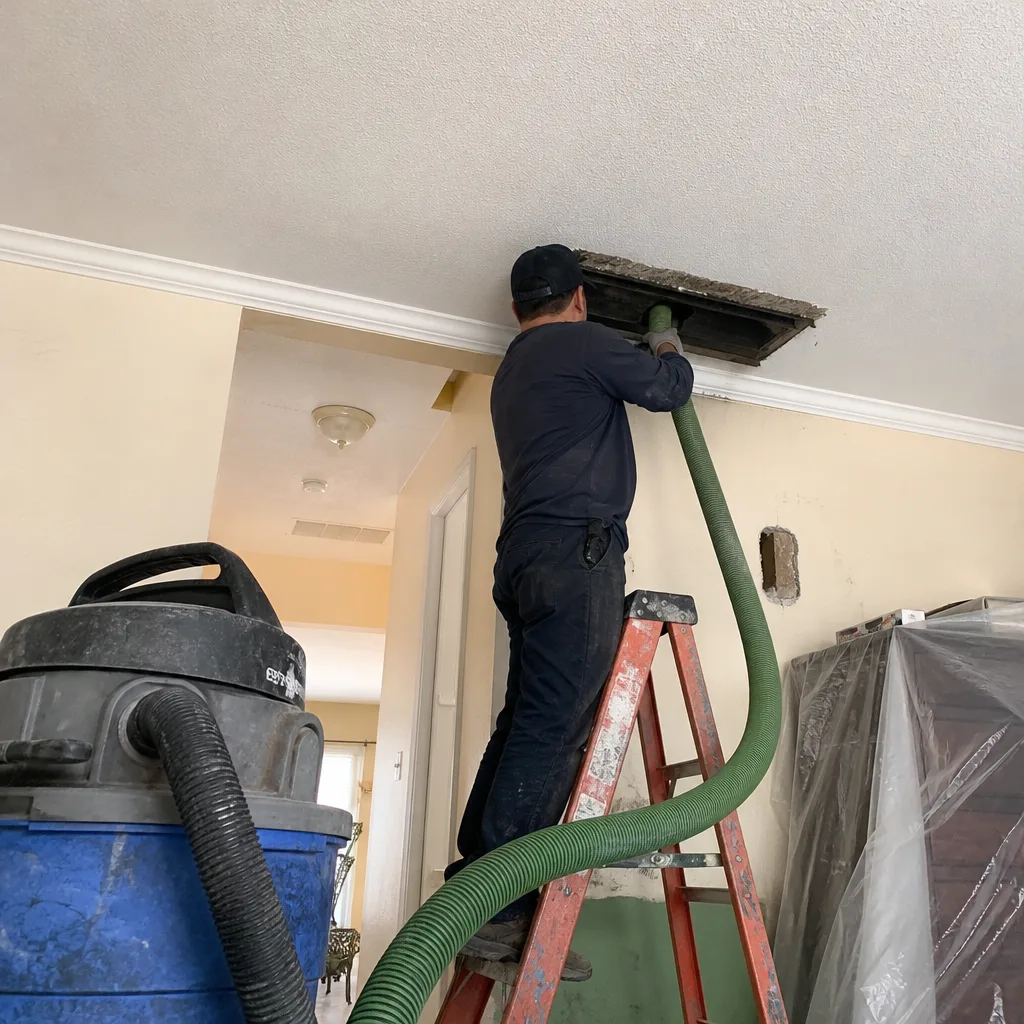 Before
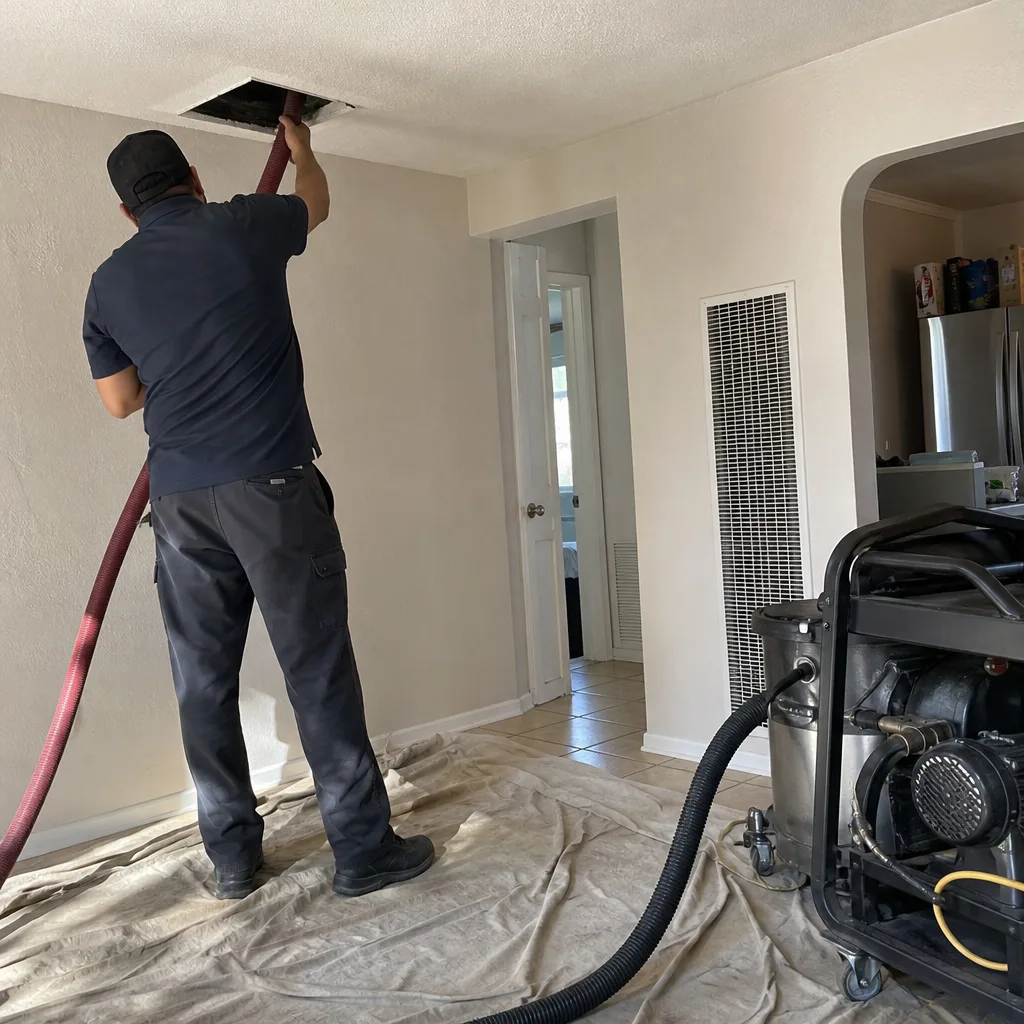 After
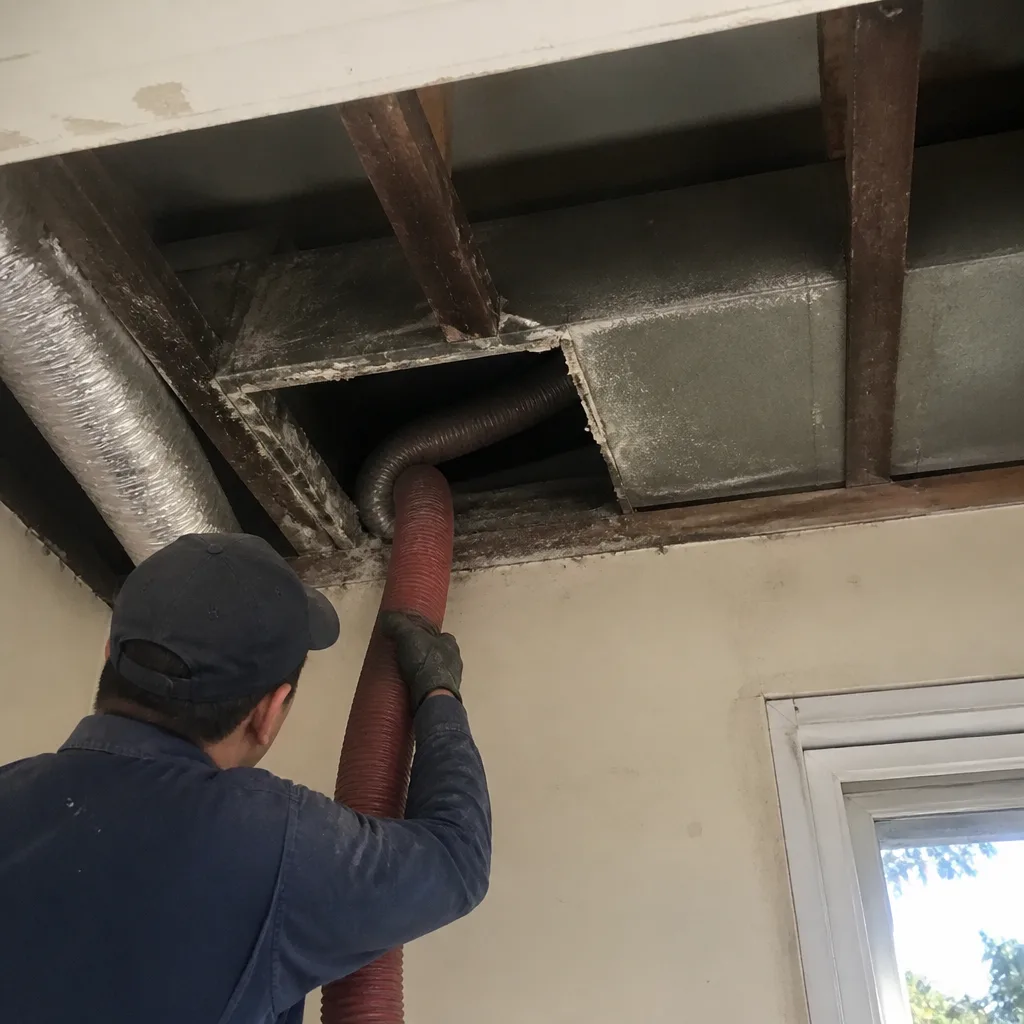 Before
 After
 Before
 After