
Last updated November 2, 2026
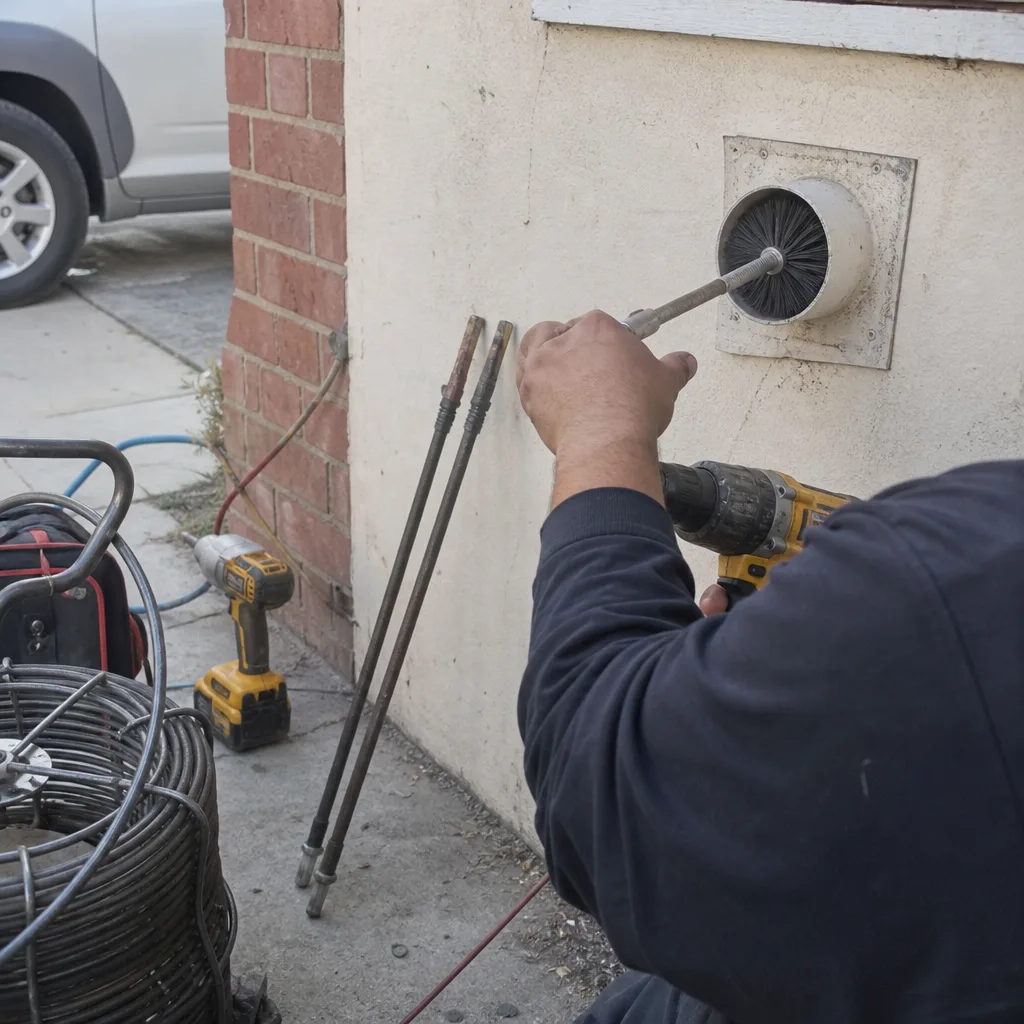
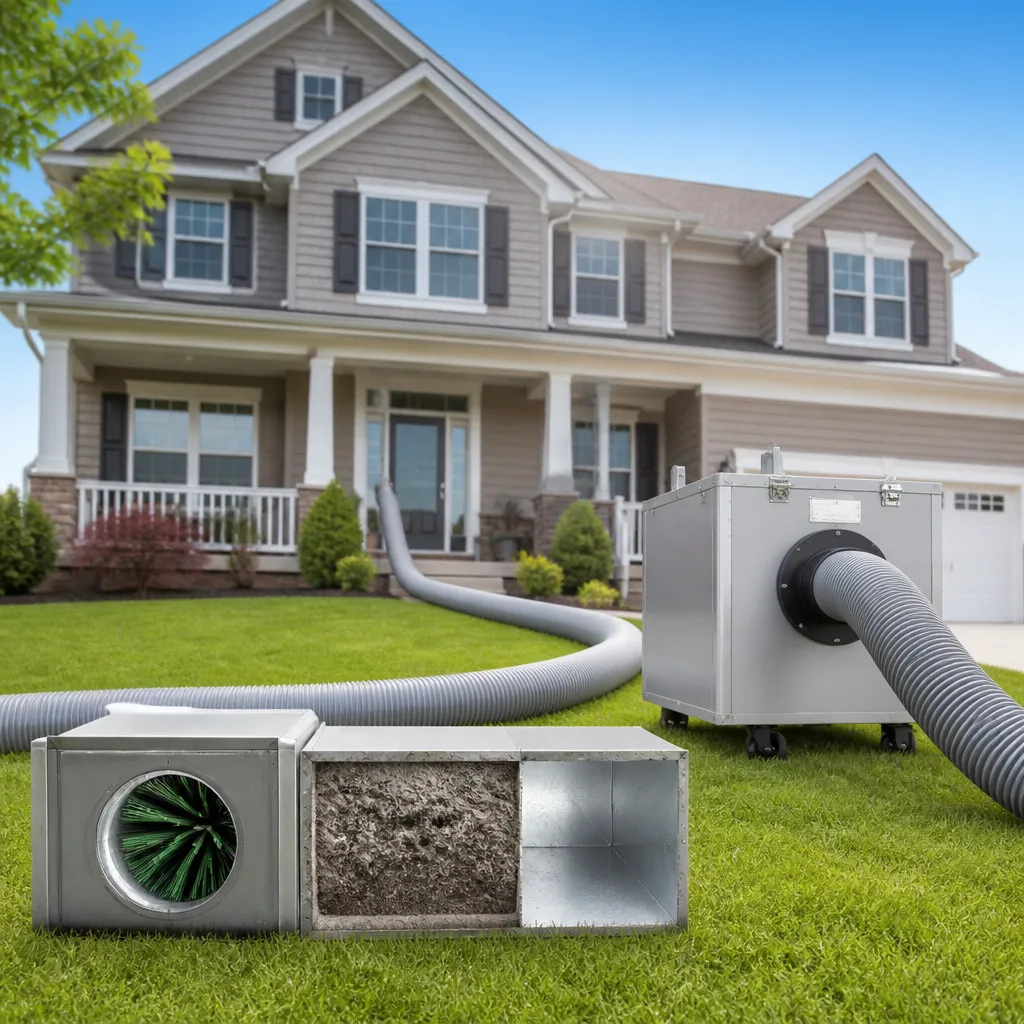 Whole-home duct cleaning
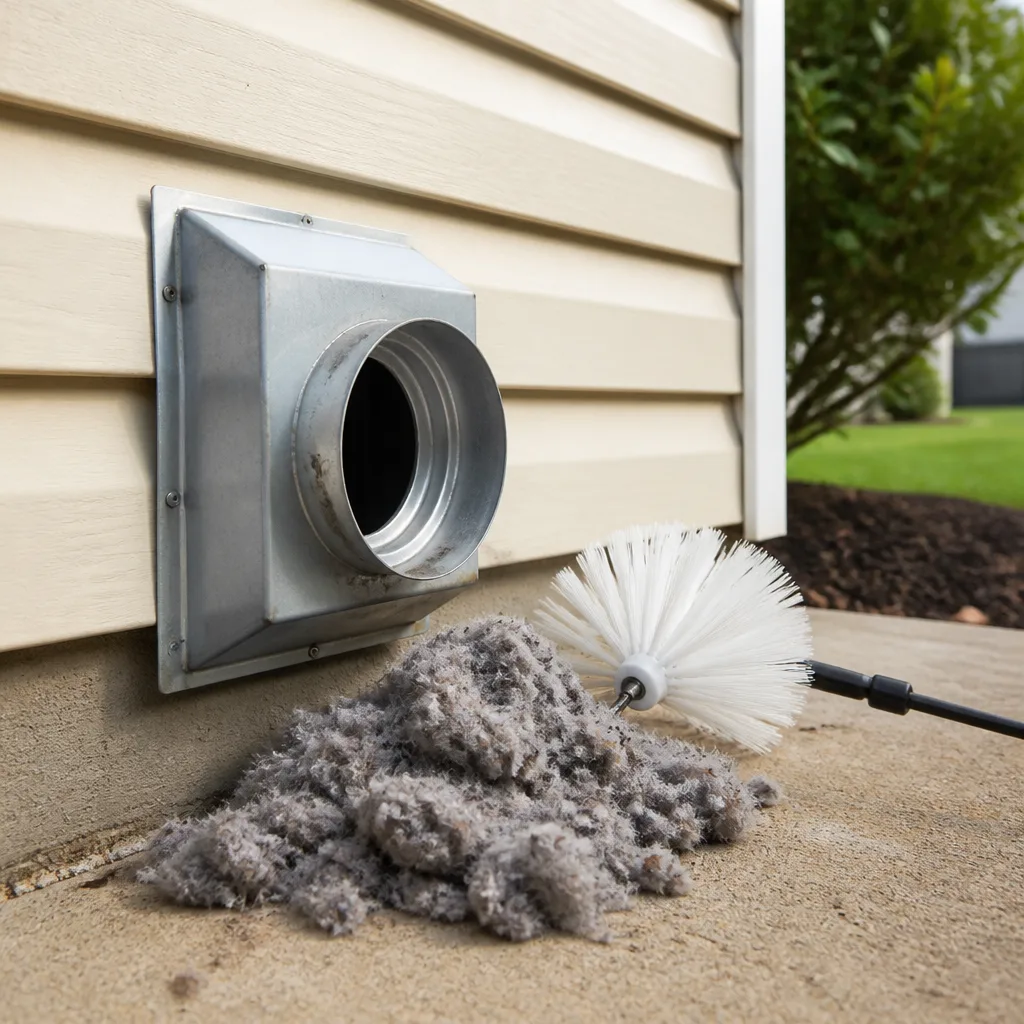 Dryer vent cleaning
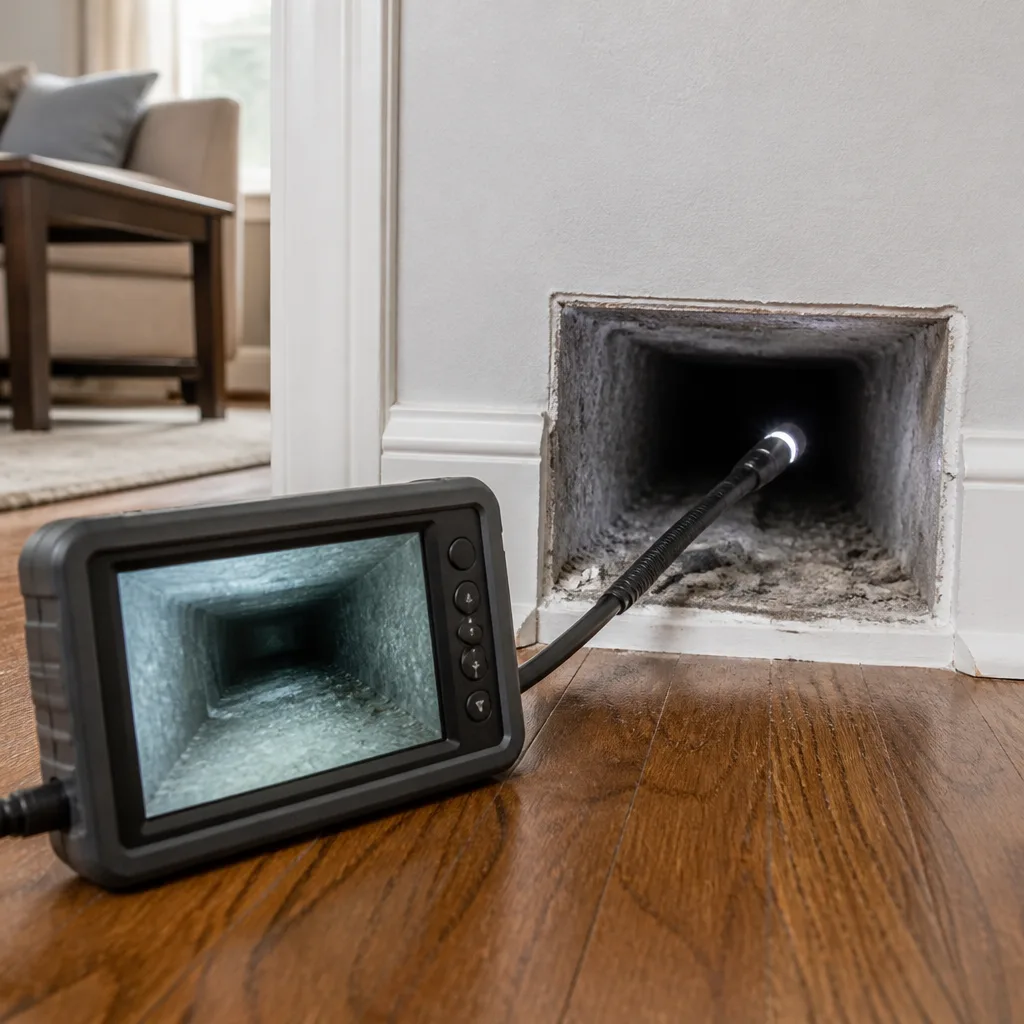 Camera inspection
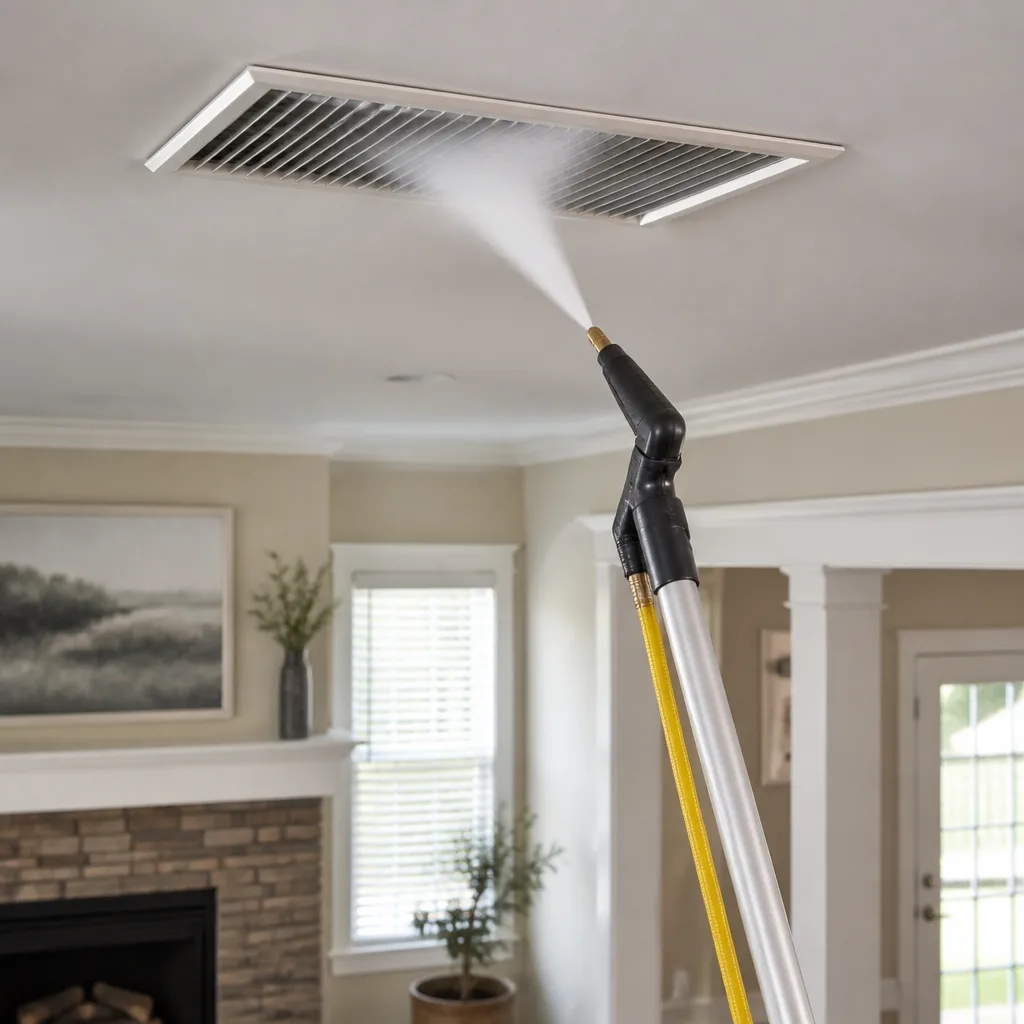 Sanitizing & deodorizing
Whole-system duct and dryer vent check with before-and-after photos - you see exactly what came out of your vents
That "$99 whole-house special" is a bait ad - the real number appears once they are in your hallway, or the "clean" is a shop-vac at the register. We photograph the inside of your ducts before and after instead.
The Complete Air Duct Cleaning Guide for Monterey Park Homeowners
Most duct cleaning guides read like they were written for a brand-new subdivision in Ohio. Monterey Park is not that. The city’s housing stock runs heavily toward postwar ranch homes, stucco duplexes, and older multi-family buildings, and those structures bring a specific set of duct conditions with them. If your home was built between 1950 and 1975, there’s a meaningful chance your ductwork includes materials and configurations that a cookie-cutter cleaning approach simply gets wrong. This guide explains what actually matters in Monterey Park: what your ducts are made of, how they fail, what a legitimate cleaning looks like, and how to tell the difference between a real technician and a guy with a shop vacuum and a coupon.
Styles & brands we work with
- Whole-home duct cleaning
- Dryer vent cleaning
- Camera inspection
- Sanitizing & deodorizing
Quick Answer
Air duct cleaning in Monterey Park typically costs between $350 and $650 for a whole system on a single-family home, depending on square footage, duct material, and how long it’s been since the last cleaning. The job should be done with a negative air pressure system paired with rotary brush agitation, and it should include before-and-after documentation, not verbal reassurance. Crucially, older Monterey Park homes with fiberglass-lined duct board or aged flex duct often need repair work identified before or during cleaning, which is why a contractor who offers both services makes sense here.
Table of Contents
- Why Monterey Park’s Housing Age Changes How Ducts Should Be Cleaned
- What Your Ducts Are Actually Made Of (And Why It Matters)
- What a NADCA-Standard Cleaning Actually Includes
- Negative Air Pressure vs. Rotary Brush: When Each Method Applies
- How to Read a Pre-Cleaning Assessment Report
- Post-Cleaning Air Quality Verification: What Credible Technicians Offer
- Dryer Vents: The Overlooked Fire Safety Component
- Common Mistakes to Avoid
- When to Call a Professional
- Frequently Asked Questions
- The Bottom Line
Why Monterey Park’s Housing Age Changes How Ducts Should Be Cleaned
Monterey Park experienced its biggest building boom between the late 1940s and the early 1970s. Drive through any neighborhood north of Garvey Avenue or east of Atlantic Boulevard and you’ll see the evidence: single-story ranch homes, modest stucco duplexes, and the occasional courtyard apartment complex, most of them untouched by major HVAC retrofits. That matters because the ductwork inside those homes was installed under construction standards that predate modern energy codes and, in many cases, predate the widespread use of sealed sheet metal ducting altogether.
Homes built before 1980 in the San Gabriel Valley are statistically more likely to have flex duct that has partially collapsed or fiberglass board lining that has begun to deteriorate. Flex duct, the accordion-style plastic-and-wire tubing used extensively in that era, sags over time. When it sags, it creates low spots where dust, dander, and construction debris collect. Worse, the inner liner can tear, exposing the fiberglass insulation beneath. That means the very material meant to keep air moving quietly is now shedding particles into your airstream.
Fiberglass duct board presents a different problem. It was popular in mid-century construction because it was cheap and easy to fabricate on site. But after 50 or 60 years, the interior surface often breaks down. The fiberglass matrix degrades, the facing peels, and you end up with a rough, fibrous surface that traps debris and resists thorough cleaning. A technician who treats a duct board system the same way they’d treat galvanized sheet metal will leave material behind and may even worsen the degradation.
In our experience working on Duct Cleaning Monterey Park home systems across the city, the homes that need the most careful assessment are the ones built between 1955 and 1972. That’s the sweet spot for original duct board installations and early flex duct. If your home sits in that window and you’ve never had the ducts inspected, the odds are genuinely high that cleaning alone won’t address what’s actually wrong.
The local climate compounds the issue. Monterey Park sits in a semi-arid zone with long dry seasons. That’s good news for mold prevention (we don’t see the chronic humidity-driven mold problems common in coastal areas), but it’s bad news for dust accumulation. Dry air means finer particulates stay airborne longer, and they eventually settle inside duct runs. Add the fact that many mid-century Monterey Park homes still run their original single-pane windows, and your HVAC system is working harder, cycling more frequently, and pulling more of that fine dust through the returns.
What Your Ducts Are Actually Made Of (And Why It Matters)
Before anyone cleans your ducts, someone should look at them. That sounds obvious, but plenty of budget operators skip straight to the vacuum and start poking around without knowing what they’re dealing with. Duct material determines cleaning method, tool selection, and whether repair work should happen first or second.
Here’s what’s most common in Monterey Park homes, broken down by era and construction type:
- Galvanized sheet metal: The gold standard. Sealed, smooth, durable. Found in newer homes (post-1990) and in some retrofits. Cleans thoroughly with standard rotary brush and negative air pressure. Minimal risk of damage during cleaning.
- Fiberglass duct board: Common in 1950s-1970s construction. Made from compressed fiberglass panels with a foil or painted facing. Degrades over time. Requires gentler agitation and often needs sections replaced rather than just cleaned.
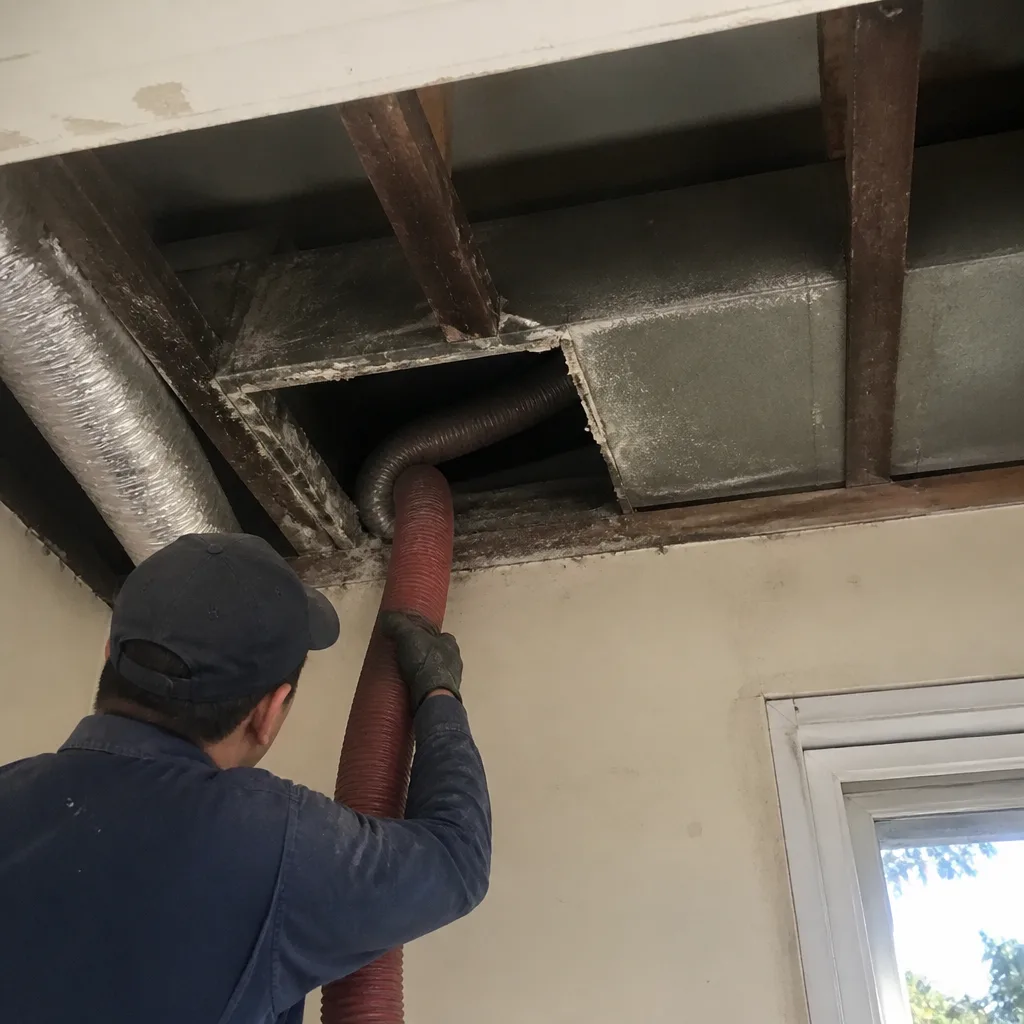
- Flex duct: Plastic inner liner wrapped in fiberglass insulation and an outer vapor barrier. Used heavily in 1960s-1980s installations, especially in additions and multi-family buildings. Prone to sagging, tearing, and inner-liner collapse. A rotary brush can shred a deteriorated liner if the technician isn’t paying attention.
- Rigid fiberboard with metal trunk lines: A hybrid common in 1970s duplexes. Metal main trunks with fiberboard branch runs. Cleaning approach varies by section.
- Asbestos-wrapped metal duct: Rare but still present in a handful of pre-1960 Monterey Park homes. Not a DIY scenario under any circumstances. If your home has original ducts with a white, fibrous wrap, stop and call a professional who knows how to test and handle it. This is a safety issue, and it’s one of the reasons a visual pre-inspection matters.
The takeaway: duct material dictates everything. A homeowner with sheet metal ducts can reasonably expect a standard cleaning to produce excellent results. A homeowner with 60-year-old fiberglass duct board might need section replacement before cleaning makes sense at all. The best contractors identify this during the assessment phase, before any equipment gets powered on.
What a NADCA-Standard Cleaning Actually Includes
NADCA, the National Air Duct Cleaners Association, publishes the industry’s foundational standard: ACR, the Assessment, Cleaning, and Restoration of HVAC Systems. It’s the closest thing to a rulebook this industry has, and it specifies what a legitimate cleaning should cover. Understanding the standard helps you spot the difference between a real service and a surface-level dust-and-dash.
A NADCA-standard cleaning covers the entire air conveyance system, not just the supply ducts. Here’s the full scope, step by step:
- System inspection and assessment: The technician examines supply ducts, return ducts, registers, grilles, the air handler unit, blower motor, evaporator coil, and drain pan. They document material types, access points, and any pre-existing damage.
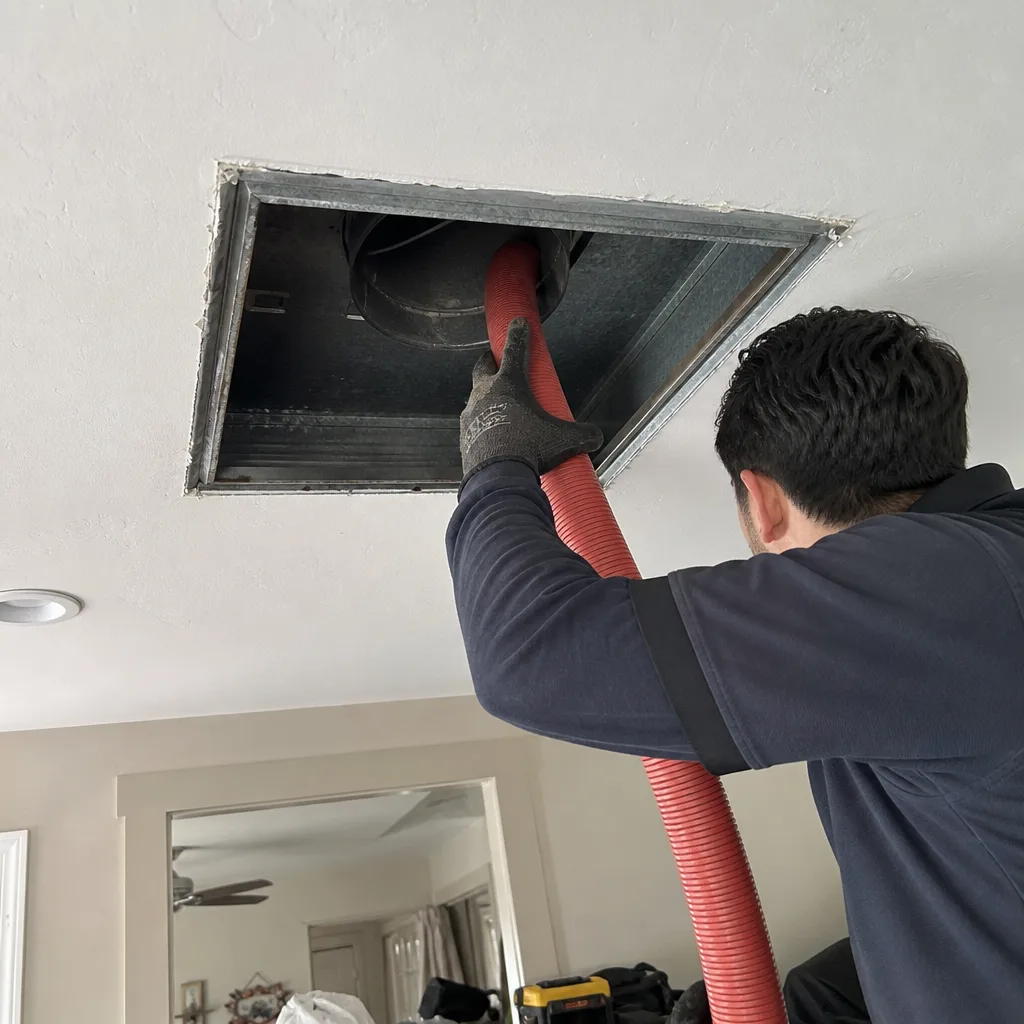
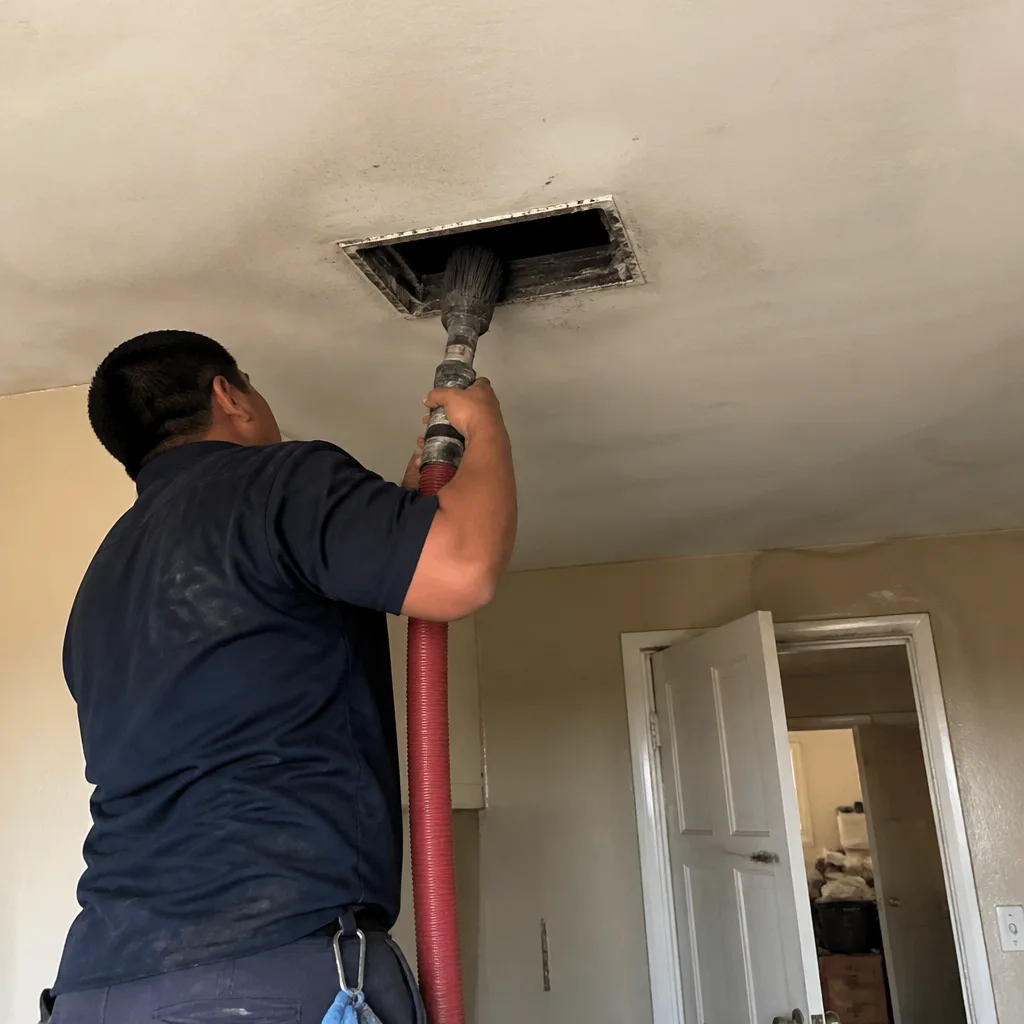
- Source removal: The core of the standard. Dust and debris are physically dislodged from duct surfaces using mechanical agitation (rotary brushes, compressed air, or hand tools), then extracted from the system under negative air pressure. This is not just vacuuming the register openings. It means getting inside the duct runs and pulling material out at the source.
- Component cleaning: The blower motor, evaporator coil, and drain pan get cleaned as part of the service. If a company quotes you a price that only covers “ducts” and not the coil and blower, they’re doing half a job.
- Register and grille cleaning: Every supply register and return grille gets removed, cleaned, and reinstalled. This is basic, but you’d be surprised how often budget operators skip pulling the registers and just vacuum around them.
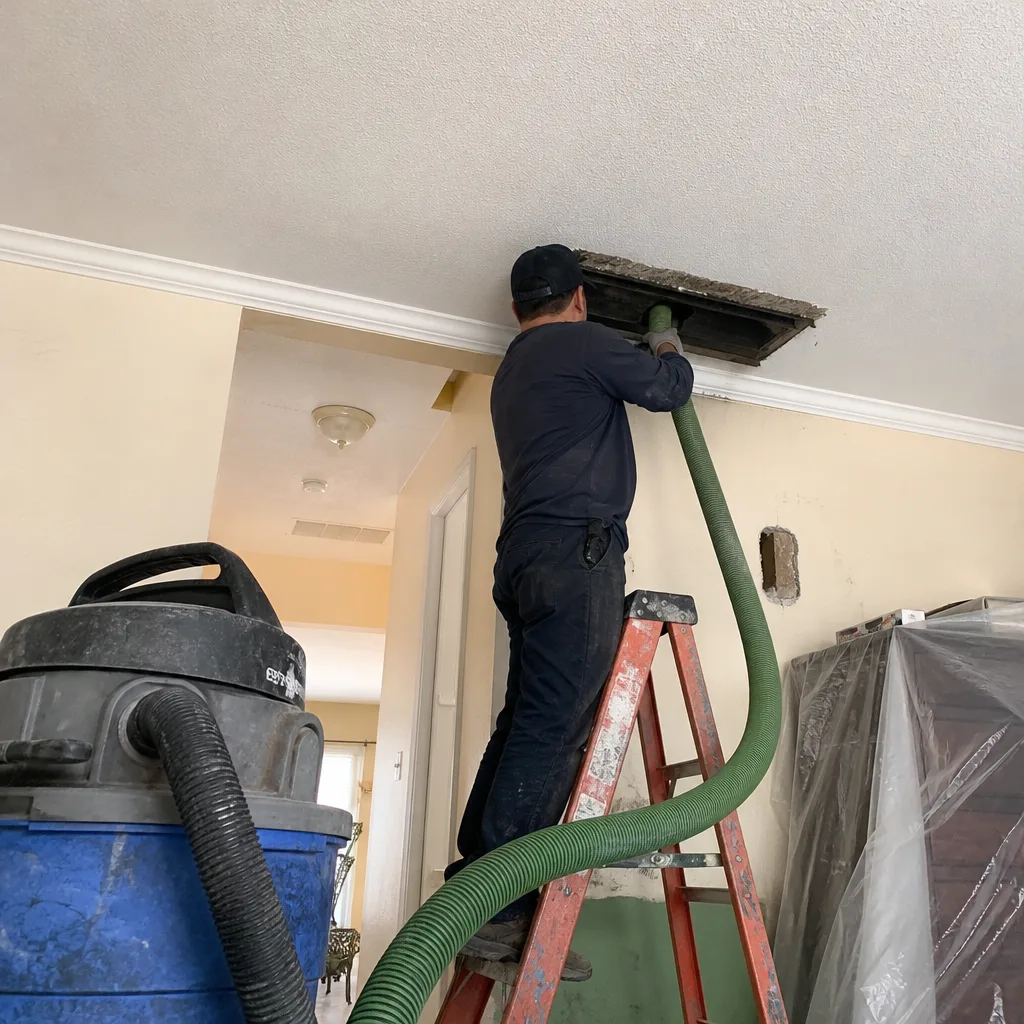
- Post-cleaning visual inspection: The technician shows you the results. Not a verbal “looks good,” but actual visual verification through access points, photos, or video. We use before-and-after photos as standard practice on Air Duct Cleaning in Monterey Park jobs because a homeowner should be able to see what changed.
The critical distinction: a NADCA-standard cleaning removes material from the entire system. A budget operator runs a vacuum at the register openings and calls it done. The former takes hours. The latter takes 45 minutes. Price is usually the tell: if someone quotes you $99 for a whole system, you are not getting a NADCA-standard cleaning, full stop.
Negative Air Pressure vs. Rotary Brush: When Each Method Applies
This is the section where most guides hand-wave. They say something like “we use professional equipment” and move on. Here’s the actual technical picture, because choosing the right method matters for your specific duct configuration.
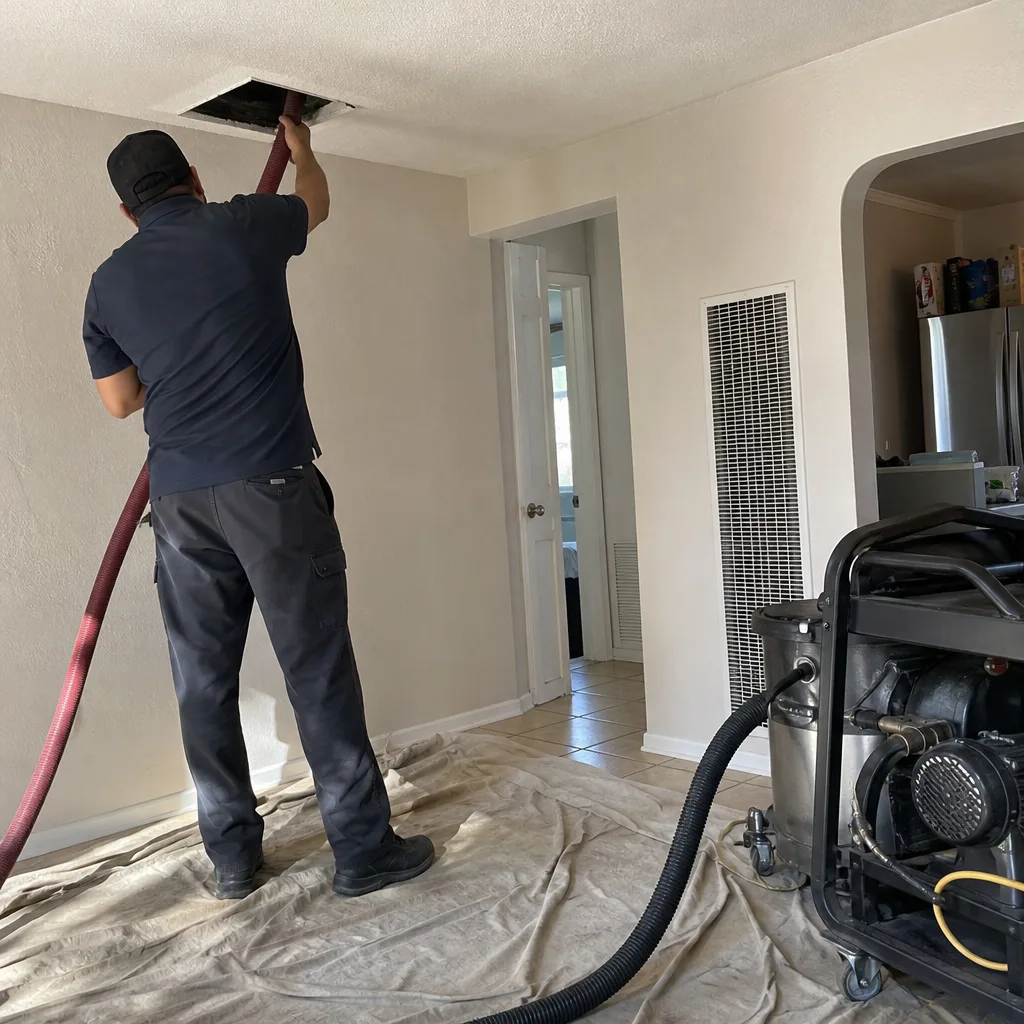
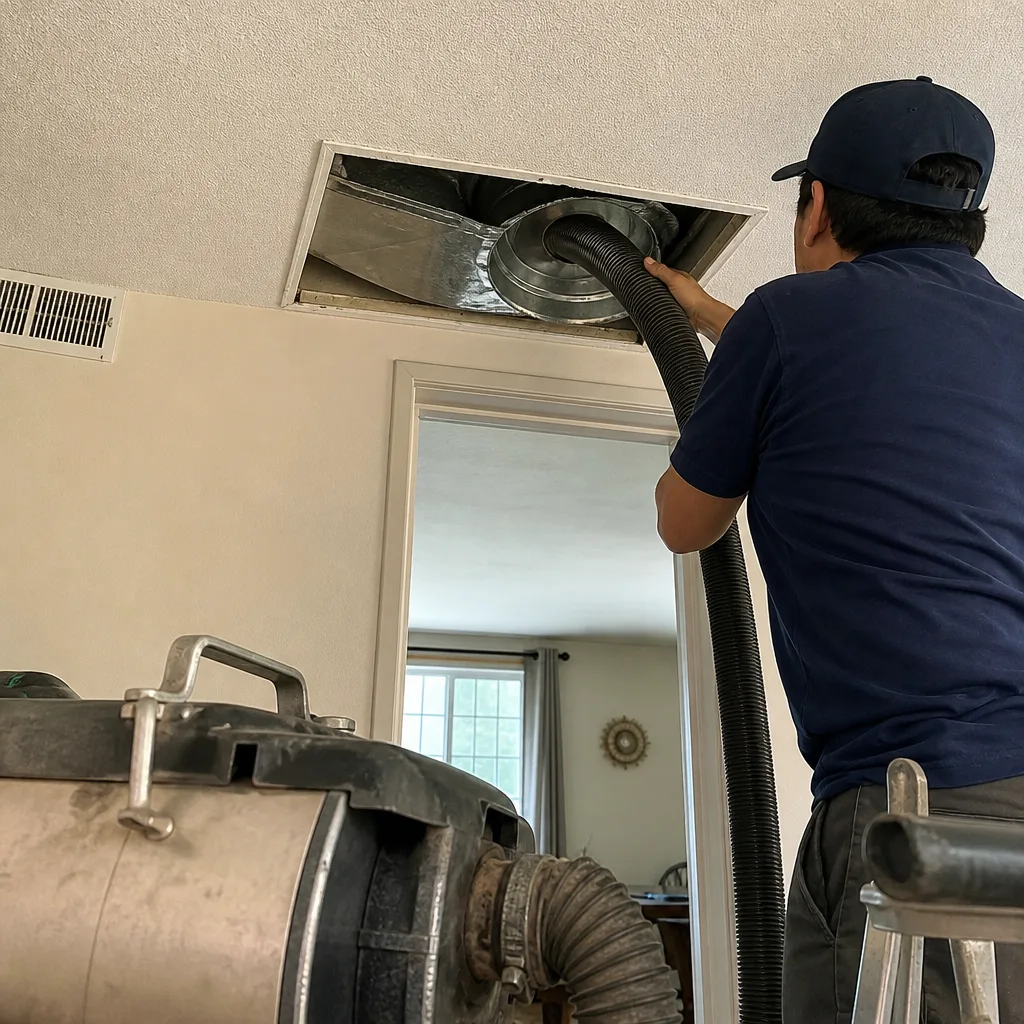
The industry standard for residential duct cleaning uses two tools together. The first is a negative air pressure machine, sometimes called a negative air machine or vacuum collection unit. This connects to the duct system, seals it, and pulls the entire system into a vacuum state while a HEPA-filtered exhaust captures extracted debris. The second is a rotary brush system, which runs a spinning brush through the duct interior to mechanically agitate and dislodge stuck-on debris.
You need both. Negative pressure alone won’t remove debris that’s adhered to duct surfaces. A rotary brush alone will knock debris loose but leave it suspended in the system to resettle once the machine shuts off. The combination is what produces actual source removal.
Where equipment selection gets more specific:
- Long metal trunk lines: A standard rotary brush on a flexible shaft works well. Metal ducts handle aggressive agitation without damage.
- Fiberglass duct board: Gentler agitation is required. Soft-bristle brushes or air-whip tools at lower RPM. A steel-bristle rotary brush will shred deteriorated duct board. This is where knowing the material before you start prevents damage.
- Flex duct: The riskiest cleaning scenario. If the inner liner is intact, a light rotary brush pass works. If the liner is torn or collapsed, brushing will make it worse. The correct move is repair or replacement of that section, not aggressive cleaning.
- Heavy debris loads: In homes with decades of accumulated debris (common in original-owner Monterey Park ranch homes where ducts haven’t been touched since installation), a higher-powered negative air machine makes a real difference. The Nikro NG8000 is the benchmark we use for these jobs: it’s a purpose-built, industrial-grade negative air machine designed for duct cleaning and remediation work, not a rented floor buffer with a hose attachment. The airflow difference is dramatic, and in heavily loaded systems, it’s the difference between getting debris out and just stirring it up.
Rotobrush systems are similarly purpose-built. The Rotobrush aiR+ and similar models combine brush agitation with on-board vacuum collection in a single pass. For accessible duct runs in standard single-family homes, it’s an efficient, effective tool. For complex systems with multiple branches or hard-to-reach sections, a separate negative air machine plus cable-driven rotary brushes gives the technician more control.
The point for homeowners: equipment matters, but the technician’s judgment matters more. The best machine in the wrong hands on the wrong material does more harm than good. When you’re evaluating a contractor, ask what equipment they run and, more importantly, ask them to explain why that equipment suits your specific duct material. If they can’t answer that question, find someone who can.
How to Read a Pre-Cleaning Assessment Report
Before any work begins, a credible company documents what they’re dealing with. That documentation should be provided to you in writing, and you should be able to understand it. Here’s what a legitimate pre-cleaning assessment report includes:
- System schematic or description: How many zones, how many supply runs, where the main trunk lines sit, where the air handler is located. This tells you the technician actually mapped the system, not just counted vents.
- Material identification per section: What each accessible duct run is made of. If different sections use different materials (common in homes with additions), the report should note that.
- Condition findings: Documented observations: “Supply run #4 shows liner tear at 12 feet from register” or “Main trunk has visible dust accumulation estimated at moderate-to-heavy.” This should include photos or video stills wherever access allows.
- Access limitations: Honest documentation of what couldn’t be accessed. Every home has some inaccessible duct sections. A credible report tells you where they are and why access wasn’t possible, rather than pretending the whole system was reached.
- Repair recommendations: If sections need repair, replacement, or sealing, that should be noted here, with priority levels. This is where the Air Duct Repair in Monterey Park conversation starts, not after cleaning is done and the problem gets blamed on “old ducts.”
- Cleaning approach: A short explanation of what equipment will be used and why, based on the material and condition findings.
If a company shows up, walks around for 10 minutes, and says “okay, we’ll get started,” you’re not getting an assessment. You’re getting a production line. Walk away and call someone who documents their work.
We’ve seen homes where a “quick cleaning” by a budget operator did nothing but aerosolize years of accumulated dust, leaving the homeowner with worse air quality than they started with. The assessment isn’t paperwork for its own sake. It’s what prevents that outcome.
Post-Cleaning Air Quality Verification: What Credible Technicians Offer
After the cleaning is done, how do you know it worked? This is where the industry separates into two camps: those who show you evidence and those who ask you to take their word for it.
A credible technician offers visual verification. That means before-and-after photos or video from inside the ducts, taken through access points during and after the cleaning. You should be able to see the actual duct surface before and the actual duct surface after. “It’s clean, trust us” is not verification.
Some companies go further with particle counting or air sampling. Particle counters measure airborne particulate levels before and after cleaning, giving you a numerical readout of what changed in the room air. This is a useful tool, but it has limits: a particle counter measures ambient air in the room, not what’s inside the ducts. It’s a proxy, not a direct measurement.
What you should realistically expect from a quality contractor:
- Visual documentation: Before-and-after photos of accessible duct interiors. Non-negotiable.
- Component verification: You should be able to see that the blower, coil, and drain pan were addressed. These are visible components; there’s no excuse for skipping their documentation.
- Filter check: A credible technician checks your air filter after cleaning and discusses replacement. If they’re integrating air quality products, they might mention options from Honeywell or Aprilaire, both of which make filtration and humidity control systems that pair well with freshly cleaned ducts. But the filter check itself is basic professionalism.
- Honest limitations: A good technician tells you what couldn’t be reached, what condition issues remain, and what to monitor going forward.
What you should not accept: a verbal “looks great” with no documentation, a technician who refuses to show you the ducts, or any pushback when you ask to see evidence. The work either happened or it didn’t, and in the age of smartphone cameras, there’s no reason documentation should be difficult. We treat documentation as part of the job on every Air Duct Cleaning in Monterey Park service, because a homeowner who can see the work is a homeowner who can trust the work.
Dryer Vents: The Overlooked Fire Safety Component
While you’re thinking about ducts, you should be thinking about the dryer vent. In Monterey Park’s older homes, dryer vents are often an afterthought: original installations routed through walls or under floors with corrugated foil or plastic transition hose, runs that are too long, and terminations that vent into attics or crawl spaces rather than to the exterior. Every one of those conditions is a lint trap waiting to become a fire.
The U.S. Fire Administration has consistently flagged dryer vent fires as a leading cause of residential fires, with failure to clean dryer vents cited as the primary contributing factor. Lint is astonishingly combustible, and a clogged vent also forces the dryer to work harder, which means longer dry times, higher energy use, and more heat buildup in the vent itself.
Signs your dryer vent needs attention in Monterey Park:
- Clothes take more than one full cycle to dry
- The dryer exterior gets unusually hot during operation
- You can smell a burning or musty odor when the dryer runs
- The outside vent flap doesn’t open when the dryer is exhausting
- It’s been more than a year since the vent was professionally cleaned
This is a separate service from duct cleaning and should be performed by someone who knows how to inspect the full vent run, clear accumulated lint, and identify installation problems like improper termination or kinked transition hose. We offer Dryer Vent Cleaning in Monterey Park as a standalone service precisely because it’s a distinct job with distinct safety implications. If you’re getting your ducts cleaned, asking about the dryer vent at the same time makes practical sense: it’s the same visit, the same technician, and one less fire hazard left unaddressed.
Common Mistakes to Avoid
- Hiring on price alone: A $99 whole-house cleaning is either a bait-and-switch or a fraud. Legitimate equipment, labor, and time cost real money. In Monterey Park’s market, a proper single-system cleaning starts around $350 and goes up from there depending on size and condition.
- Skipping the pre-inspection: If a company won’t inspect and document before cleaning, you’re gambling on their competence. Duct material, condition, and access all affect the work. Skipping that step is how ducts get damaged.
- Assuming cleaning fixes everything: Older Monterey Park homes with degraded duct board or collapsed flex duct need repair, not just cleaning. A cleaning-only company will either miss the problem or clean around it and leave you with the same airflow and air quality issues.
- Ignoring the dryer vent: Duct cleaning and dryer vent cleaning are different services. Plenty of homeowners get their ducts done and assume the dryer vent was included. It isn’t, and it’s the more urgent fire safety item.
- Not asking about equipment: “Professional equipment” means nothing. Ask what machines they run and why. If the answer is vague, the equipment is probably consumer-grade.
- Accepting verbal verification: You should see before-and-after documentation. If a company can’t or won’t provide photos or video, you have no way to know the work happened at all.
- Waiting until there’s a problem: Most Monterey Park homeowners only think about ducts when someone in the house develops allergies or the system stops moving air. By then, the cleaning is more involved and may require repairs that could have been caught earlier. Annual visual inspection is a reasonable cadence, with cleaning every 3 to 5 years depending on household conditions.
When to Call a Professional
Air duct cleaning is not a DIY project, and it’s especially not a DIY project in a 60-year-old Monterey Park home with aged duct materials. If you notice visible dust blowing from registers when the system kicks on, if rooms stay stuffy regardless of thermostat settings, if your energy bills have crept up without explanation, or if anyone in the household has unexplained respiratory irritation that worsens at home, those are signals to get a professional assessment. The same goes for a dryer that takes forever to dry clothes or a dryer vent you can’t remember ever having cleaned. There’s no downside to an inspection. Duct Cleaning Monterey Park offers free estimates in Monterey Park – call (866) 413-8552 and we’ll assess the system, document what we find, and give you a straight answer on what needs doing and what doesn’t.
Frequently Asked Questions
For a standard single-family home in Monterey Park, expect to pay between $350 and $650 for a thorough, NADCA-standard cleaning that includes the supply ducts, return ducts, registers, blower, coil, and drain pan. Larger homes, systems with heavy debris, and homes requiring additional access work will run higher. Call (866) 413-8552 for a free estimate based on your specific system.
Cheap quotes usually reflect cheap work: a technician with a consumer-grade vacuum who spends 45 minutes on the registers and leaves the duct interiors untouched. The labor and equipment costs of a legitimate cleaning are real, and no company can deliver a proper job for $99. When comparing quotes, ask for a written scope of work and equipment details. The difference becomes obvious quickly.
You should receive before-and-after photos or video showing the interior surfaces of accessible ducts. A credible technician documents the work and shows it to you. Refusal to provide visual documentation is a red flag. Call (866) 413-8552 and ask about our documentation practices before booking.
Most homes in Monterey Park do well with cleaning every 3 to 5 years, with annual visual inspections in between. Households with pets, smokers, recent renovations, or residents with respiratory sensitivities may need more frequent service. The dry local climate means dust accumulation is a bigger issue here than mold, so watching visible dust levels is a good guide.
Removing accumulated dust, dander, and debris from the duct system can reduce the volume of particulates circulating through your home, which many homeowners with allergies report as beneficial. Results vary by individual and household, and duct cleaning is not a medical treatment, but a cleaner system means less material cycling through your living space with every HVAC cycle.
Duct cleaning removes accumulated debris from inside the duct system. Duct repair addresses structural problems: collapsed flex duct, degraded duct board, leaking joints, disconnected sections, or damaged insulation. Monterey Park’s older homes frequently need both, which is why we offer Air Duct Repair in Monterey Park as a distinct service. We repair what we find, rather than cleaning around a structural problem and walking away.
No. Dryer vent cleaning is a separate service addressing a separate system. It’s easy to combine both in one visit, which saves time and makes sense since both deal with your home’s air exhaust systems, but they are distinct jobs with distinct procedures. Ask your contractor whether a combined visit makes sense for your schedule.
The Bottom Line
Monterey Park’s housing stock is old enough that duct cleaning here requires more thought than it does in newer suburbs. Material identification matters. Equipment selection matters. Documentation matters. And in plenty of cases, cleaning alone isn’t enough: the system needs sealing, section replacement, or flex duct repair to actually function properly. The right contractor inspects before cleaning, documents before and after, uses purpose-built equipment like the Nikro negative air machines and Rotobrush systems, and doesn’t disappear when the job reveals underlying damage. If you’re in Monterey Park and want an honest assessment of what your ducts need, call (866) 413-8552. Clean ducts, sealed ducts, safe vents. One call for the full system.
Written by the team at Duct Cleaning Monterey Park, serving Monterey Park since 2013.
See the difference
 Before
 After
 Before
 After
 Before
 After