
Last updated November 2, 2026
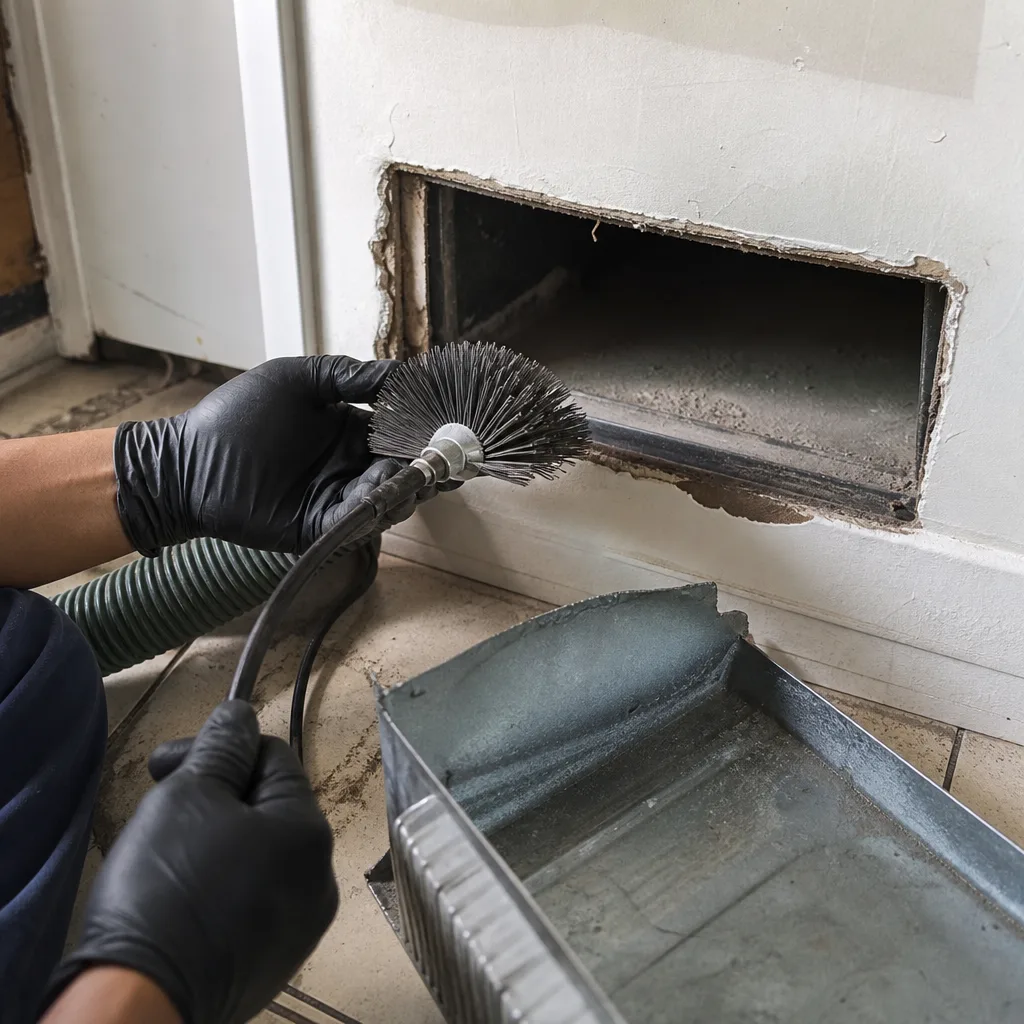
 Whole-home duct cleaning
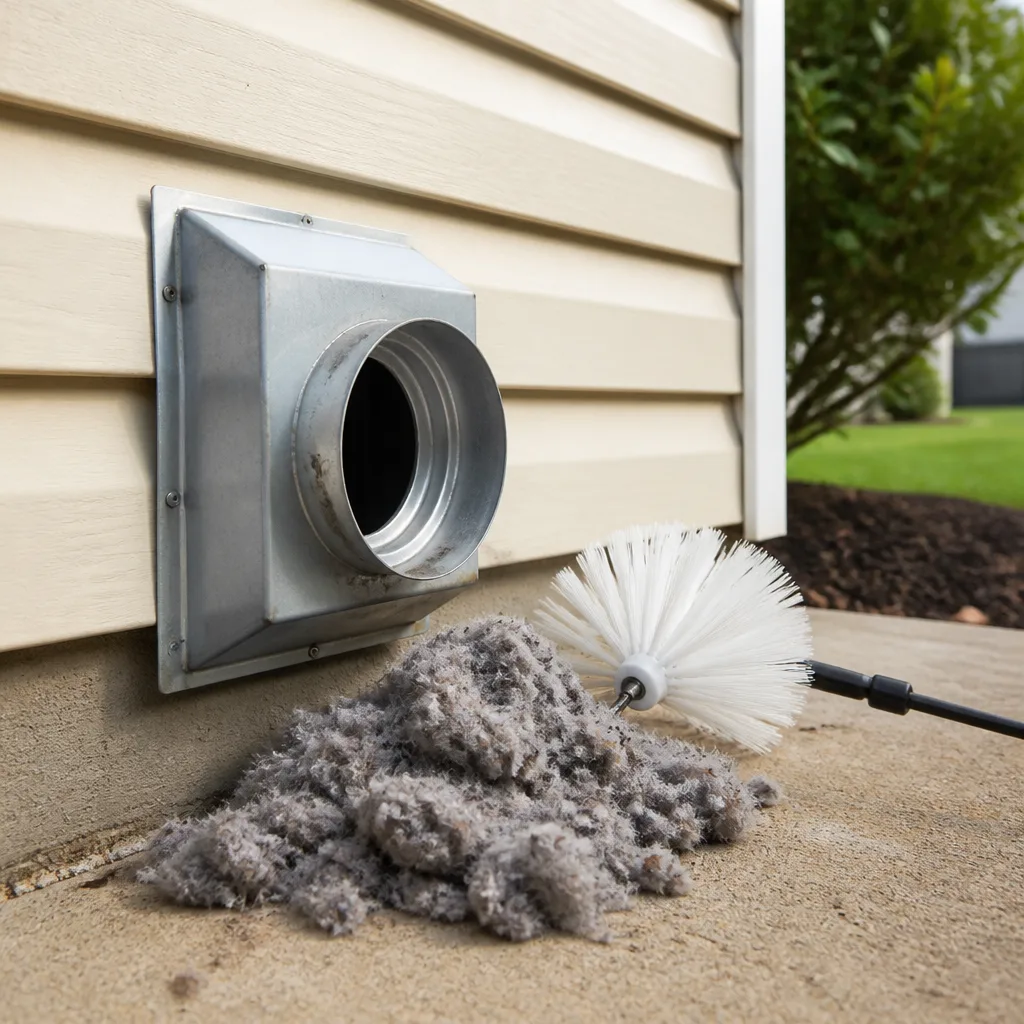 Dryer vent cleaning
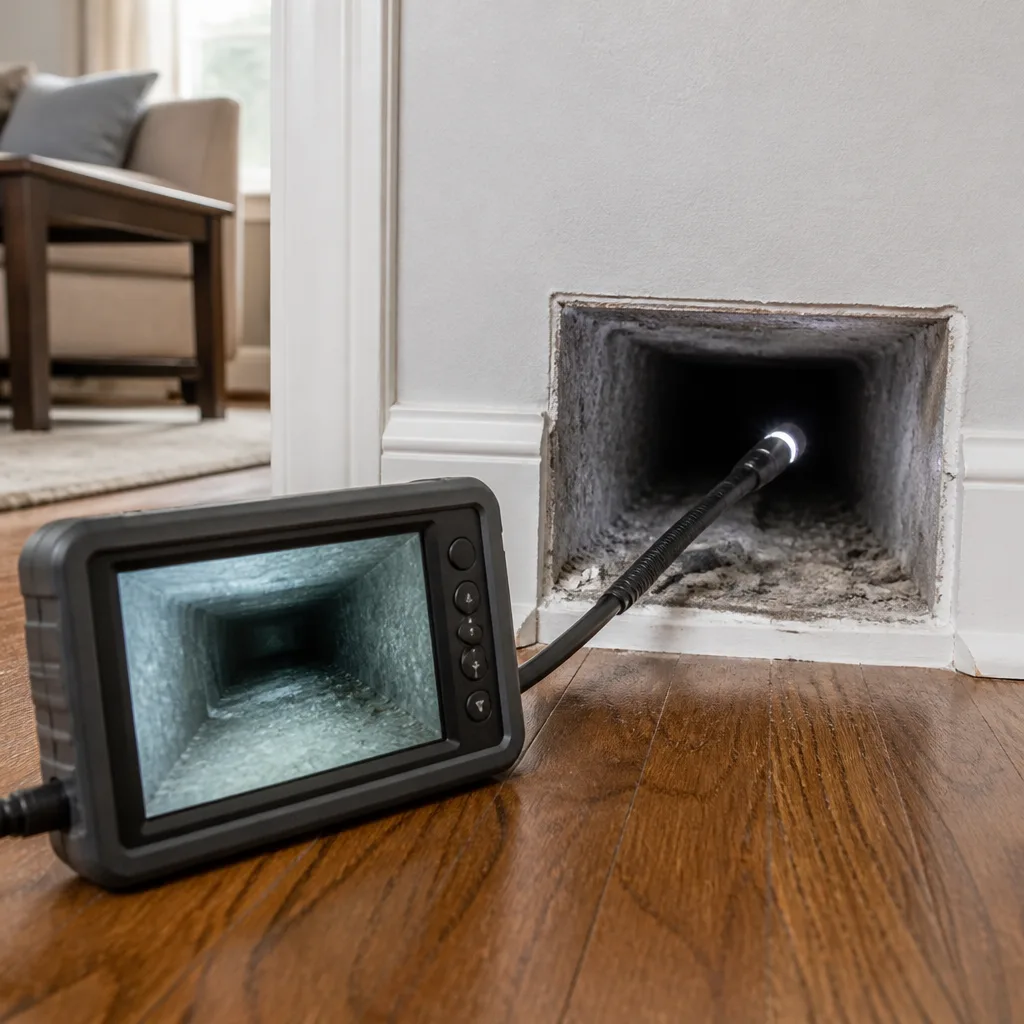 Camera inspection
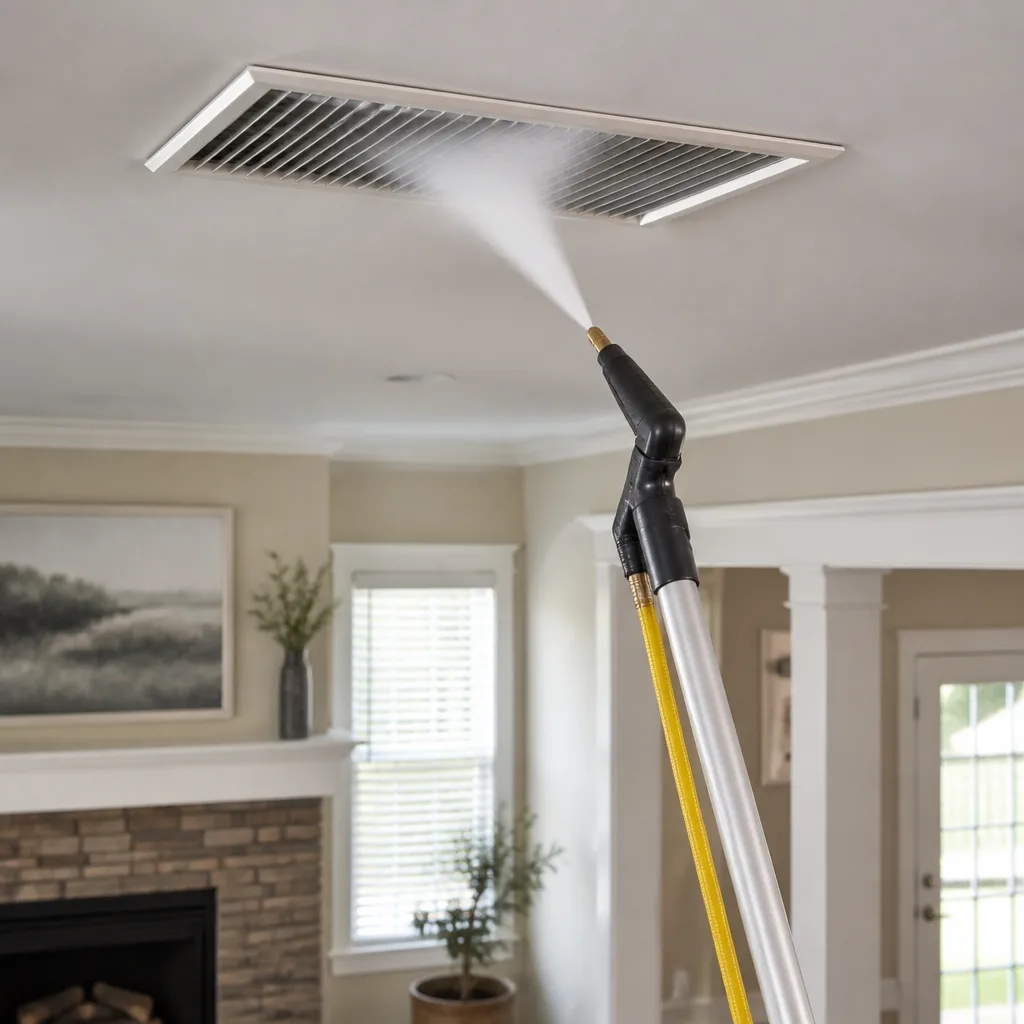 Sanitizing & deodorizing
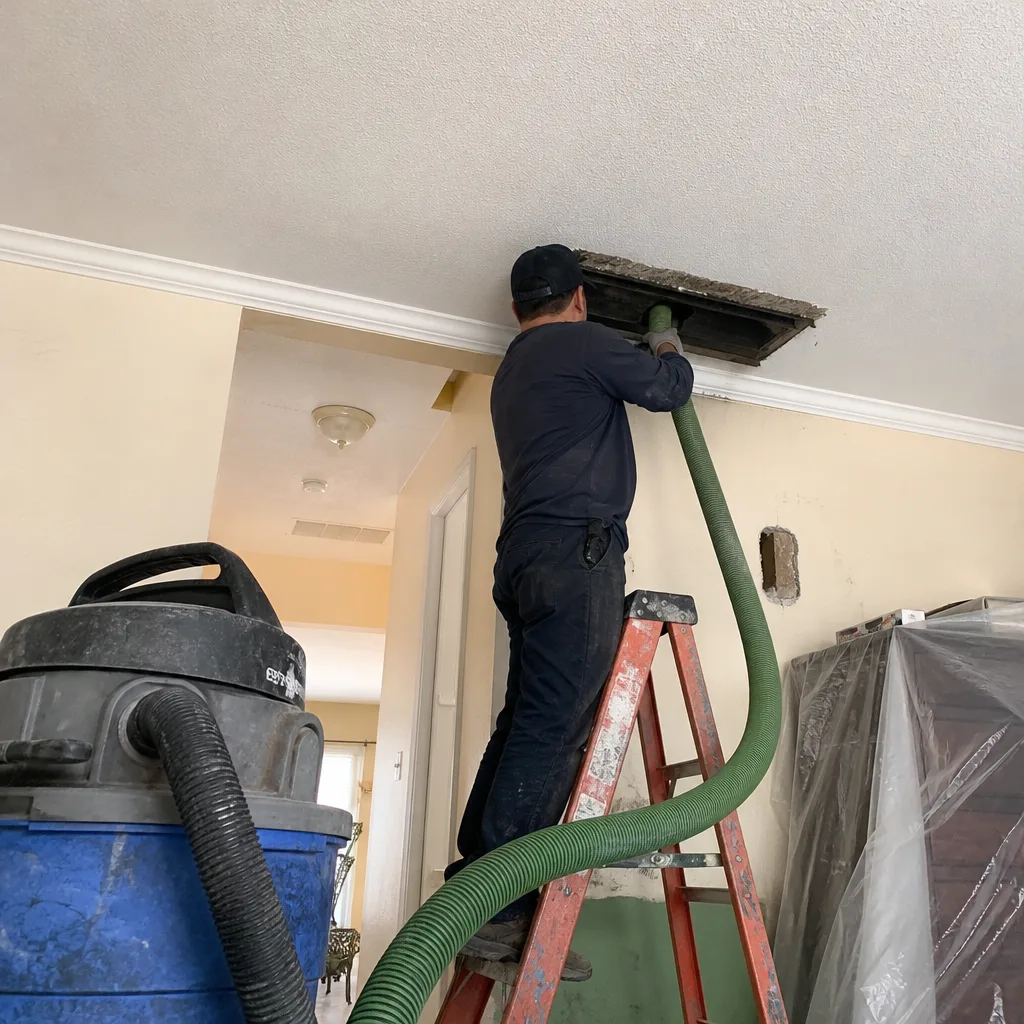
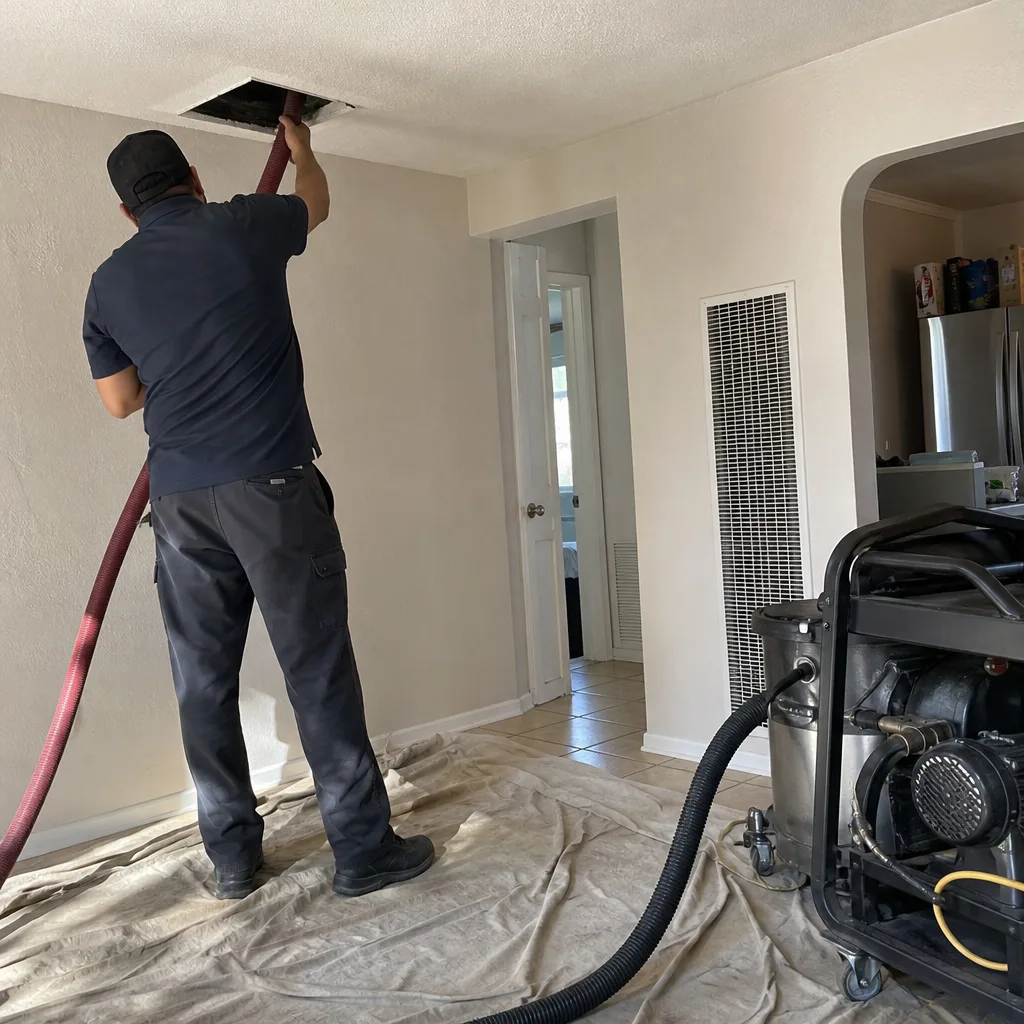
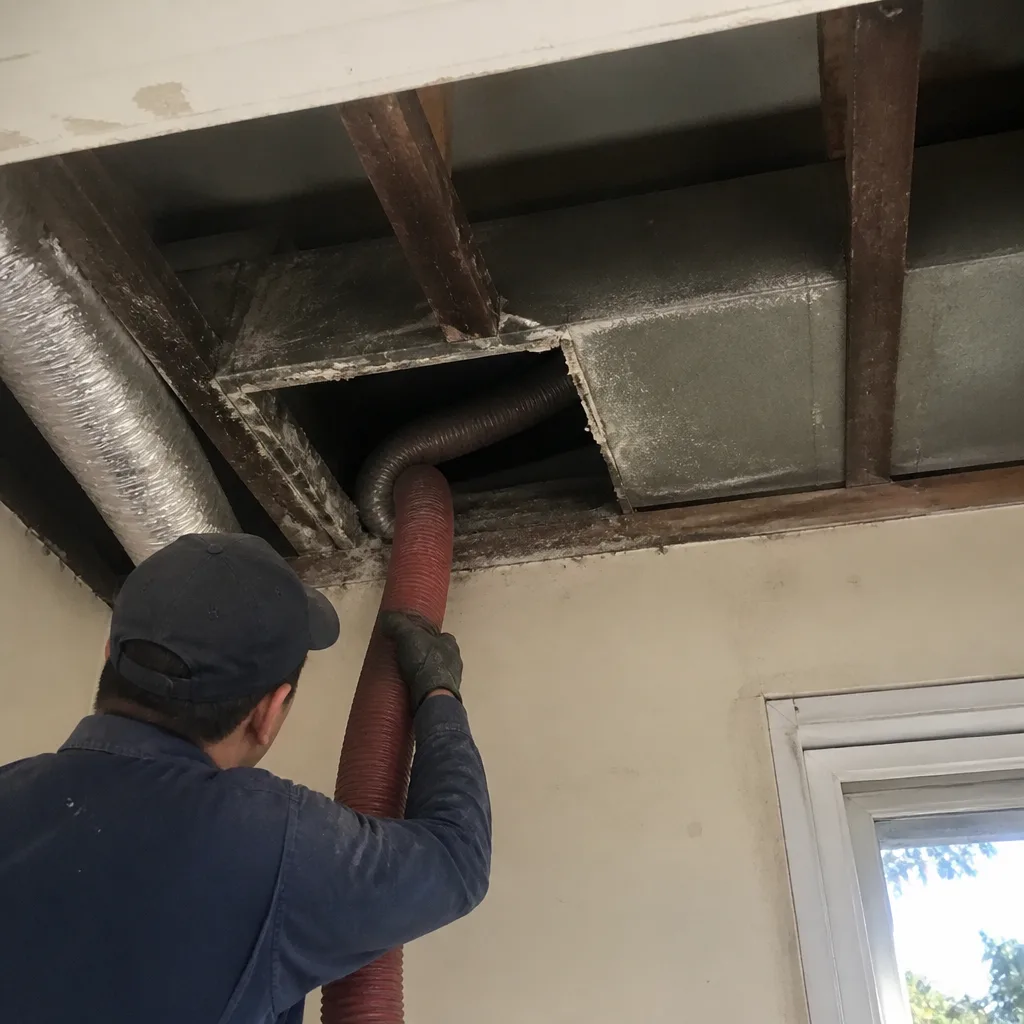
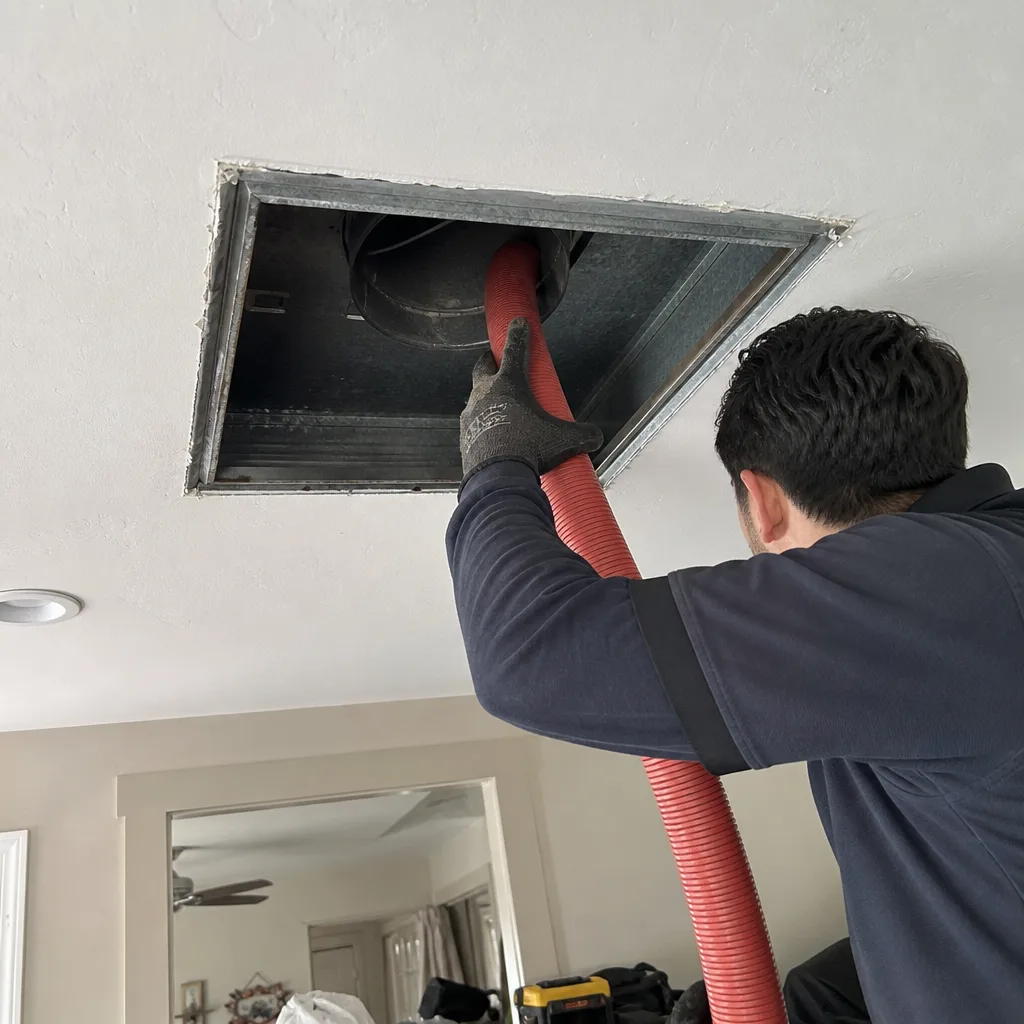
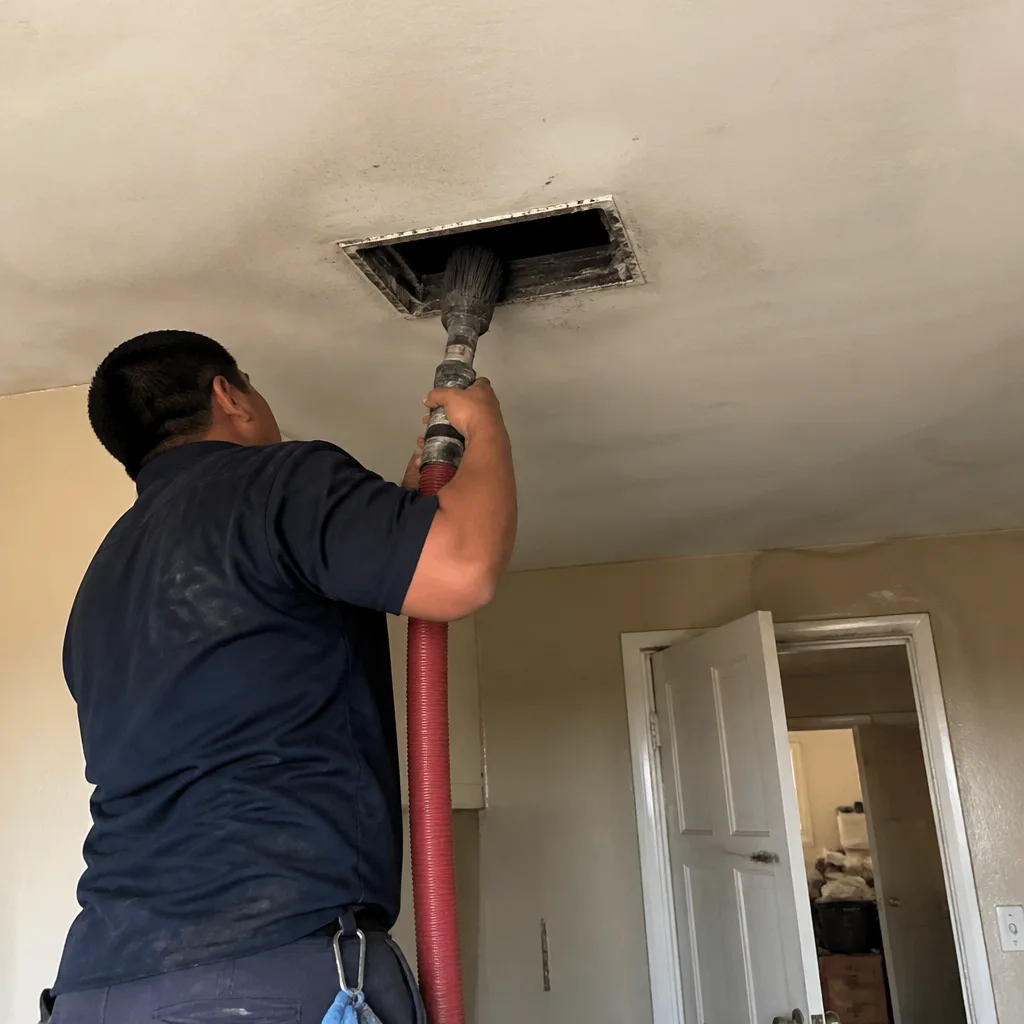
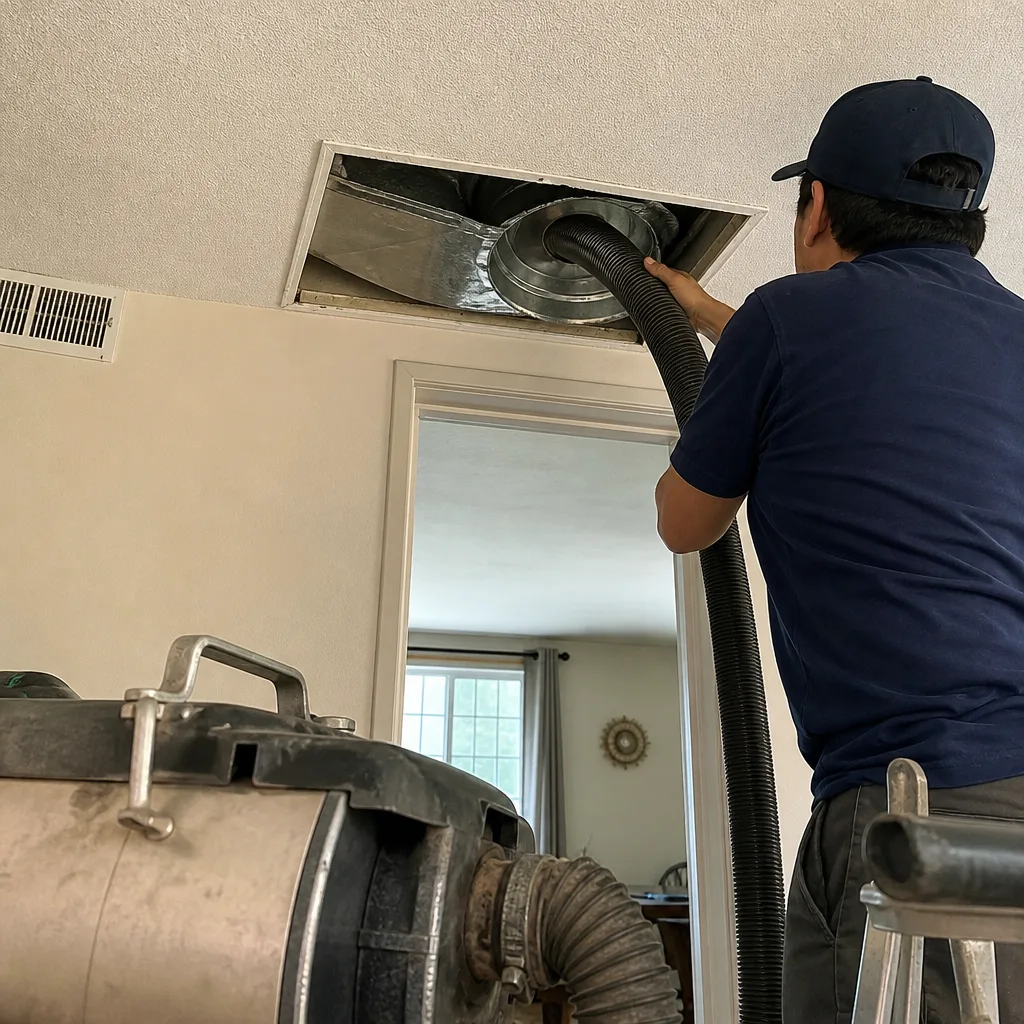
Whole-system duct and dryer vent check with before-and-after photos - you see exactly what came out of your vents
That "$99 whole-house special" is a bait ad - the real number appears once they are in your hallway, or the "clean" is a shop-vac at the register. We photograph the inside of your ducts before and after instead.
Air Duct Cleaning Warning Signs: A Monterey Park Homeowner’s Reference Guide
If one room in your Monterey Park house is consistently five degrees warmer than the rest and your HVAC system has been maintained on schedule, the cause is more likely a blocked or collapsed branch duct than an undersized unit. A camera scope will confirm it in minutes. Most warning-sign guides dwell on the obvious – visible mold, a smell you can’t place – but by the time you’re seeing or smelling a duct problem, it has usually been developing for months. This reference focuses on the early, measurable signals: airflow imbalance you can check with a tissue, filter loading rates that changed without explanation, and system behavior that points to duct trouble before it becomes a visible disaster. By the end, you’ll know exactly which signs warrant a call for air duct cleaning in Monterey Park and which ones mean something else entirely.
Styles & brands we work with
- Whole-home duct cleaning
- Dryer vent cleaning
- Camera inspection
- Sanitizing & deodorizing
Quick Answer
The most common early warning signs of air duct trouble in Monterey Park are airflow that is noticeably weaker in one or two rooms, a filter that loads noticeably faster than it used to, a persistent musty or burning odor that gets stronger when the HVAC runs, and visible dust accumulating quickly on surfaces after cleaning. Any of these, alone or in combination, justifies a professional duct inspection – especially if the house predates 1990 or recently went through a renovation.
Table of Contents
- Airflow Imbalance: The Register-by-Register Test
- Filter Loading Rate as a Diagnostic Tool
- Odor Taxonomy: What Different Smells Actually Indicate
- Post-Renovation Contamination: The Overlooked Trigger
- Dryer-Specific Warning Signs Most Guides Ignore
- Odd Noises and System Cycling Changes
- Moisture, Condensation, and Mold Indicators
- Common Mistakes to Avoid
- When to Call a Professional
- Frequently Asked Questions
- The Bottom Line
Airflow Imbalance: The Register-by-Register Test
Airflow imbalance is the single most reliable early indicator of a duct problem, and it is also the one most Monterey Park homeowners miss because they attribute the temperature difference to sun exposure or an aging system. Here is the thing: a well-designed duct system delivers relatively even air pressure to every register in the house. When a branch duct starts to collapse, disconnect, or fill with debris – and in our experience, older Monterey Park homes built in the 1950s through 1970s are especially prone to this – the pressure drop shows up as a weak stream of air at one or two specific registers.
The test is simple and takes under ten minutes. Here is the step-by-step version:
- Set your thermostat to “fan on,” not heat or cool. You want the blower running without the temperature cycling.
- Tear a single-ply tissue into strips roughly two inches wide and six inches long.
- Walk to each supply register in the house, hold the tissue strip about six inches from the vent, and watch how far it moves.
- Note which registers produce a strong, steady deflection and which ones barely move the tissue at all.
- Compare the weak registers against the floor plan. If a weak register is isolated to a single room or one side of the house while the rest are strong, you likely have a duct restriction, not an HVAC problem.
In the San Gabriel Valley, our hot, dry summers mask this symptom because homeowners run the AC constantly and assume any room that reaches the thermostat setting is fine. The problem is that the system is working harder and longer to compensate for the restricted duct. That means higher energy bills and accelerated wear on the blower motor. If the airflow check reveals an imbalance, the next step is a camera scope inspection of the duct runs serving those weak registers. We have found everything from collapsed flex duct to decades of construction debris to a disconnected branch that had been dumping conditioned air into the attic for years. None of these problems show up on a basic filter change.
This is also where air duct repair in Monterey Park becomes relevant. Cleaning cannot fix a collapsed or disconnected duct. The right response is to scope the system, identify the structural fault, and repair it – which is why our service model pairs cleaning with repair capability under one roof. Most duct cleaning companies do not offer this, which means their technicians find the problem and then leave you to find another contractor to fix it.
Filter Loading Rate as a Diagnostic Tool
Your HVAC filter is a data log that you are probably throwing away every 30 to 90 days without reading. The rate at which a filter loads with particulate is one of the most underused diagnostic signals in residential HVAC, and it can tell you more about duct condition than any visual inspection of the filter itself.
Here is the framework used in professional diagnostics. A standard 1-inch pleated filter in a Monterey Park home with average occupancy and no pets will typically load to visible gray discoloration in about 45 to 60 days. If you are seeing that same level of discoloration in 20 to 30 days – or less – and nothing else about your household habits has changed, something upstream is generating excess particulate. The usual suspects are:
- A duct system that has accumulated years of dust, pet dander, and skin cells that is recirculating through the system every time the blower runs.
- A return-side leak pulling unfiltered attic or crawlspace air into the system – common in older Monterey Park homes where return ducts were improvised during retrofits.
- A collapsed or sagging section of flex duct that has created a low point where debris collects and gets periodically stirred up.
The actionable step is to start tracking your filter loading. Note the install date on a piece of painter’s tape on the filter door, and check the filter at 30 days. If it looks like it used to look at 60, you have data, not guesses. That data is exactly what we use when deciding whether a duct system needs cleaning or whether the real issue is a return-air leak that cleaning would not address. This is the difference between treating symptoms and solving the problem at the source. As a company that runs professional-grade Rotobrush and Nikro systems rather than consumer-grade vacuums, we see the full range: filters that load in two weeks because the ducts are essentially a decades-old dust reservoir, and filters that never load because the return duct has disconnected entirely and the system is pulling attic air.
Monterey Park’s location also matters here. The city sits at the western edge of the San Gabriel Valley, and homes in the lower elevations near Garvey Avenue and the 60 freeway corridor see more road dust and freeway particulate than homes up in the hills. If you live near a busy arterial, expect faster filter loading as a baseline. What you should not accept is a sudden change in loading rate with no corresponding lifestyle change. That change is a signal, and the signal usually points to the duct system.
Odor Taxonomy: What Different Smells Actually Indicate
“Strange odor from vents” is the warning sign most guides mention, but almost none of them distinguish between the specific smells, and the distinctions matter enormously. A musty smell points one direction. A burning smell points another. A chemical smell points yet another. Treating all three as the same problem leads to wasted money and a problem that persists.
Musty or damp-earth smell
A musty smell that intensifies when the blower kicks on typically indicates microbial growth inside the duct system or in the air handler. In Monterey Park’s climate, the risk window is not winter – it is late summer and early fall, when we run AC constantly and condensation forms on the evaporator coil. That condensation drains, but if the drain pan is cracked, the drain line is clogged, or the duct insulation has wicked moisture at some point, the result is a persistent musty odor. This is not a smell to mask with air fresheners. It warrants a camera inspection of the supply and return plenums and the coil area. If growth is present on hard surfaces, cleaning needs to be paired with the right equipment. Our team has worked with Abatement Technologies equipment on air quality jobs where standard surface cleaning would not address the full scope of the issue.
Burning or hot-dust smell
That dusty burning smell on the first cold morning of the year is the most common odor complaint we hear in Monterey Park. It is usually exactly what it sounds like: dust that settled on the heat exchanger or electric heating elements over the summer burning off when the furnace first runs. A short-lived version of this, lasting minutes, is normal. A burning smell that persists, or one that smells like plastic or electrical insulation rather than dust, is not normal and should be addressed immediately by an HVAC technician before the system runs again. That is a component-level problem, not a duct problem.
Chemical or solvent smell
Chemical odors from vents almost always have an external source. Spray foam recently applied in an attic, paint, flooring adhesive, or even a spilled solvent in a garage can infiltrate the return side of the duct system and distribute the smell through the entire house. If you have recently renovated, this is the first thing to investigate. Duct cleaning can help in cases where the VOC source has dissipated but the odor has adhered to duct surfaces, but cleaning cannot remove an active source. Find and eliminate the source first.
The taxonomy matters because each smell dictates a different response. Homeowners who call a duct cleaning company for a burning smell are usually calling the wrong trade entirely. Homeowners who call for a musty smell are usually calling the right one but often too late. If you are ever unsure, a camera scope of the duct system costs far less than cleaning the entire system and will usually identify or rule out the ducts as the source within an hour. For Monterey Park homeowners who want to start with a professional assessment, our Duct Cleaning Monterey Park home page outlines the full scope of what an inspection covers.
Post-Renovation Contamination: The Overlooked Trigger
Here is one of the most actionable signals in this entire guide, and it is one almost no other warning-sign article covers: any renovation in any part of the house is a reliable trigger for a duct inspection. Not the room adjacent to the HVAC closet. Not the room with the return grille. Any room, anywhere in the house.
The reason is straightforward. HVAC systems create negative pressure zones that actively pull airborne particulate toward the return side. That means the drywall dust from a bedroom at the back of the house does not stay in that bedroom. It gets pulled down the hall, into the return grille, through the return ducts, past the filter, and into the blower and coil. If the system runs during the renovation – and in Monterey Park’s climate, it almost always does – the duct system becomes the collection point for the entire project’s airborne debris.
What we typically find after a renovation includes:
- Fine drywall dust coating the inside of the supply plenum and the first several feet of the main trunk line.
- Debris settled in the return boots and low points of return flex duct.
- Paint overspray or construction debris that entered through floor registers that were not properly sealed during the project.
- Filter material that loaded with drywall dust and was then left in place, allowing dust to bypass around the frame.
The practical recommendation for any Monterey Park homeowner is simple: if you have done any work that produced dust – a kitchen remodel, a bathroom remodel, flooring replacement, wall removal, even a major repaint with sanding – schedule a duct inspection before you declare the project complete. The cost of a post-renovation duct cleaning is a small percentage of the renovation budget, and it prevents a situation where your newly renovated room is served by air that is being pushed through a layer of construction dust. This is also one of the situations where a Honeywell or Aprilaire filtration upgrade makes sense: if you are going to invest in clean ducts after a renovation, pairing them with upgraded filtration protects that investment over the long term.
Dryer-Specific Warning Signs Most Guides Ignore
Duct cleaning guides nearly always focus on the HVAC system, but dryer vents are a duct system too – one that carries lint, moisture, and heat and that runs through walls, floors, and attics. In Monterey Park, where many homes have laundry areas in the garage or in interior closets with long vertical dryer vent runs, the warning signs of a restricted dryer vent are specific and detectable. And unlike HVAC ducts, a restricted dryer vent is a fire safety concern, which is why dryer vent cleaning in Monterey Park is part of what we do as a full-scope duct company.
The warning signs that matter:
- Extended dry times. If a load that used to dry in one cycle now requires two, or if you find yourself running the dryer twice for towels, the vent is restricting airflow. A dryer with a restricted vent cannot remove moisture efficiently, and it is also working harder – which means higher utility costs and more wear on the heating element.
- Exterior vent flap that does not open fully. The flap on the exterior vent hood should be clearly lifted and open when the dryer is running. If it is barely moving, or if it is fluttering weakly, airflow is restricted somewhere between the dryer and the exterior. Do not test this with your hand over the vent – just visually observe the flap movement while the dryer is on.
- Lint on surfaces near the dryer. Lint should exit the vent, not the dryer cabinet. If you are finding a fine layer of lint on shelves, the wall, or the floor near the dryer, the vent is either disconnected, leaking at a joint, or so restricted that lint is backing up into the laundry area. The same applies to lint visible around the dryer door seal.
- Laundry room that is warmer or more humid than the rest of the house during a dry cycle. A properly vented dryer exhausts heat and moisture outside. If the heat and humidity are staying in the room, the exhaust path is compromised.
- Burning or hot-fabric smell during drying. Lint accumulation inside the dryer cabinet or at the dryer-to-duct connection is combustible. A burning smell during a dry cycle is not a nuisance; it is a warning. Stop the machine and address the vent.
The structural reality in many Monterey Park homes makes this more urgent. Dryer vent runs in older houses here often go up through the attic and out the roof, or they run horizontally for 15 or 20 feet with multiple elbows. Every elbow is a lint collection point. Every roof termination is a bird nesting point. The National Fire Protection Association has identified dryer vents as a leading cause of residential house fires, and the majority of those fires trace back to lint accumulation in the vent run. A visual check of the exterior vent and an annual professional cleaning of the full run is the practical, high-priority habit here.
Odd Noises and System Cycling Changes
Your duct system should be silent. You should hear the air moving, and nothing else. When a duct system starts producing new noises, or when the HVAC system starts cycling differently than it used to, the duct system is speaking to you.
The noises that matter:
- Popping or banging when the system starts or stops. This is usually a duct wall flexing under pressure change. It can indicate an undersized return system, a sealed-off supply that the system is pushing against, or a sagging duct pannel that moves with the airflow. The noise is not harmful by itself, but the pressure imbalance that causes it reduces efficiency and can eventually separate duct joints.
- Rattling or vibrating from a specific ceiling or wall location. A rattling that appears to come from inside the wall or ceiling when the blower runs suggests a loose duct hanger, a detached joint, or debris trapped inside the duct and vibrating against the duct wall. This is a camera-scope situation.
- Whistling or high-pitched air noise. Whistling indicates airflow passing through a restriction. It can be a nearly closed damper, a crimped flex duct, or a register that is undersized for the room. The restriction is the issue, not the noise.
Cycling changes are equally diagnostic. If your HVAC system used to run for 15 minutes and then rest for 20, and now it runs for 30 minutes with short rests, something has changed in the system’s efficiency. The change could be the outdoor unit, but it is equally often a duct restriction that reduces the system’s ability to deliver conditioned air. The Air Duct Repair in Monterey Park service addresses exactly this category of problem: when the ducts themselves are the bottleneck, repair and sealing restore the system to the airflow the equipment was designed to deliver. Cleaning alone cannot fix a crimped flex run or a separated joint.
Monterey Park’s older housing stock makes this section especially relevant. Houses built in the 1950s and 1960s in the neighborhoods around Monterey Park’s civic center often have original rigid metal ducts that were installed with practices we would never use today: narrow returns, undersized branch runs, and joints that were never sealed. If you are in one of those homes and have noticed a change in noise or cycling, the ducts are the first place we would look.
Moisture, Condensation, and Mold Indicators
Visible mold on registers, grilles, or the walls around supply vents is a late-stage indicator. It means moisture has been present long enough for growth to become visible on surfaces you can see. The earlier, more useful indicators of moisture in a duct system are subtler, and catching them before visible mold appears can save thousands in remediation work.
Early moisture indicators to watch for:
- Condensation on supply registers during cooling season. Small amounts of condensation on the register face during humid weather are not unusual. Consistent condensation, or condensation that drips or stains, indicates that conditioned air is being delivered too cold or that the register is in an unusually humid area. Both situations deserve a look.
- Water stains on ceiling or walls near duct runs. A water stain that follows the line of a duct run suggests condensation forming on the outside of the duct insulation, which usually means the insulation has failed or the duct is sweating. In Monterey Park’s dry climate, persistent duct sweating is not normal and usually points to an insulation or sealing problem.
- Musty smell isolated to one room. If a room smells musty even when the HVAC is off, the issue may be in the duct serving that room, or it may be in the room itself. Scoping that specific branch run is the fastest way to determine which.
- Darkening around the edges of supply registers. This is often the earliest visible sign of moisture-driven growth inside the duct boot. The darkening appears at the register perimeter because that is where the coolest air meets the warmest room air.
When moisture-driven growth is confirmed inside a duct system, cleaning is only part of the response. The source of the moisture has to be identified and corrected or the problem will return. We have worked with Abatement Technologies equipment on jobs where the scope went beyond standard duct cleaning because the air quality concerns were more significant. That equipment matters: it signals the difference between a company that moves dust and one that understands air quality as a system problem. The source correction is typically a duct sealing, insulation repair, or the addition of a dehumidification element – work that falls under the repair side of what we do.
For a full picture of what a professional duct cleaning in your home involves, including how we handle moisture-related findings, see our Air Duct Cleaning in Monterey Park service page.
Common Mistakes to Avoid
- Replacing the HVAC system before checking the ducts. We have seen Monterey Park homeowners spend five figures on a new system when the real problem was a collapsed return or a disconnected branch. Always scope the ducts before you replace equipment. A new system on bad ducts performs like an old system on bad ducts.
- Ignoring one weak register because the rest of the house is comfortable. A single weak register is a localized duct problem, not a comfort problem. It will not get better on its own, and it typically worsens over time as the restriction accumulates more debris.
- Treating all vent odors as the same problem. As covered in the odor section above, a musty smell and a burning smell point to completely different issues. Diagnosing before you act saves money.
- Skipping duct inspection after a renovation. The renovation is done, the dust has settled, and the ducts have silently collected a layer of drywall dust and construction debris. Cleaning before you consider the project complete is the disciplined approach.
- Assuming duct cleaning fixes duct damage. Cleaning removes accumulation. Repair fixes structure. If the duct is collapsed, disconnected, or crushed, no amount of cleaning restores airflow. You need a company that does both.
- Neglecting the dryer vent because the HVAC ducts were cleaned. They are separate systems. A clean HVAC duct system does nothing for a lint-loaded dryer vent, and the dryer vent is the one that carries a fire risk.
- Using consumer-grade equipment for a professional problem. Duct cleaning with a shop vacuum or a rental machine moves visible dust and leaves the fine particulate that professional equipment is designed to extract. If the job is worth doing, it is worth doing with the right tools.
When to Call a Professional
If any of the following apply, a professional duct inspection is the right next step: airflow imbalance confirmed by the register test, a filter loading rate that changed without explanation, a persistent musty odor from vents, a post-renovation dust situation that was never addressed, extended dryer times or a weak exterior vent flap, new popping or rattling from the duct system, or visible condensation that does not resolve. These are all early, actionable signals. Duct Cleaning Monterey Park offers free estimates in Monterey Park – call (866) 413-8552 to schedule a scope and find out whether your ducts are actually the problem before you spend money on a fix.
Frequently Asked Questions
Professional air duct cleaning in Monterey Park typically runs between $300 and $600 for a standard single-family home, depending on the number of systems, the accessibility of the ducts, and the level of contamination. Homes with multiple HVAC systems, significant construction debris, or extensive flex-duct runs will fall on the higher end. Be cautious of quotes significantly below this range; those offers are often tied to a specific room count or applied with aggressive upsell pressure. We quote one flat price per system before the work starts. Call (866) 413-8552 for an exact quote for your home.
Most homes in Monterey Park benefit from a professional duct cleaning every three to five years, assuming normal occupancy and no unusual contamination events. Homes with pets that shed heavily, occupants with allergies or respiratory conditions, or recent renovation history may warrant more frequent cleaning. The best approach is to use the warning signs in this guide as the actual schedule: clean when the ducts signal that they need it, not on an arbitrary calendar.
The most common reason is simple: the cheap quote is a foot in the door, not the final price. The low number applies to a limited scope – often a set number of vents – and the full system is presented as an add-on once the technician is onsite. The second reason is equipment. Professional-grade duct cleaning systems from manufacturers like Rotobrush and Nikro are expensive to own and maintain, and consumer-grade equipment is cheaper to operate but does not extract the same level of particulate. When you compare quotes, ask what equipment the company runs and whether the quoted price covers the entire system, not a vent count.
The most reliable way is to ask for before-and-after photos of your actual ducts. Any company doing honest work will capture interior images with a camera scope before cleaning and after. You should be able to see the difference in the photos. If a company cannot or will not provide interior photos of your system, you have no way to verify the work happened. A second layer of verification is the filter test: note the date you replace the filter after cleaning and observe whether the loading rate improves.
Yes, but not in the way most marketing claims suggest. Dirty ducts alone do not meaningfully increase energy consumption unless the accumulation is severe enough to restrict airflow. What does affect energy use is duct damage – collapsed sections, disconnected joints, or crimped flex runs – because the system has to run longer to deliver the same amount of conditioned air. That is why airflow testing and a camera scope matter: they distinguish between a cleaning problem and a repair problem.
Yes. Monterey Park’s dry climate reduces the risk of microbial growth in ducts compared to humid regions, but it does not eliminate dust, pet dander, renovation debris, or insulation particles. In fact, our hot summer season means the HVAC system runs heavily for four to six months of the year, cycling more air through the ducts and accumulating more particulate than a system in a milder climate. Dry-climate homes deal less with mold and more with volume – and the filter loading test in this guide is the best way to measure your own home’s rate.
The Bottom Line
The most useful warning signs for air duct problems are the ones you can measure: airflow differences between registers, a filter that loads twice as fast as it used to, a dryer that suddenly needs two cycles, a new noise or cycle pattern from the HVAC system. Smells and visible mold are what every guide lists, but they are late-stage signals and often point to problems that could have been caught months earlier. If you find yourself running through the checks in this guide and identifying two or more active warning signs, the cost of a professional inspection is small compared to the cost of an HVAC replacement that was never the problem. Clean ducts, sealed ducts, safe vents – that is our full-scope approach, and it is the standard we apply to every Monterey Park home we serve.
Written by the team at Duct Cleaning Monterey Park, serving Monterey Park since 2013.
See the difference
 Before
 After
 Before
 After
 Before
 After