
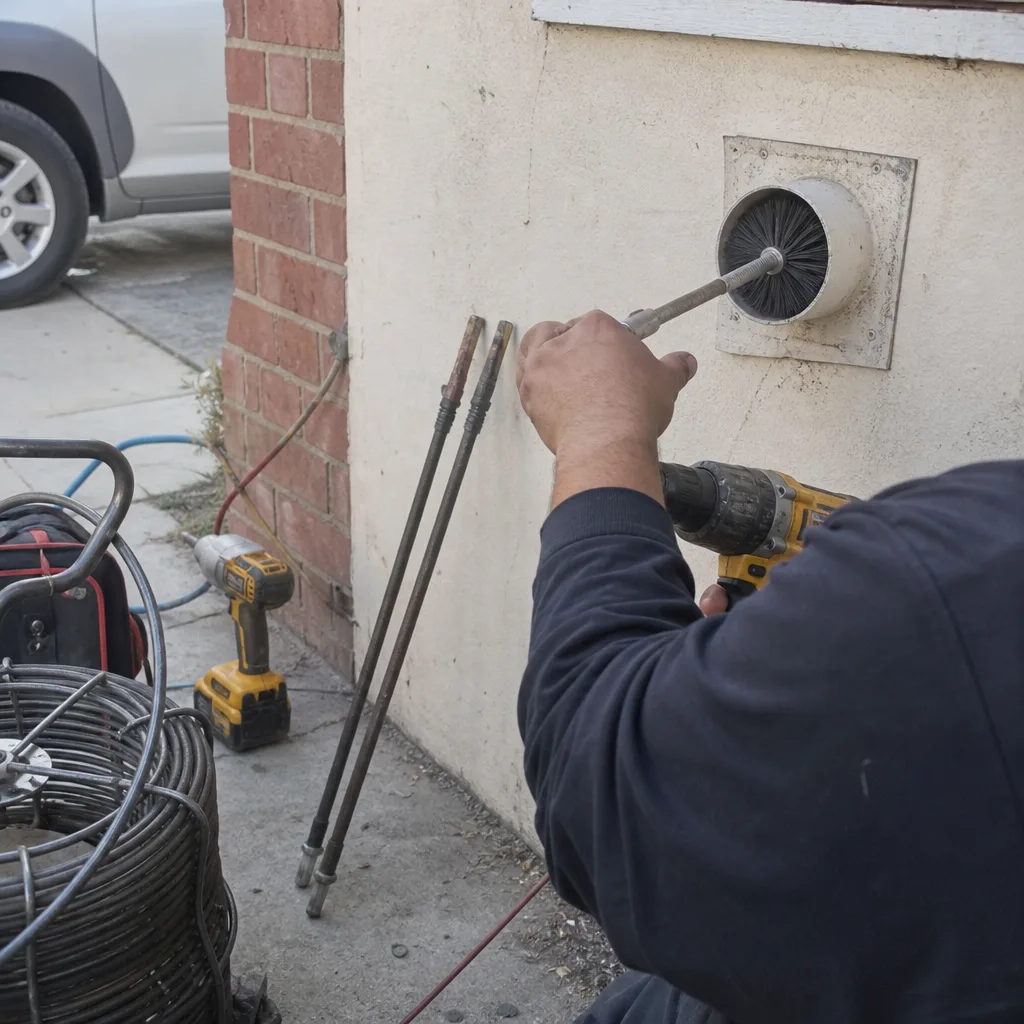
Last updated November 2, 2026
 Whole-home duct cleaning
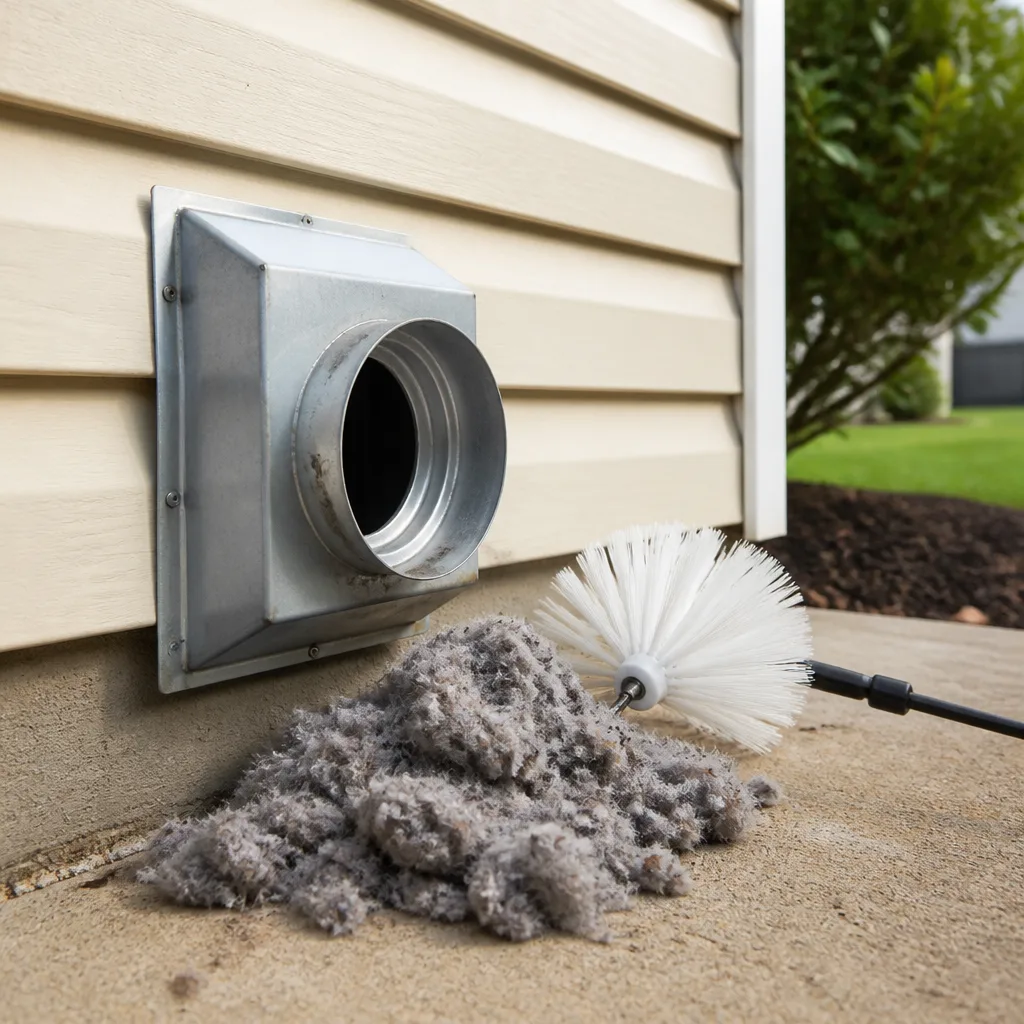 Dryer vent cleaning
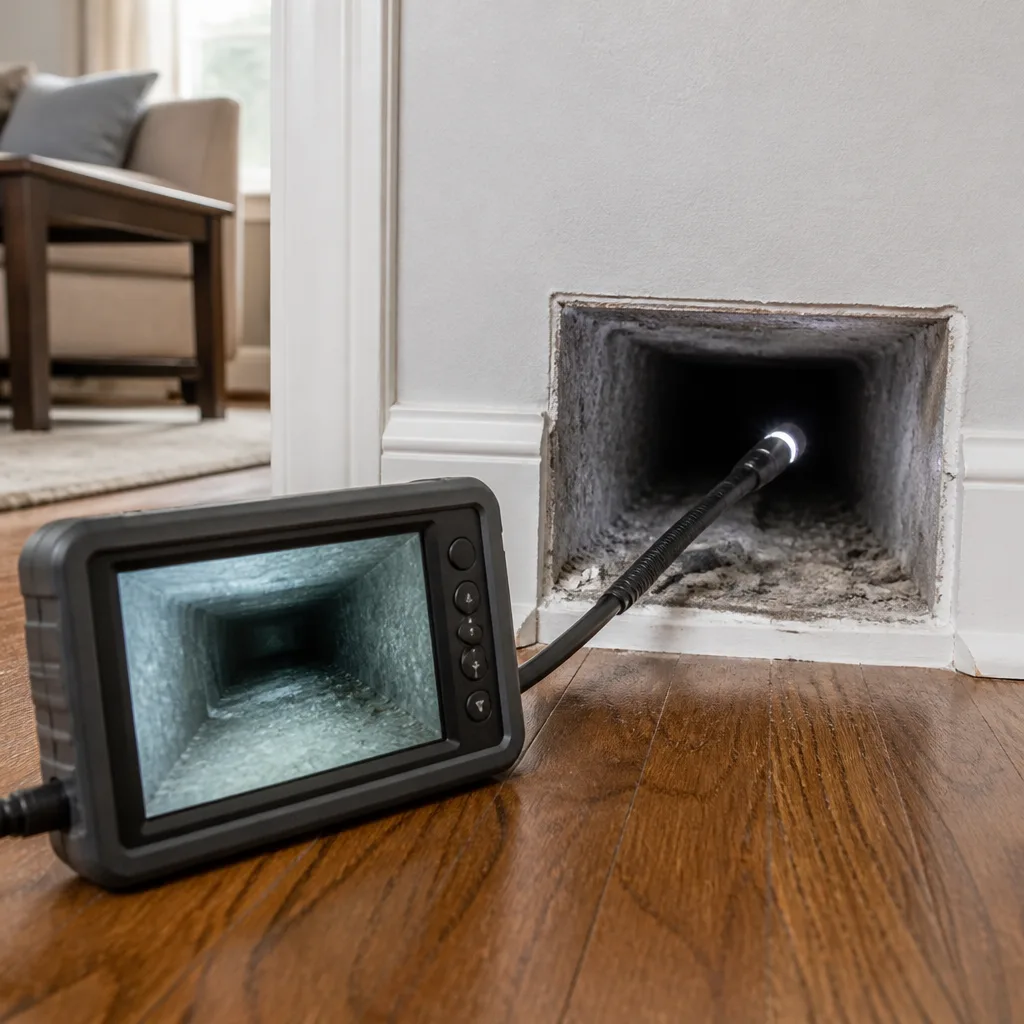 Camera inspection
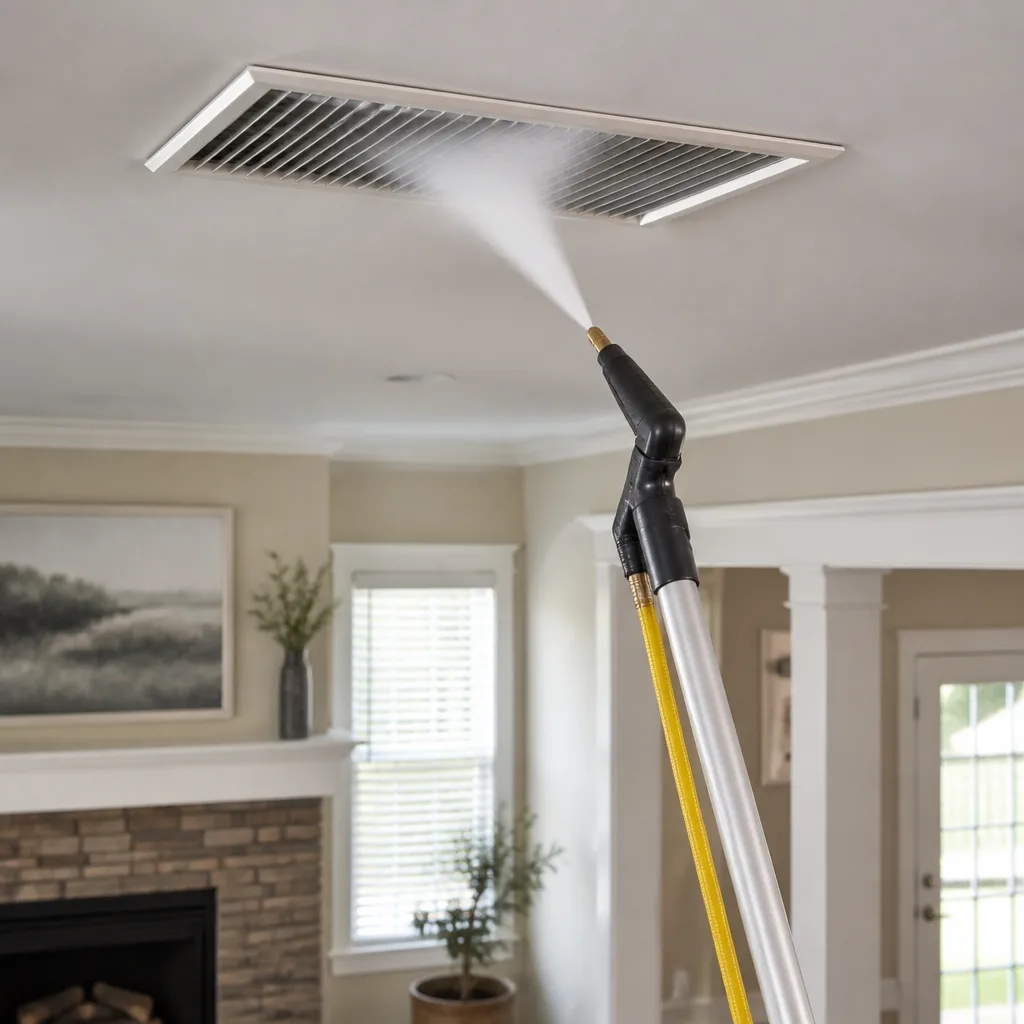 Sanitizing & deodorizing
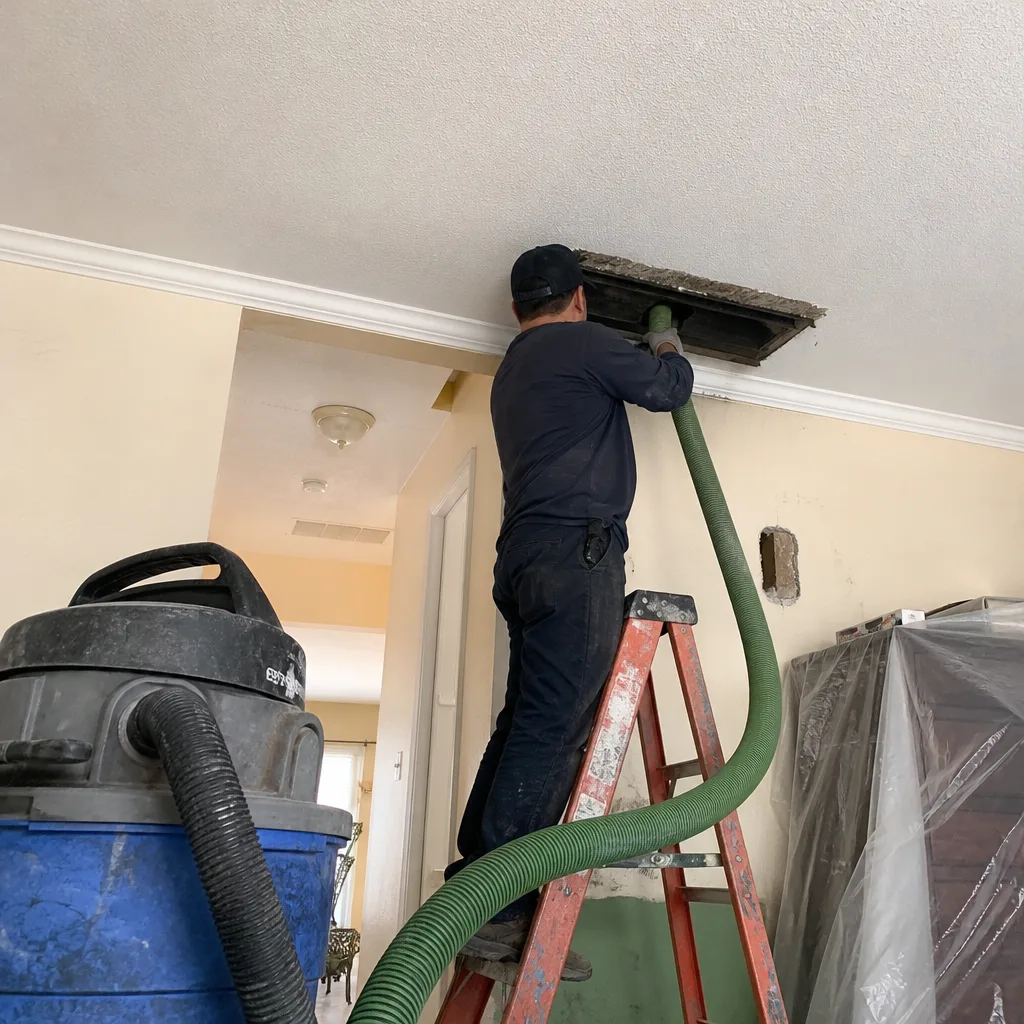
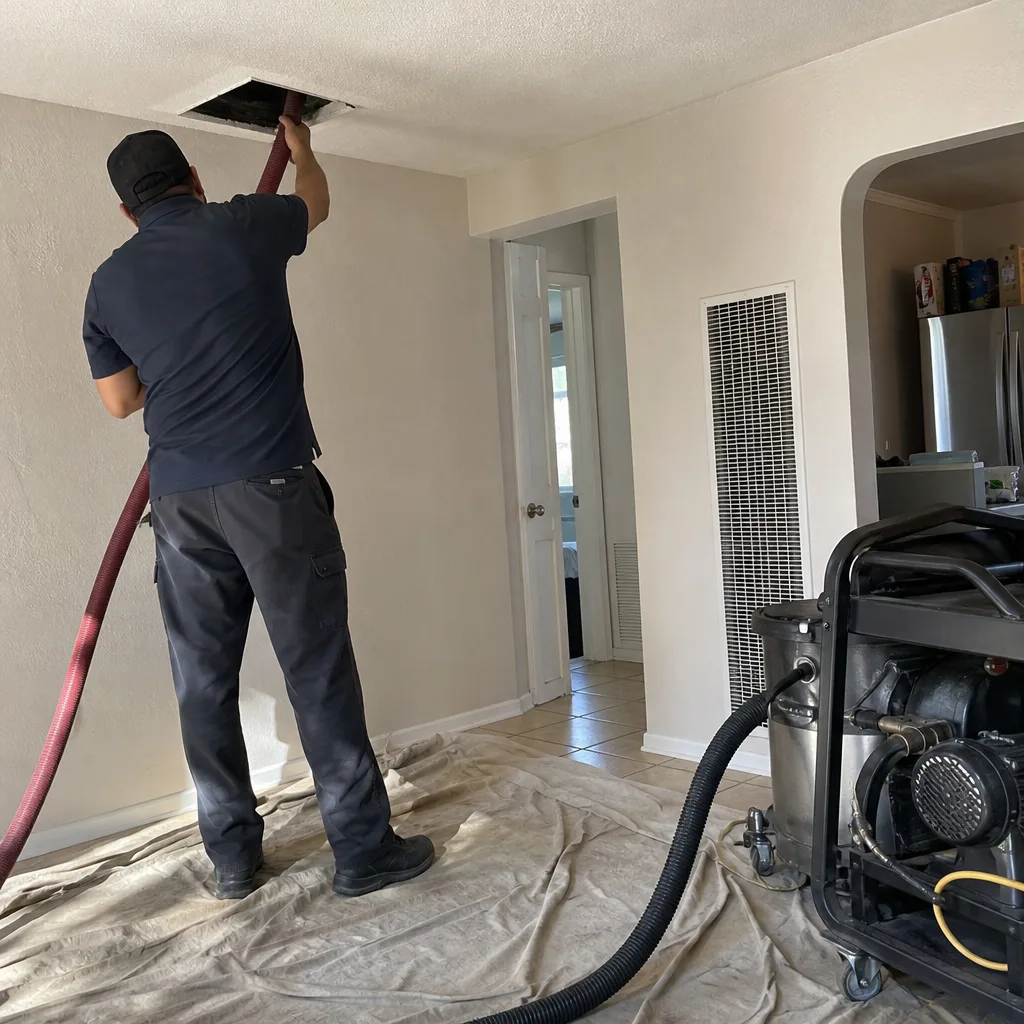
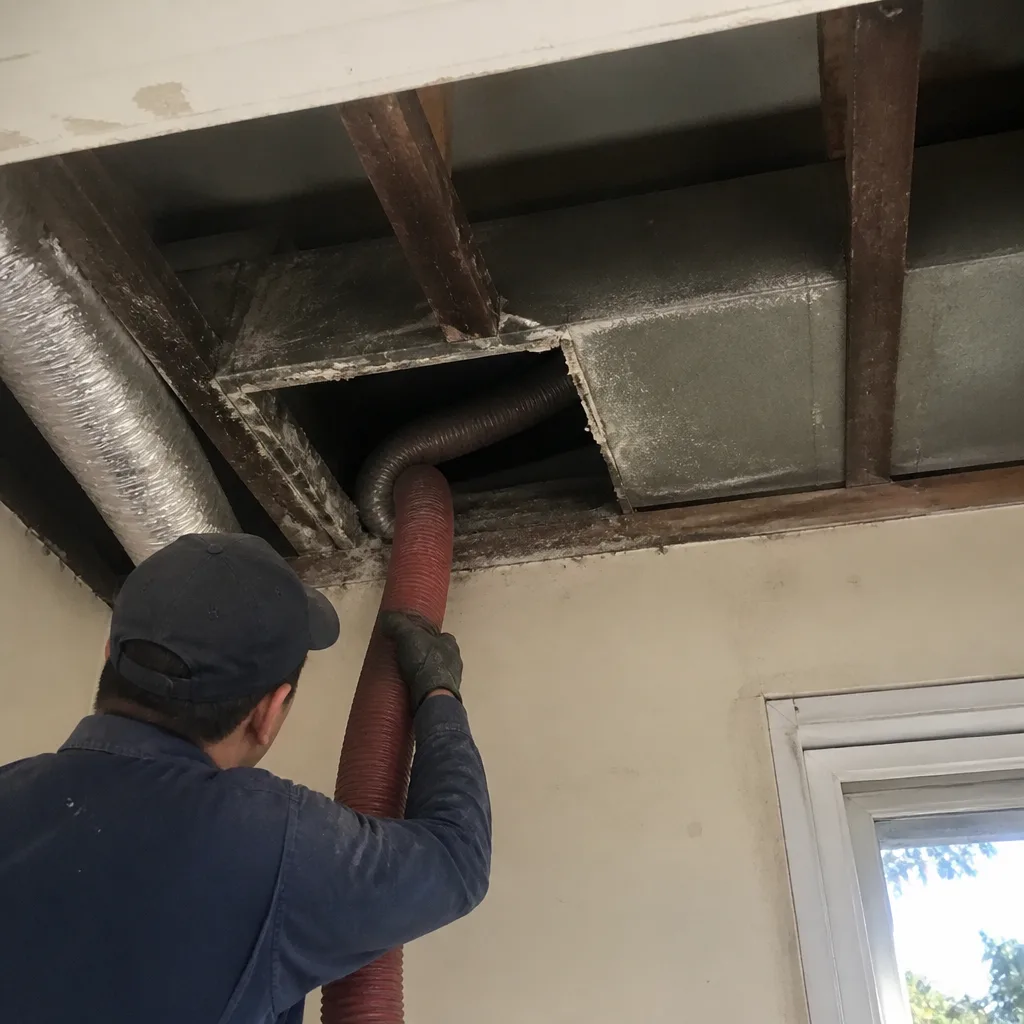
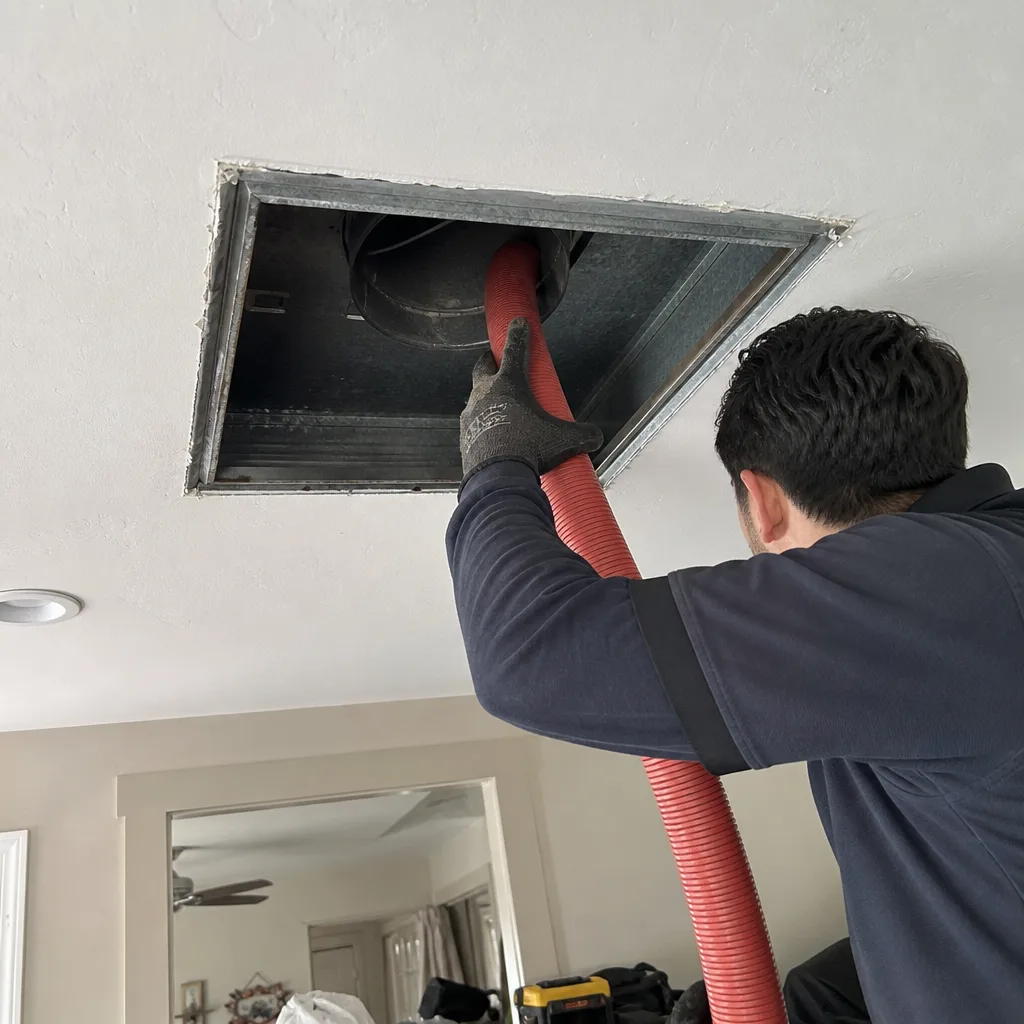
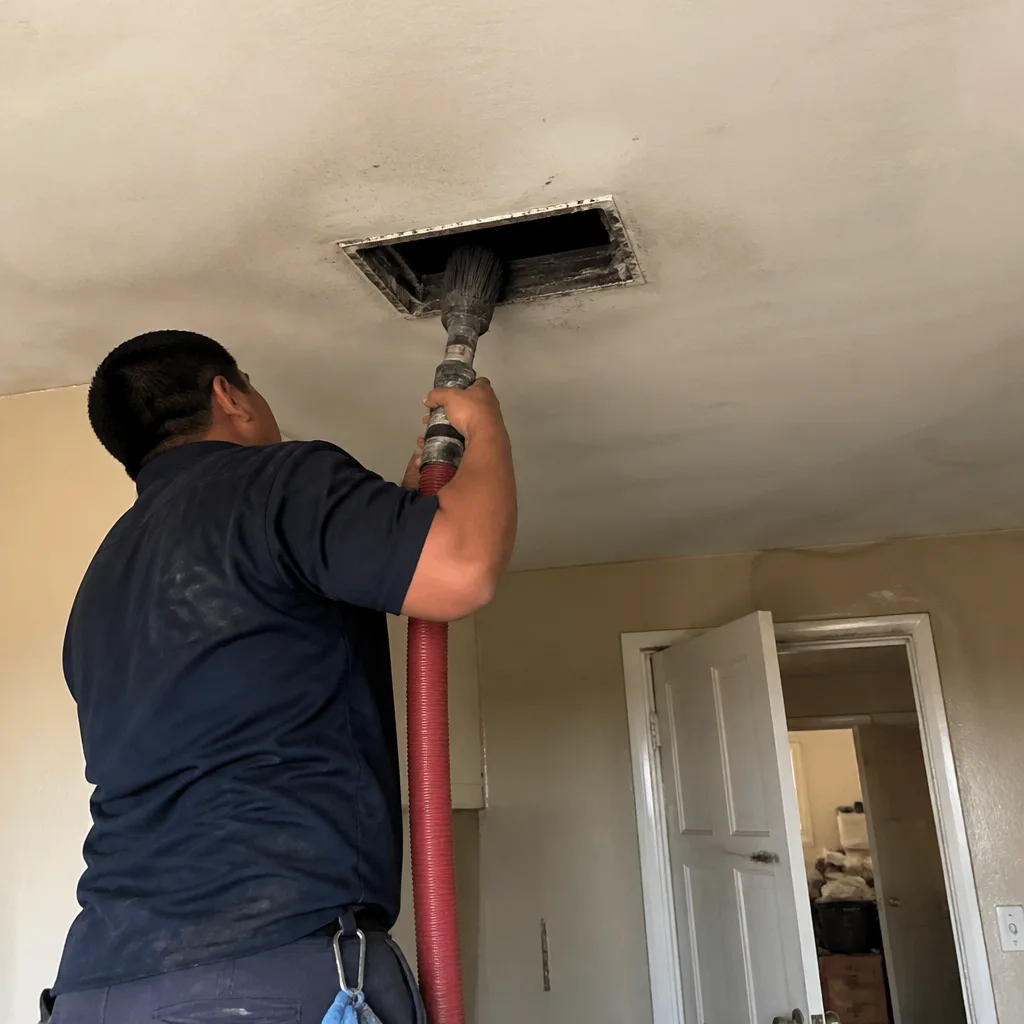
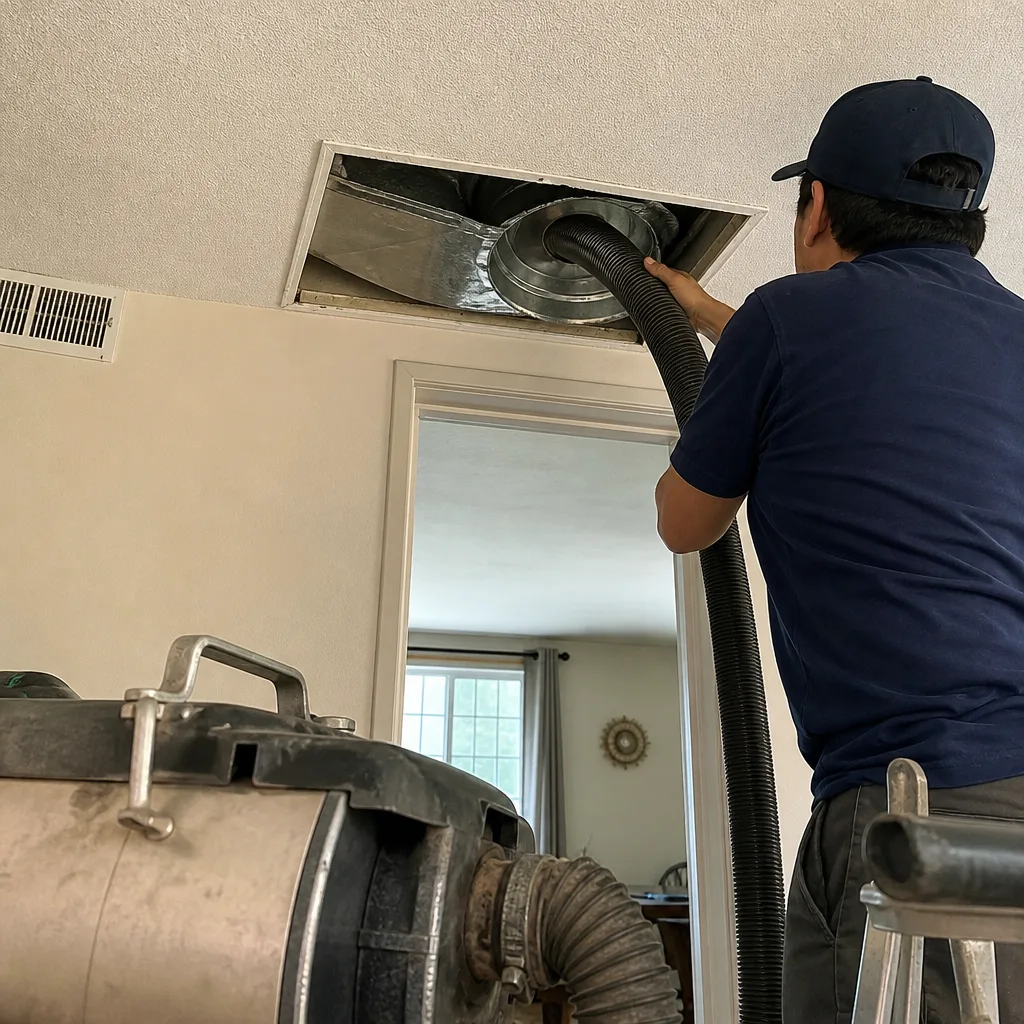
Whole-system duct and dryer vent check with before-and-after photos - you see exactly what came out of your vents
That "$99 whole-house special" is a bait ad - the real number appears once they are in your hallway, or the "clean" is a shop-vac at the register. We photograph the inside of your ducts before and after instead.
Seasonal Air Duct Cleaning Care for Monterey Park: Year-Round Homeowner’s Guide
Most homeowners in Monterey Park schedule duct cleaning the same way they schedule gutter cleaning: when something looks dirty enough to notice. The problem is that your ductwork hides its worst contamination during exactly the months you’re least likely to look. The October Santa Ana season pushes fine wind-driven particulate deep into return ducts, and by the time spring arrives and you finally schedule service, that material has had six months to compact, absorb moisture, and work its way toward your evaporator coil. This guide explains what actually happens inside your ducts during each Monterey Park season, what to check, and when Air Duct Cleaning services make a measurable difference.
Styles & brands we work with
- Whole-home duct cleaning
- Dryer vent cleaning
- Camera inspection
- Sanitizing & deodorizing
Quick Answer
Seasonal air duct care in Monterey Park should focus on four windows: late fall after the first Santa Ana events (check return grilles and filter seats for fine dust bypass), winter’s light-use period (watch for musty startup smells indicating moisture accumulation), spring before cooling season (inspect supply boots for settled debris), and summer’s peak AC load (monitor filters at shorter intervals and feel for reduced register airflow). A professional cleaning is most effective when timed for late fall or early spring, and dryer vent monitoring should happen year-round regardless of HVAC season. See Air Duct Cleaning Emergency Preparedness Guide for Monterey Park Homes for related planning.
Table of Contents
- Fall: Post-Santa Ana Inspection Priorities
- Winter: What Low-Use Periods Do to Duct Systems
- Spring: Pre-Cooling Season Checks
- Summer: High-Load AC Operation and Filter Management
- Year-Round: Dryer Vent Monitoring
- How to Know Your Ducts Actually Need Cleaning
- What to Check Yourself vs. What a Professional Should Handle
- Common Mistakes to Avoid
- When to Call a Professional
- Frequently Asked Questions
- The Bottom Line
Fall: Post-Santa Ana Inspection Priorities
Monterey Park’s fall is defined less by dropping temperatures and more by the Santa Ana wind events that typically begin in October and peak through November. These northeast winds carry fine dust, pollen, and occasionally wildfire smoke particulate from inland areas directly across the San Gabriel Valley. When winds gust 30 to 50 mph, the air pressure differential across your home’s envelope forces outdoor air through every gap: window seals, door thresholds, attic penetrations, and especially the return air path of your HVAC system.
What most homeowners don’t realize is that Santa Ana particulate behaves differently from ordinary household dust. It’s finer, denser, and carries mineral content that makes it slightly abrasive. When it enters return ducts, it doesn’t just settle passively. It coats the interior surfaces, including the return plenum, the filter housing, and the first few feet of return ducting. Over time, this layer builds up and begins restricting airflow even before you see any visible dust on your registers.
What to Check After the First Santa Ana Event
- Return grille loading: Remove the return grille (most Monterey Park homes built in the 1950s through 1980s use standard stamped steel grilles held by two Phillips screws). Hold it up to a light. If you see more than about 30 percent of the grille slots blocked by accumulated dust, your return path is already restricted.
- Filter bypass gaps: Look at the filter slot where your filter sits. Run your finger around the edges of the installed filter. If you can feel a gap larger than about 1/8 inch between the filter frame and the housing, air is bypassing the filter entirely during high-static events like Santa Ana winds. This is one of the most common sources of duct contamination we encounter in Monterey Park homes.
- Smoke particulate versus standard dust: Wildfire smoke particulate looks fundamentally different from household dust. Standard dust is gray, fluffy, and distributed evenly. Smoke particulate is darker, often with a brown or black tint, and it adheres to surfaces in a fine film rather than accumulating as loose particles. If you wipe a white paper towel inside your return duct and the residue is gray and greasy rather than light and fluffy, you’re seeing smoke-derived contamination that should be professionally removed rather than wiped.
- Outdoor air intake locations: Walk around your home during a windy day and note where outdoor air is being drawn in. Fresh air intakes, crawl space vents, and garage-to-house door gaps all contribute to duct contamination when winds are sustained. Homes on the north side of Monterey Park near hillside exposures typically see higher wind-driven dust loading than homes in more sheltered central neighborhoods.
The right time to schedule professional air duct cleaning in Monterey Park is after the first significant Santa Ana event, not before. Cleaning before the winds arrive simply means you’ll have a contaminated system again within weeks. Cleaning after means you remove the season’s worst loading before it has months to compact and work deeper into the system.
Winter: What Low-Use Periods Do to Duct Systems
Monterey Park winters are mild by most standards, with daytime highs typically in the 60s and 70s and overnight lows rarely dipping below 40. That means many HVAC systems in Monterey Park run very little from December through February. This low-use period creates a specific set of conditions that don’t occur during summer’s constant operation.
The issue is condensation. When your system runs regularly, airflow through the ducts keeps interior surfaces relatively dry. During winter’s light usage, any moisture that enters the system, from bathroom venting, cooking steam, or small roof leaks, stays in place much longer. This creates the perfect environment for biofilm to develop on interior duct surfaces. Biofilm is a thin bacterial and fungal layer that adheres to duct walls and doesn’t blow away with normal airflow. Once it forms, it requires mechanical agitation and professional-grade negative air equipment to remove properly.
Winter Warning Signs Worth Paying Attention To
- Musty smell on first startup: When your system first kicks on after sitting idle for a few days, do you notice a musty or stale odor from the registers? That’s often the smell of biofilm that has developed during the idle period, with the first airflow releasing volatile compounds into your living space.
- Visible condensation on supply registers: If you see water droplets or moisture staining on metal registers during winter, condensation is forming in the duct run, and that moisture is feeding biological growth in the system.
- Increased dust settling on surfaces despite the system running less: Counterintuitive, but a system that runs less shouldn’t distribute more dust. If you’re seeing more dust on furniture during winter months, it’s likely material that settled in supply boots during fall and is now being blown out on startup cycles.
- Uneven heating between rooms: Winter is when airflow deficiencies become most noticeable because you’re asking a low-usage system to perform. If one bedroom in your Monterey Park home is consistently 5 degrees colder than the rest of the house, there’s likely a restriction or leak in that duct run.
If you notice any of these signs, the first step is usually a visual inspection of what’s accessible: remove a supply register, look inside with a flashlight, check the return plenum, and assess your filter condition. What you see will tell you whether the issue is surface dust (addressable with cleaning) or structural damage like disconnected segments or crushed flex duct (which requires air duct repair in Monterey Park).
The equipment we use for winter cleaning work matters more than in other seasons because biofilm removal requires more aggressive mechanical agitation. Soft-bristle brush systems that work fine for removing loose dust in summer struggle with winter’s adhered biological film. That’s why we run Rotobrush and Nikro professional duct cleaning systems, equipment designed for precisely this kind of remediation-grade work rather than surface dust pickup.
Spring: Pre-Cooling Season Checks
Spring in Monterey Park is the practical deadline for getting your ducts into shape before cooling season demands real performance from your system. By March, winter’s settled debris has had time to work into supply boots, register boxes, and coil surfaces. Once your AC starts cycling daily, that debris becomes mobile and gets distributed through your home.
Spring Inspection Sequence
- Remove and clean all supply registers: In most Monterey Park homes, supply registers are located in ceilings or high on walls. Remove each one and wipe it down. Look inside the boot, the metal or plastic transition piece that connects the duct to the register. If you see dust accumulation in the boot, it will be the first thing blown into your rooms when cooling season starts.
- Check the evaporator coil: The evaporator coil sits inside your air handler or attached to your furnace. Access is typically through a removable panel on the indoor unit. If you can see the coil surface and it appears matted or coated with dark material, that’s a sign that fall particulate was not filtered effectively and has consolidated on the coil. A dirty coil reduces cooling capacity and forces your system to run longer for the same thermostat setting.
- Test airflow at each register with the fan on: Turn your HVAC fan to ON at the thermostat and walk from register to register. Compare airflow between rooms. Noticeable differences between registers in rooms of similar size and distance from the air handler suggest restrictions somewhere in the duct path. This is worth noting before summer arrives and the system is under full load.
- Replace the filter, then check it again in 30 days: Install a new filter at the start of spring. Set a reminder to check it in 30 days. If it’s significantly dirty after a month of moderate usage, your system was carrying fall and winter contamination into spring, and professional cleaning is warranted.
- Inspect flex duct runs in the attic for sagging or kinking: In many Monterey Park homes built or renovated in the 1980s and 1990s, flex duct is the primary distribution material. Flex duct that sags between supports creates low spots where condensation and debris collect. A Kinked or collapsed section can cut off an entire room’s airflow. These are structural issues, not cleaning issues, and they’re exactly the kind of problem we address through air duct repair rather than passing over during a cleaning-only visit.
Spring cleaning should be completed before temperatures consistently exceed 75 degrees, which in Monterey Park typically means before mid-April. After that point, HVAC demand increases and scheduling becomes more constrained, plus you’re asking your cooling system to work through whatever accumulated during the previous six months.
Summer: High-Load AC Operation and Filter Management
Monterey Park summer temperatures regularly push into the 90s from July through September, and your HVAC system responds by running longer cycles and moving more air through the ductwork than at any other time of year. This is both a stress test for your system’s cleanliness and the period when the consequences of deferred maintenance become most visible in your energy bills.
During high-load operation, a restricted duct system forces your air handler to work against higher static pressure. That translates directly into longer run times, higher energy consumption, and accelerated wear on the blower motor and compressor. The good news is that summer problems announce themselves clearly if you know what to look for.
Summer Monitoring Checklist
- Filter replacement interval: During peak summer, check your filter every two weeks rather than monthly. Monterey Park’s summer air carries construction dust from the ongoing redevelopment in the downtown area plus fine particulate from the 10 and 710 freeway corridors. A filter that lasted two months in spring may be fully loaded in three weeks during August.
- Register airflow reduction: If a register that normally blows strongly starts feeling weak, don’t assume it’s your imagination. Reduced airflow at specific registers while others remain strong indicates a localized restriction, often a collapsed flex section, a disconnected boot, or a significant buildup at a transition point.
- Temperature differential between rooms: On a hot afternoon, walk through your home and feel for consistent temperatures. A 5-degree or greater difference between rooms, like one upstairs bedroom being significantly warmer than the hallway, suggests an airflow problem that cleaning or repair can address before it becomes a mid-summer emergency.
- System runtime habits: If your AC used to satisfy the thermostat in 15 minutes and now runs 25 minutes per cycle for the same setpoint, the system is working harder than it should. Possible causes include a dirty evaporator coil, restricted return airflow, or leaking ductwork in unconditioned space.
- Strange odors during operation: Summer is when you’ll most likely notice odors from the duct system because the air is moving constantly. A dusty smell on startup is normal for a system that has been sitting. A persistent musty or burning smell that doesn’t resolve after running for a few minutes deserves investigation.
One consideration specific to Monterey Park summers: many homes in the community were built before central air conditioning was standard, and HVAC systems were retrofitted into homes not originally designed for them. This often means undersized return ducts and filter housings. In these situations, even clean ducts can produce high static pressure because the return path simply isn’t large enough for the airflow volume the air handler demands. That’s a design limitation, not a cleaning issue, and it typically requires duct modification to resolve properly.
Year-Round: Dryer Vent Monitoring
Unlike HVAC ducts, which follow a rough seasonal pattern in Monterey Park, dryer vents accumulate lint every time the dryer runs regardless of the month. This makes dryer vent maintenance the one task that doesn’t fit neatly into a seasonal schedule but has the highest consequence if neglected. The U.S. Fire Administration identifies failure to clean dryer vents as a leading cause of residential clothes dryer fires, with thousands of such fires occurring each year nationwide.
The rate of lint accumulation depends on several factors specific to your situation: how often you dry clothes, what types of fabrics you dry most often, whether your dryer vent path is short and straight or long with multiple elbows, and whether your vent terminates properly outside or in an attic or crawl space. In many older Monterey Park homes, dryer vents were installed when the homes were built and have never been professionally cleaned.
Signs Your Dryer Vent Needs Attention Now
- Drying time has increased noticeably: Clothes that used to dry in 30 minutes now take an hour. This is the most reliable indicator that lint buildup is restricting airflow.
- The dryer exterior gets hot to the touch: A dryer that’s running hot on the outside is working against internal airflow restriction. The heat that should be leaving through the vent is staying in the machine.
- The laundry room feels humid during dryer operation: Moisture should exit through the vent. If it’s staying in the room, the vent path is partially blocked.
- You see lint accumulating around the exterior vent termination: This indicates the vent is not pushing air efficiently and lint is backing up.
- The vent flap doesn’t open fully when the dryer runs: Restricted airflow doesn’t create enough pressure to push the exterior flap open properly.
We approach dryer vent cleaning in Monterey Park as a specific technical task, not an add-on to duct cleaning. It requires vent-specific tools sized for typical residential dryer vent diameters, an understanding of the vent path from the dryer exhaust through walls or crawl spaces to the termination point, and attention to proper reassembly so the system seals correctly afterward. A vent that’s cleaned but not properly reconnected is a safety hazard.
Although dryer vent cleaning doesn’t follow HVAC seasons, we’ve found that most Monterey Park households benefit from annual or biennial service depending on usage. A family of five doing daily laundry loads will accumulate lint at nearly three times the rate of a two-person household doing three loads a week. The rule of thumb we suggest: if you can’t remember the last time your dryer vent was cleaned, it’s due.
How to Know Your Ducts Actually Need Cleaning
Duct cleaning has a reputation problem because the industry includes both legitimate professionals and operations that sell unneeded services. In Monterey Park’s competitive market, you may encounter offers for $49 whole-house duct cleaning that turn into thousand-dollar invoices once the technician “discovers” additional problems. Knowing when your ducts genuinely need professional attention protects you from both unnecessary work and deferred necessary work.
Legitimate Indicators That Your Ducts Need Professional Cleaning
- Visible dust accumulation on supply boots or registers: Remove a supply register and look inside. If you see accumulated dust on the boot surfaces that doesn’t just wipe away with a finger, the material has been deposited over time and is likely present throughout the system.
- Dark filtration lines on your filter’s perimeter: If your air filter shows dark lines along its edges rather than uniform discoloration, air is bypassing the filter and carrying particulate directly into your return ductwork and coil.
- Reduced airflow at most registers: If multiple registers show reduced airflow simultaneously and the filter is new, the restriction is likely in the duct system itself rather than at the filter.
- Evidence of a pest intrusion: Rodent droppings in duct runs or insulation disturbed in the attic suggest animals have accessed the system. This requires professional cleaning plus addressing the entry point to prevent recurrence.
- Post-renovation dust: If you’ve completed sheetrock work, flooring replacement, or any construction that generated fine particulate, that material has likely been pulled into return ducts. New construction in Monterey Park generates gypsum dust that’s particularly fine and pervasive.
- System age exceeding 8 to 10 years without prior cleaning: While age alone isn’t a reason, a system that has never been cleaned in a decade of regular service has accumulated particulate regardless of filter diligence.
What doesn’t automatically mean you need duct cleaning: a slightly dusty return grille (that’s normal between cleanings), a musty smell that resolves within a minute of startup (surface moisture that dries with airflow), or a salesperson telling you that all ducts need “routine” cleaning every two years (cleaning frequency depends on your specific conditions, not an arbitrary schedule).
What to Check Yourself vs. What a Professional Should Handle
There’s a meaningful difference between monitoring your duct system’s condition and attempting to clean it yourself. The monitoring tasks described throughout this guide are all homeowner-appropriate: removing registers, visual inspection, filter checks, airflow comparison, and watching for the warning signs associated with each season. These require nothing more than a screwdriver, a flashlight, and some attention to detail.
Actual duct cleaning is a different matter. Accessible ductwork in Monterey Park homes is typically located in attics with limited clearance, and the interior surfaces of ducts require mechanical agitation to loosen adhered material. Consumer-grade tools simply don’t reach, and more importantly, they don’t extract what they loosen. This is the critical distinction: agitating dust loose without proper negative air extraction just redistributes that material into your living space in concentrated form.
Professional duct cleaning involves equipment purpose-built for this specific task. We run Rotobrush and Nikro systems, which are designed to agitate and extract simultaneously while maintaining negative pressure in the duct run. These are the same equipment types used in restoration and remediation work where contamination control is essential. The difference between this approach and a consumer-grade vacuum with an extension hose is not a matter of degree; it’s a completely different category of tool. No amount of technique closes that gap.
Similarly, structural problems like disconnected duct sections, crushed flex runs, leaking plenums, or improperly sealed transitions require modification or repair, not cleaning. If you can see or feel a gap in your duct system from the attic or crawl space, cleaning will not resolve it. That requires air duct repair as a separate service, which is why we offer it as a standalone specialty rather than pretending a cleaning service can substitute for structural work.
For air quality monitoring between professional visits, homeowners in Monterey Park can use the same brands that commercial facilities rely on. Honeywell indoor air quality monitors and Aprilaire filtration systems integrate into residential HVAC systems and provide objective data about particulate levels and filter efficiency. These complement professional cleaning rather than replacing it; they tell you when conditions are degrading so you can schedule service before issues become visible or odorous. Air quality you can measure is air quality you can manage.
Common Mistakes to Avoid
- Cleaning before Santa Ana season rather than after: Scheduling a professional cleaning in September means your system will be recontaminated within weeks once the winds arrive. Time your cleaning for after the first significant Santa Ana event, typically late October or November in Monterey Park.
- Replacing the filter without checking for bypass gaps: A new filter does nothing if air flows around it. In more Monterey Park homes than you’d expect, especially older homes with original filter slots, the filter doesn’t seat tightly and a significant fraction of return air bypasses it entirely.
- Ignoring winter musty smells as “normal”: A musty odor on startup that persists for more than a minute after the system runs is not normal. It’s a sign of biological growth in the system that will not resolve on its own and typically worsens over time.
- Treating a weak register as a minor inconvenience: Reduced airflow at one register while others run strong indicates a structural restriction, often a collapsed or disconnected duct segment. Left unaddressed, the system compensates by working harder and the restriction often worsens, eventually affecting adjacent duct runs.
- Assuming the dryer vent is fine because the dryer still works: Dryers continue to operate long after vent restrictions reach dangerous levels. The machine runs longer and hotter, but it still dries clothes. Extended drying time is the indicator, not failure of the machine.
- Using consumer-grade tools to “clean” ducts from the register openings: Partial access from inside the living space cannot reach the majority of duct length and cannot provide proper extraction. What this approach does, at best, is dislodge material near the register and blow it back into the duct system. At worst, it compacts material deeper into the runs.
- Deferring duct repair because “cleaning first” seems simpler: If your inspection reveals a structural issue, cleaning the system before repairing it just means you’ll need to clean again after the repair work is complete. Address structural problems first, then clean the system to remove construction and repair debris.
When to Call a Professional
Professional duct cleaning is warranted when you see visible accumulation inside supply boots or return ducts, when musty smells persist through multiple heating or cooling cycles, when your filter bypasses air around its edges, when post-renovation or post-wildfire particulate has entered the system, or when airflow has diminished across multiple registers without explanation. Professional duct cleaning in Monterey Park is also the right call when pest intrusion has occurred or when you’ve never had the system cleaned in a decade or more of occupancy.
For dryer vents specifically, call when drying times have increased significantly, when the dryer runs hot on its exterior surfaces, when the laundry room becomes humid during operation, or when you can’t remember the last time the vent was serviced. Dryer vent cleaning is the single highest-consequence maintenance task on this list, and the cost of professional service is trivial compared to the alternative.
Duct Cleaning Monterey Park offers free estimates in Monterey Park. Call (866) 413-8552 and we’ll inspect your system, tell you honestly whether cleaning is warranted, and provide a flat price for the work before anything is scheduled.
Frequently Asked Questions
For most Monterey Park homes, professional duct cleaning every 3 to 5 years is appropriate, with the interval determined by your specific conditions: proximity to freeway corridors, frequency of Santa Ana wind events, pet ownership, smoking status, and whether you’ve had renovation work done. Homes near the 10 or 710 freeways tend to accumulate particulate faster than homes in central residential neighborhoods. The most reliable signal is your own inspection: when you see accumulation inside supply boots or persistent musty odors, it’s time regardless of the calendar. Call (866) 413-8552 for a free assessment if you’re unsure.
Professional air duct cleaning in Monterey Park typically ranges from $400 to $900 for a whole-house system, depending on home size, number of returns and supplies, and the level of contamination present. For a detailed analysis, see our Air Duct Cleaning Cost Breakdown: The Monterey Park Homeowner’s Reference for 2026. This assumes a single-family home with standard ductwork configuration. The price should include cleaning of all supply ducts, return ducts, both plenums, and the blower compartment. Be extremely wary of quotes under $150; they cannot possibly cover the labor and equipment required for a legitimate cleaning and are almost certainly a bait-and-switch entry price. Call (866) 413-8552 for an exact quote on your home, provided before any work begins.
Low-price duct cleaning offers are engineered to get a technician into your home with a coupon price, after which the invoice grows through “discovered” problems: mold that requires remediation, damaged ducts requiring repair, additional returns that “need” cleaning, and so on. The entire duct cleaning industry has a reputation problem created by this business model. Legitimate operators quote an honest price for the complete job, use professional-grade equipment rather than shop vacuums with hose extensions, and can explain exactly what their service includes. A quote that seems too low relative to others in the Monterey Park market is a red flag, not a bargain.
A legitimate duct cleaning includes before-and-after photographic documentation. Ask your provider to photograph the interior of representative duct runs, the return plenum, and the supply boots before and after cleaning. These photos should be time-stamped and provided to you with your invoice. Additionally, proper cleaning uses negative air extraction, meaning the system runs under vacuum during the entire process. You should be able to hear the vacuum unit running, see the technician agitating each duct run with purpose-built tools, and confirm that equipment is connected to the duct system rather than working through register openings alone. We document every job with before and after photos so you can verify the work yourself.
Regular filter changes reduce the rate of duct contamination but do not eliminate it. Even the most diligent filter maintenance cannot capture 100 percent of particulate, and low-pressure gaps around filter housings allow bypass regardless of filter quality. Filters also cannot address contamination already present in the duct system, condensation-related biological growth, construction debris, or pest intrusion material. Think of filter changes as reducing future work, not replacing the need for periodic professional cleaning. In our experience, Monterey Park homes with good filter discipline still show meaningful accumulation after 5 years simply from normal operation and the regional particulate load.
Both seasons have merit in Monterey Park, but for most homes we recommend fall cleaning after the first Santa Ana event. Fall cleaning removes the year’s worst particulate loading before it has months of low-use winter conditions to compact and adhere to duct surfaces. Spring cleaning is also effective for removing debris settled during winter’s idle period before cooling season demand arrives. The least useful time to clean is mid-summer, when the system is running at continuous high demand and the cleaning process temporarily removes the system from service during peak seasonal need. Either fall or spring works; choose based on when you actually notice issues or when your schedule permits. Call (866) 413-8552 and we’ll help you assess your timing.
The Bottom Line
Monterey Park’s duct contamination follows a predictable annual pattern: Santa Ana winds in fall drive particulate into return systems, winter’s low-use period allows moisture and biofilm to develop, spring brings the deadline for addressing settled debris before cooling season, and summer’s peak operation exposes every deferred maintenance decision through longer run times, reduced airflow, and higher energy costs. The window for effective seasonal maintenance opens after the first fall wind event and closes in mid-spring, but dryer vent monitoring operates on its own year-round schedule with consequences that outweigh the rest of the checklist combined.
The professionals at Duct Cleaning Monterey Park work with Rotobrush and Nikro equipment, handle repairs through every season, and provide before-and-after documentation so you can verify the work. If your next seasonal inspection turns up something worth a second look, call (866) 413-8552 for an honest assessment and a flat quote before any work begins. For more guides & resources, visit our blog.
Written by the team at Duct Cleaning Monterey Park, serving Monterey Park since 2013.
See the difference
 Before
 After
 Before
 After
 Before
 After