
Last updated November 2, 2026
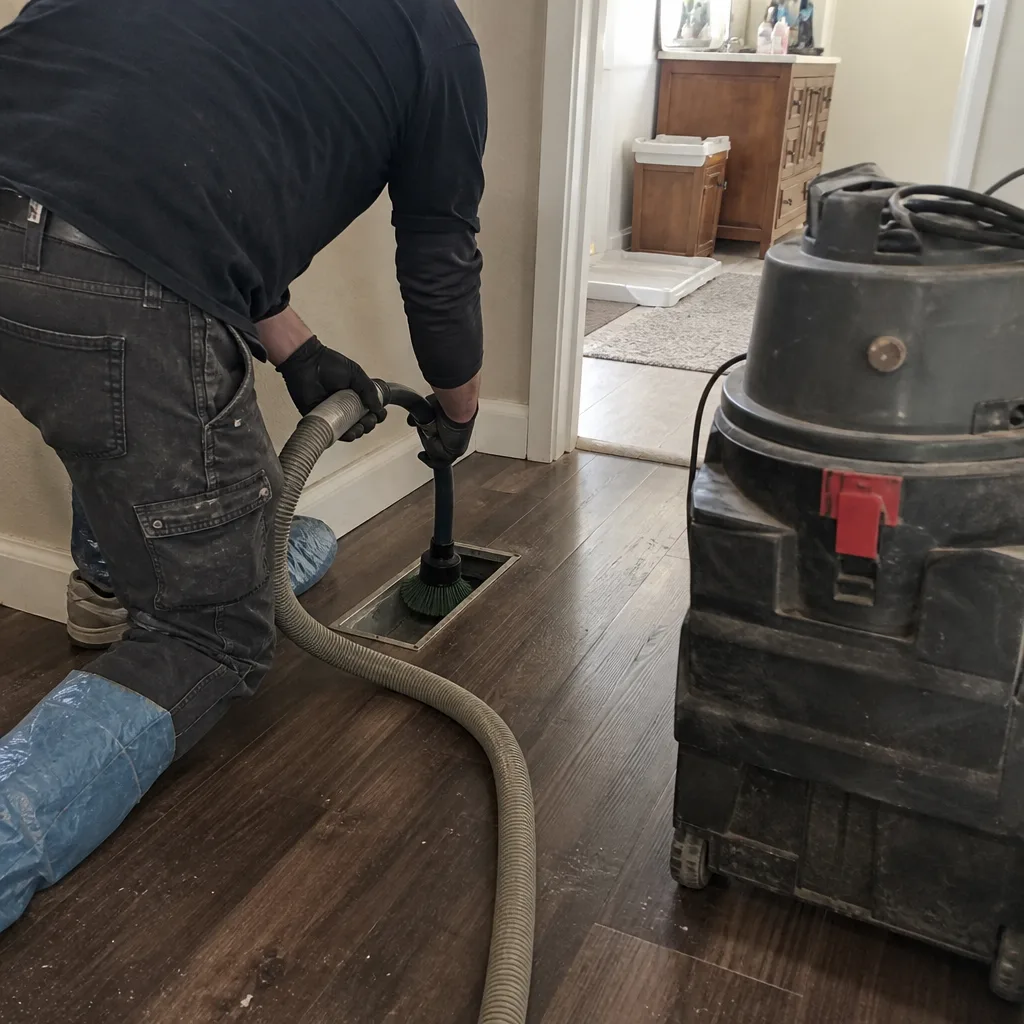
 Whole-home duct cleaning
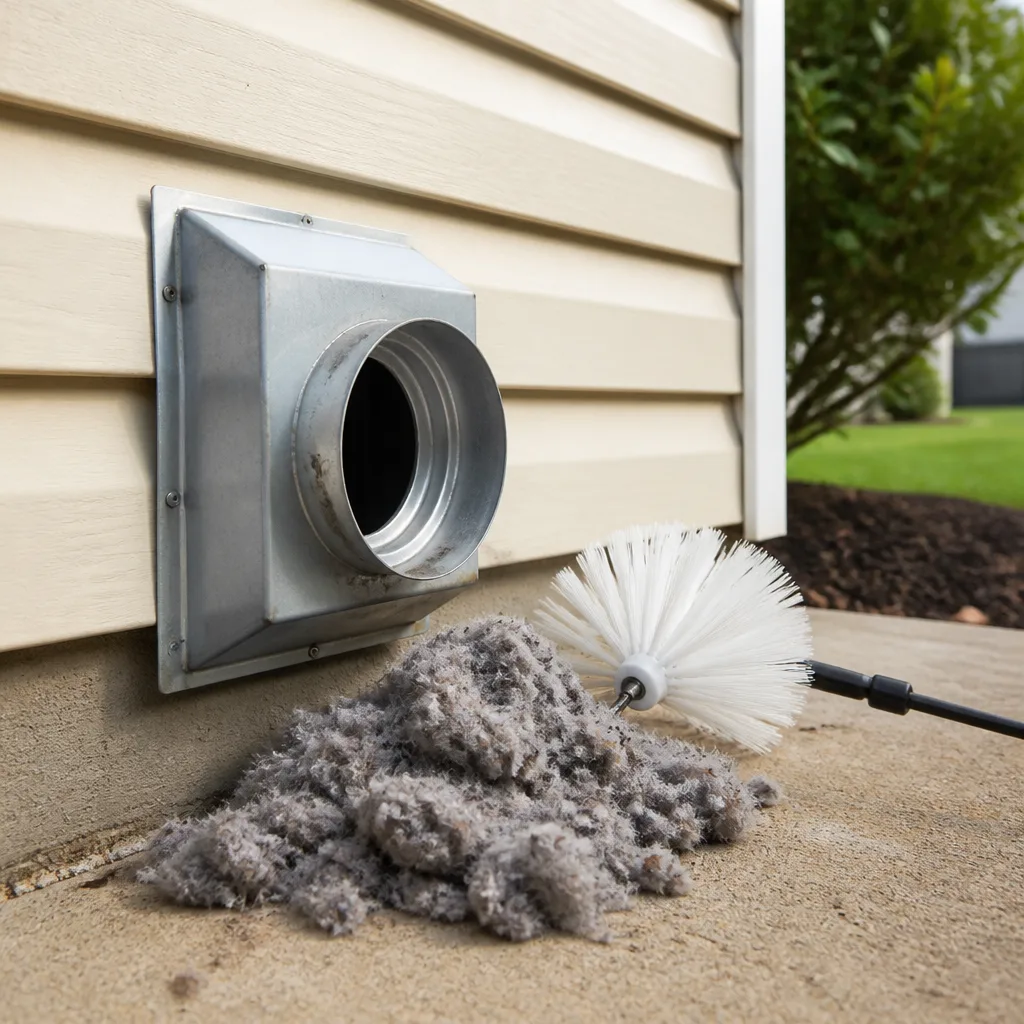 Dryer vent cleaning
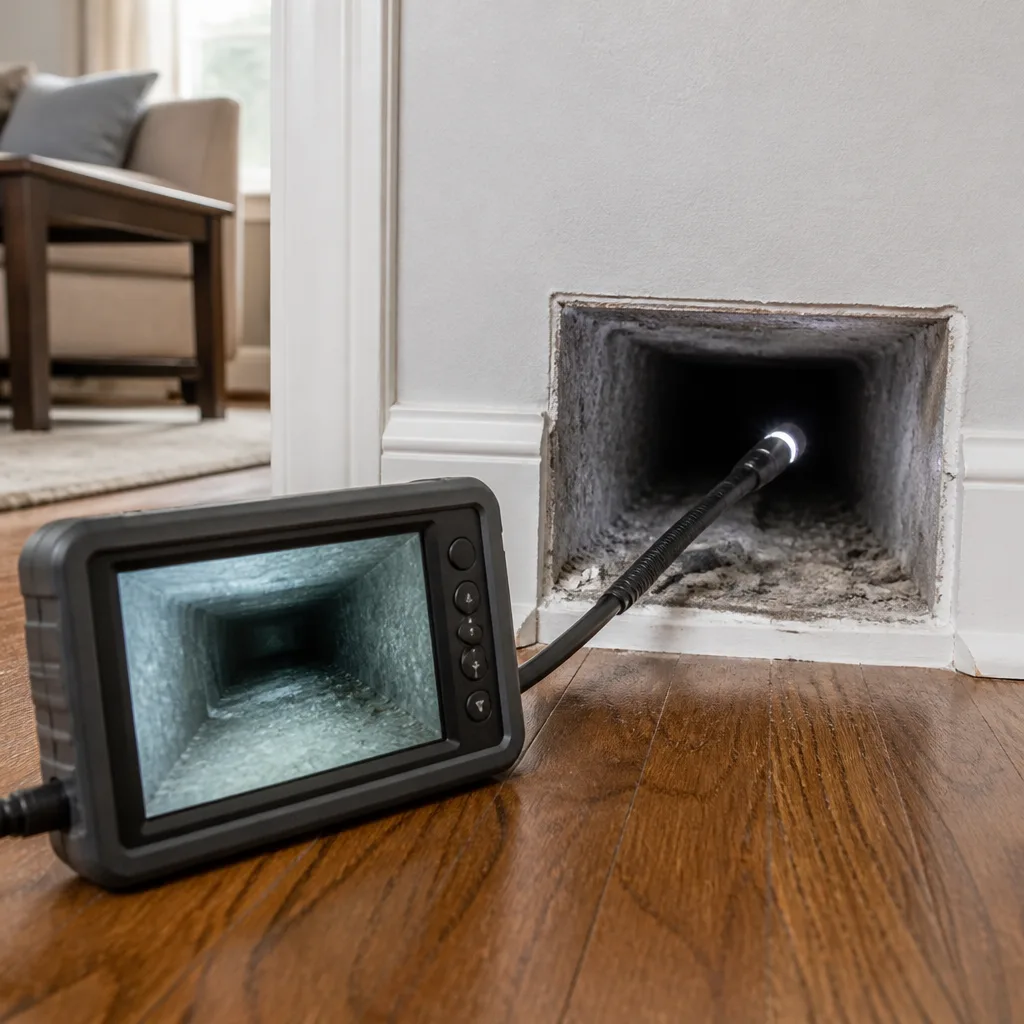 Camera inspection
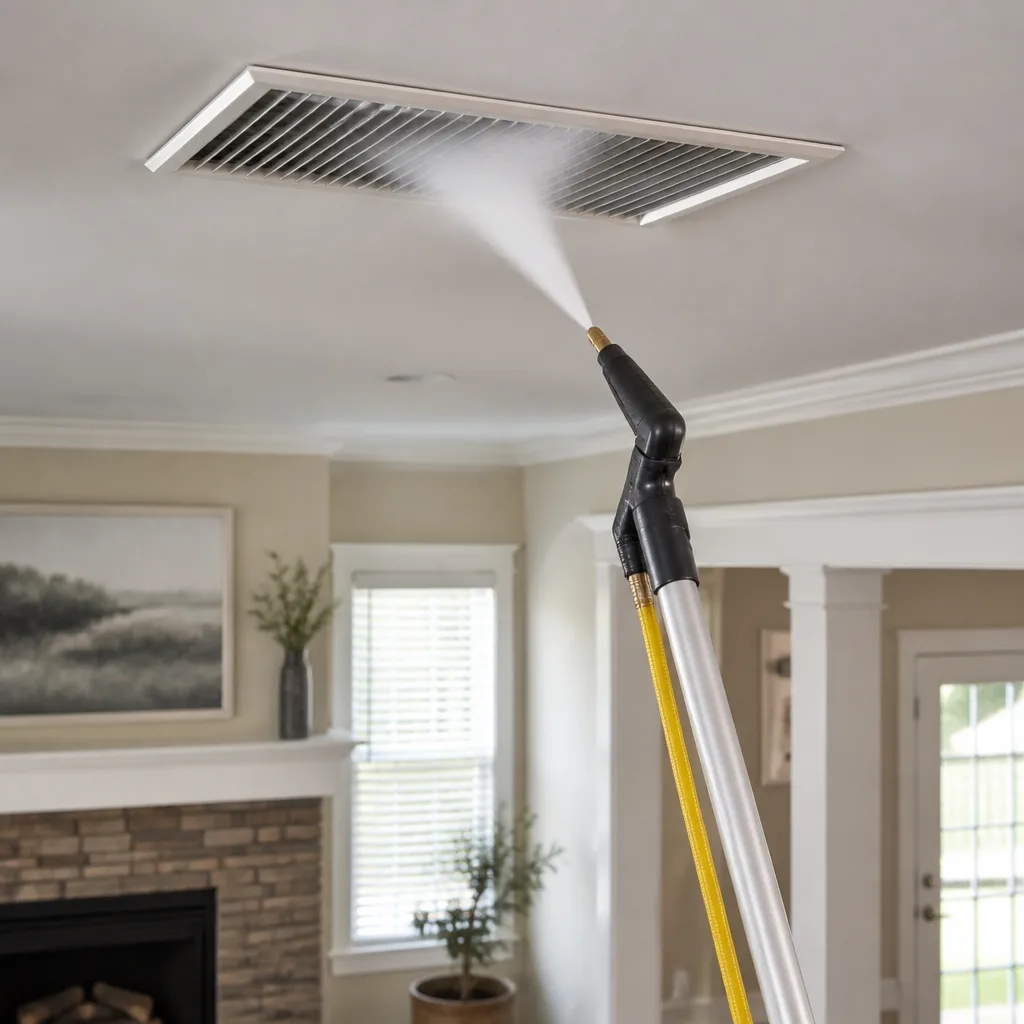 Sanitizing & deodorizing
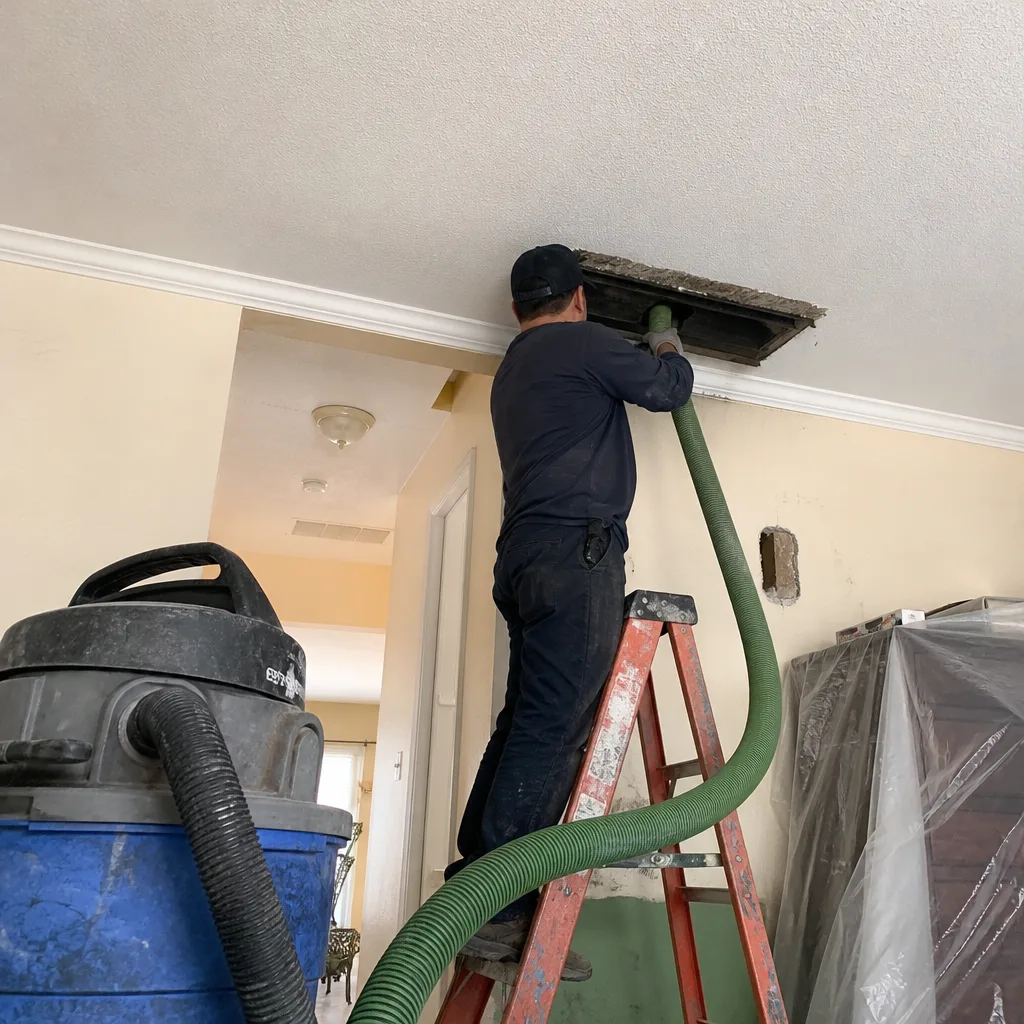
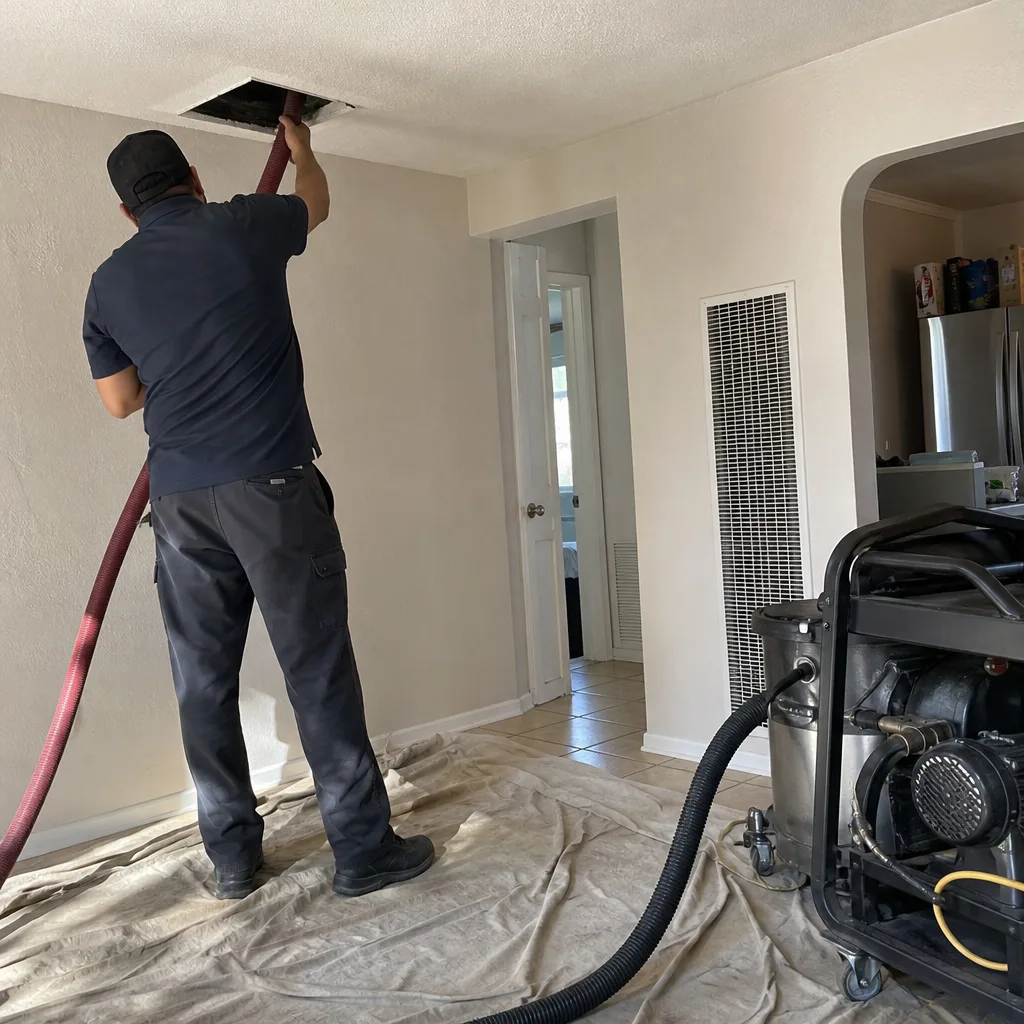
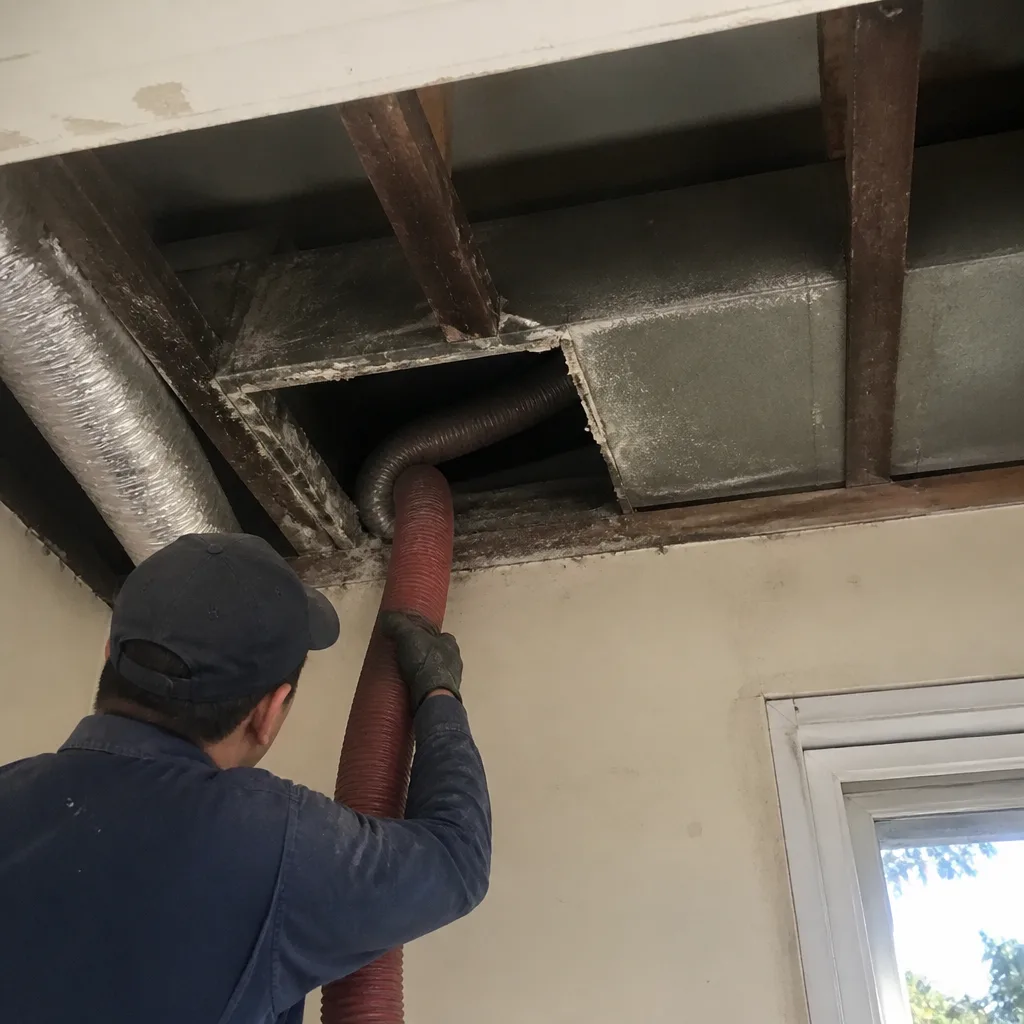
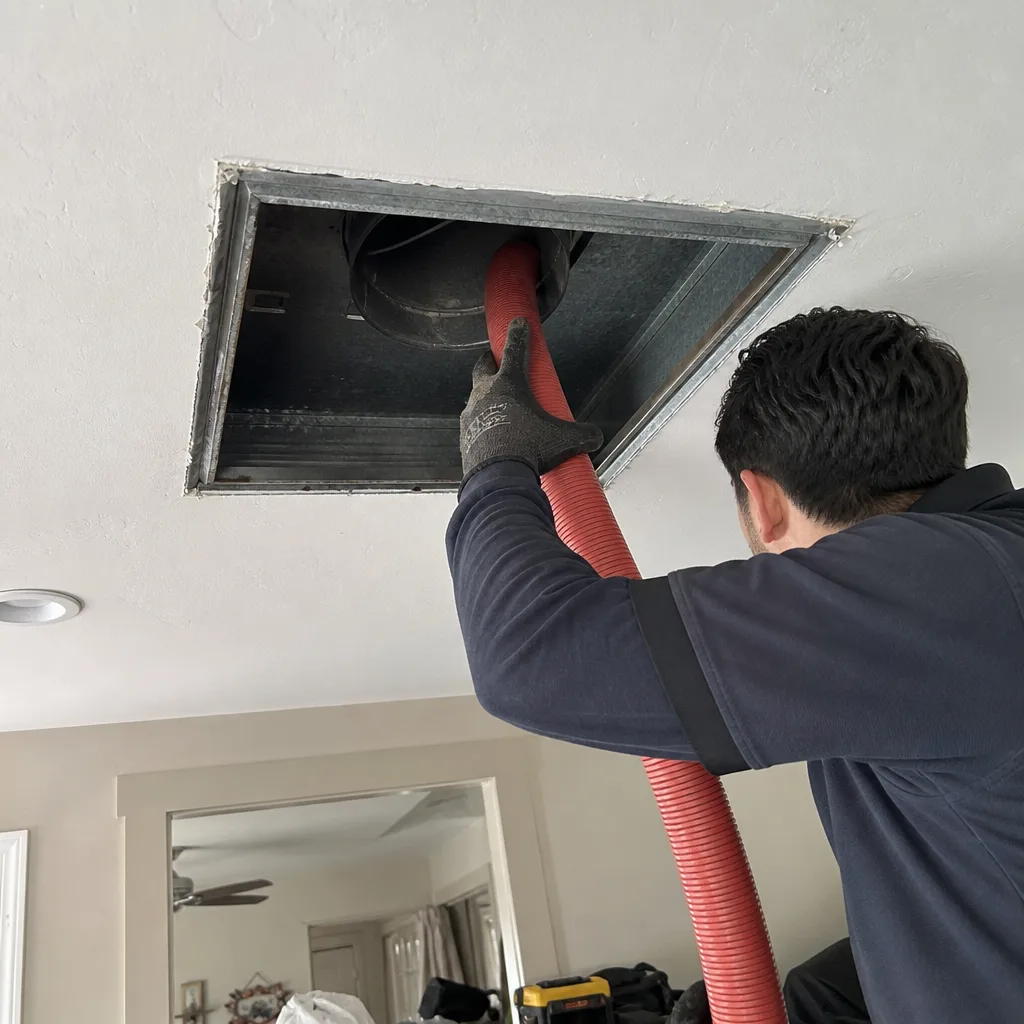
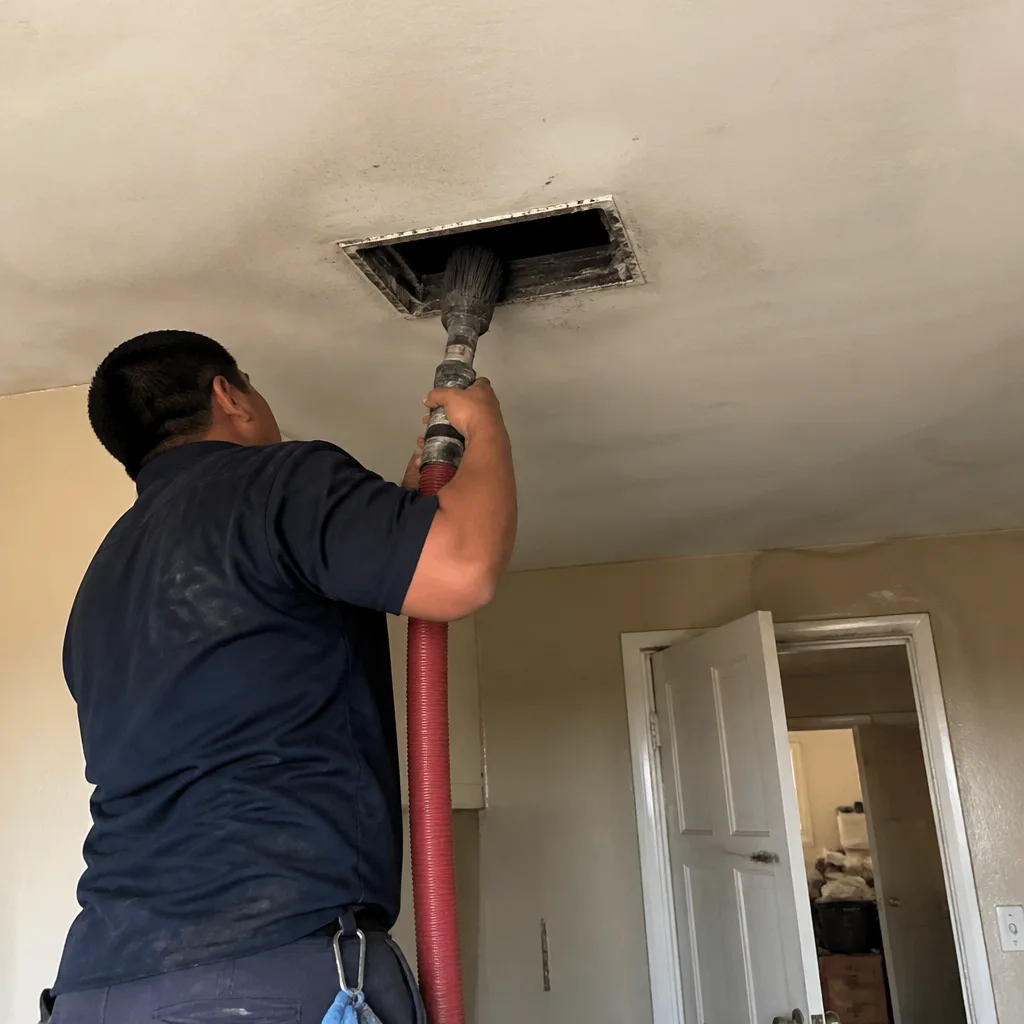
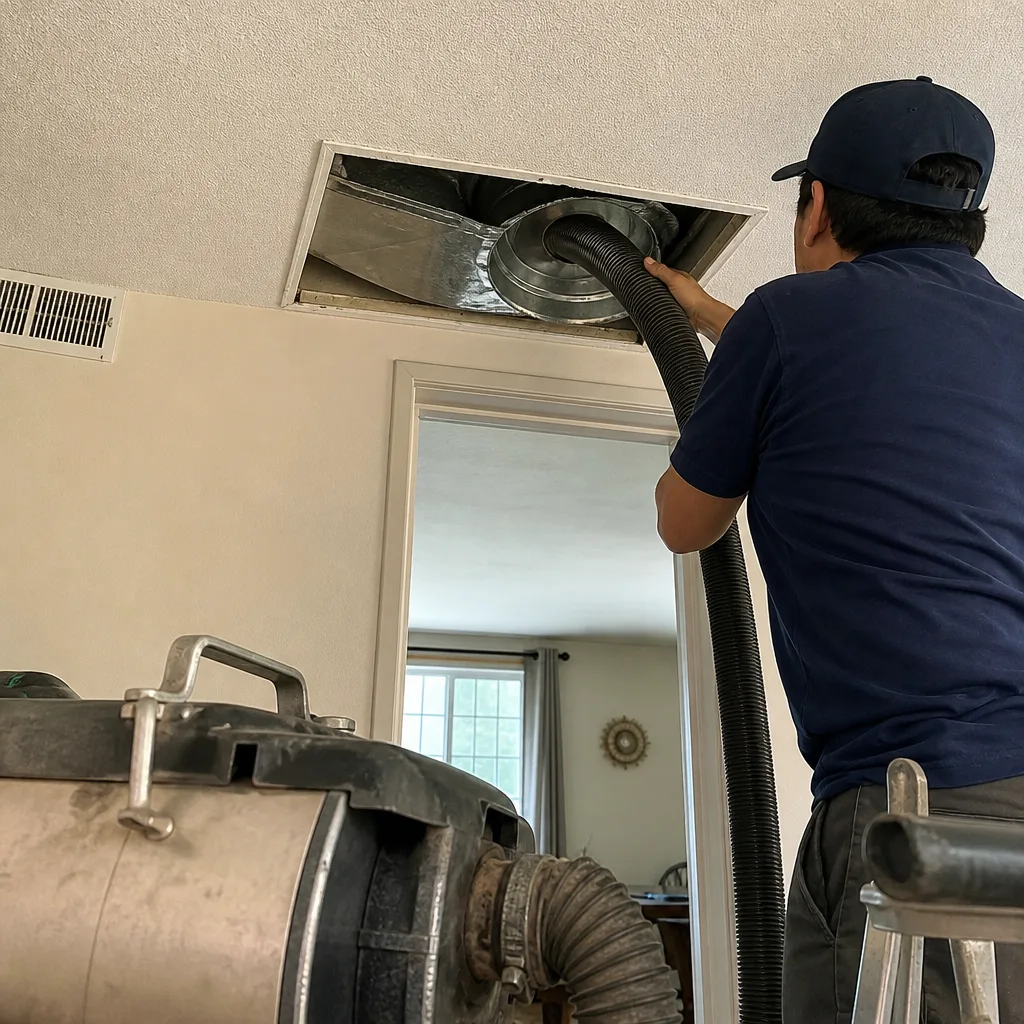
Whole-system duct and dryer vent check with before-and-after photos - you see exactly what came out of your vents
That "$99 whole-house special" is a bait ad - the real number appears once they are in your hallway, or the "clean" is a shop-vac at the register. We photograph the inside of your ducts before and after instead.
Air Duct Cleaning Maintenance Checklist for Monterey Park Homeowners
Here’s a pattern we see constantly in Monterey Park: a homeowner with a spotless 3-bedroom ranch near Garvey Ranch Park changes their furnace filter every quarter without fail, yet can’t figure out why the return grille in their hallway is caked with gray fuzz a month after cleaning it. The filter they’re so diligent about is downstream of that grille. Everything upstream, the return plenum, the boot, the first few feet of return duct, has been accumulating dust, pet hair, and cooking residue for years. This guide breaks duct maintenance down by component, because a filter schedule alone is furnace care, not air care. You’ll learn what to inspect, when, and what actually warrants a professional call.
Styles & brands we work with
- Whole-home duct cleaning
- Dryer vent cleaning
- Camera inspection
- Sanitizing & deodorizing
Quick Answer
The most effective air duct maintenance schedule for Monterey Park homes is not a single annual event. Supply registers need a quick visual check every 90 days, the return plenum and grille deserve a cleaning every 6 months, the main trunk line and evaporator coil should be professionally evaluated every 2 to 3 years, and the dryer vent needs professional cleaning every 12 months regardless of visible buildup. A full system cleaning is warranted when visible dust returns within 2 weeks of cleaning, when renovation work has occurred, or when your HVAC system shows signs of restricted airflow.
Table of Contents
- Supply Registers: The 90-Day Visual Check
- The Return System: Where the Real Accumulation Happens
- Main Trunk Lines and Branch Ducts: The 24-36 Month Interval
- Dryer Vent: The 12-Month Non-Negotiable
- The Evaporator Coil and Drain Pan: The Missing Piece
- Documentation: Building a Maintenance Record That Matters
- Seasonal Adjustments for Monterey Park’s Climate
- Common Mistakes to Avoid
Supply Registers: The 90-Day Visual Check
Supply registers are the easiest component to inspect and the most commonly ignored. Every 90 days, walk through each room and look at the register face and the first visible inch of the boot behind it. In Monterey Park, where winter heating runs are intermittent and summers push AC systems hard, dust patterns at supply registers tell you a lot about what’s happening upstream.
What to look for at the register face:
- Dark gray or black streaks on the white register body. This is fine dust being blown through, and it means the filter is capturing less than it should or the return side is pulling unfiltered air.
- Visible dust on the louvers themselves. If you run a finger across the louver and come back with a gray smudge, the system has been circulating dust for at least a season.
- Uneven airflow between rooms. A register that barely moves a tissue in one room while another flaps it strongly suggests a damper, kink, or disconnection in the branch line.
What to look for inside the boot:
- Remove the register (two screws in most Monterey Park homes built after 1970, snap-in for many mid-century properties) and look down into the boot with a flashlight.
- A light even coat of fine dust is normal. A quarter-inch of matted debris, pet hair, or visible construction dust is not.
- Check the sheet metal seams. Rust trails or moisture staining at the seams indicate condensation inside the duct, which means the boot may not be sealed properly where it passes through the wall or floor.
In well-sealed systems, supply registers can go 6 to 8 months between deep cleanings. But if you have older windows, unsealed wall penetrations, or a home with original mid-century ducting, you’ll likely see accumulation faster. Many Monterey Park neighborhoods from the 1940s and 1950s, like Midwick or Bella Vista, have original duct boots that were never sealed at the floor penetration, which means dust from the crawlspace gets pulled into every supply run. For a deeper look at how this affects whole-home cleaning, see our guide to Air Duct Cleaning in Monterey Park.
90-day register checklist:
- Remove each supply register and inspect the boot with a flashlight.
- Wipe the register face and louvers with a damp microfiber cloth.
- Vacuum the first 2 inches of the boot with a HEPA-filter vacuum. Do not push a standard vacuum hose deeper than this.
- Check for rust, moisture staining, or gaps between the boot and the floor or wall.
- Note any room with noticeably weaker airflow than the rest of the house.
- Reinstall registers and confirm they seat tightly without rattling when the system runs.
The Return System: Where the Real Accumulation Happens
The return side is where Monterey Park homes get dirty fastest. Every cubic foot of air your furnace or AC conditions has to enter through the return grille first, and before it reaches the filter it passes through the grille, the return boot, and the return duct run. In homes with a single central return in the hallway, which is common in the ranch-style properties that dominate Monterey Park’s residential streets, that one grille carries the entire air burden of the home.
The plenum upstream of the filter is the single most overlooked component in residential HVAC hygiene. Your filter catches what reaches it. Everything before the filter, the grille, the boot, the plenum wall, the first section of return duct, has no protection whatsoever. This is where we consistently find the heaviest accumulation: gray cottony dust, pet dander, hair, and in many Monterey Park kitchens with active cooking, a thin film of cooking oil that makes dust stick permanently.
Here’s the problem with the “change the filter every 90 days” advice you see everywhere: it addresses furnace protection, not air quality. The air that circulates through your home has already picked up whatever was sitting in that return plenum. The filter cleans the air before it enters the furnace, yes, but the air you breathe in the hallway passes the return grille on its way into the system, not out of it.
6-month return system checklist:
- Turn the system off at the thermostat.
- Remove the return grille. In most Monterey Park homes this is one or two screws.
- Vacuum the grille thoroughly on both sides with a brush attachment. A HEPA vacuum matters here.
- Inspect the return boot and the first visible section of return duct with a flashlight.
- Wipe the plenum walls you can reach with a damp cloth. Do not insert anything into the duct beyond arm’s reach.
- Check the return duct for gaps, sagging flex sections, or sheet metal separation where it meets the plenum.
- Replace the filter if it has been 60 days or more since the last change, even if it doesn’t look visibly clogged.
If you see dust return to the grille face within 2 to 3 weeks of cleaning it, the return duct itself has a significant accumulation that will keep shedding into the airstream until it’s professionally removed. That’s the point at which a full Duct Cleaning Monterey Park home service becomes the appropriate next step.
Main Trunk Lines and Branch Ducts: The 24-36 Month Interval
The main trunk line and the branch ducts that feed each room are not a quarterly or even annual maintenance item. In most clean, well-filtered Monterey Park homes, these areas accumulate slowly enough that professional attention every 2 to 3 years is appropriate. But there are specific conditions that accelerate the timeline.
Conditions that justify more frequent trunk cleaning:
- Recent renovation or remodeling work. Construction dust, drywall compound, and sawdust get pulled into the return side during any project that disturbs walls or floors. This is the number one reason we see heavily fouled trunk lines in otherwise clean homes.
- Homes with shedding pets. Pet dander and hair are lighter than household dust and travel further into the system before settling.
- Older Monterey Park homes with original ducting that has never been sealed. Air leaks at every joint pull attic or crawlspace air, along with whatever’s in it, directly into the trunk.
- Smoke, from either smoking indoors or a kitchen with frequent high-heat cooking. Smoke particles are extremely fine and penetrate deep into the trunk.
- Water intrusion. A roof leak, plumbing leak, or AC condensate overflow that reached the ductwork introduces moisture that turns ordinary dust into a matted, adherent layer.
What a professional trunk inspection should include:
- Camera inspection of the main supply and return trunks. This is non-negotiable. A technician who cannot show you what the inside of your ducts looks like before and after is not providing verification.
- Measurement of static pressure to identify restrictions that visual inspection can’t reveal. A trunk that looks clean on camera can still be undersized, kinked, or partially collapsed.
- Verification of duct sealing at all accessible joints. Monterey Park’s older housing stock has a lot of unsealed or poorly sealed sheet metal.
- Full extraction using professional equipment, not a portable vacuum. Rotobrush and Nikro systems used in commercial and restoration environments are designed to scrub and extract simultaneously through the full length of the duct run.
Structural problems in the trunk, separated joints, crushed flex sections, holes from rodents or renovation damage, are cleaning failures waiting to happen. A duct that pulls attic air will re-contaminate within months no matter how thoroughly it’s cleaned. This is why Air Duct Repair in Monterey Park is a separate service from cleaning. It’s also why our teams carry repair materials on every cleaning job: when we find a separated joint during cleaning, we seal it then, not schedule a second appointment. Clean ducts that leak are not clean.
Dryer Vent: The 12-Month Non-Negotiable
The dryer vent is the one component on this checklist that carries an actual fire safety obligation, and in Monterey Park it earns its place every year. Clothes dryers are among the leading causes of residential structure fires in the United States, and the overwhelming majority of dryer fires start with lint accumulation in the vent run, not in the dryer itself.
Why every 12 months, even if the dryer seems fine:
- Lint accumulates in the vent run in a thin, uniform layer. It doesn’t block the vent until it’s already thick enough to pose a fire hazard. By the time airflow is noticeably restricted, the vent has been unsafe for months.
- Monterey Park’s climate produces fine, dry laundry lint. High ambient temperatures and low humidity dry laundry quickly, and that dry lint is more combustible than the damp lint that accumulates in coastal humidity.
- Vent runs in many Monterey Park homes are longer than modern code recommends. Laundry rooms in converted garages and additions often push vent runs to 25 feet or more with multiple elbows, and every elbow is a lint trap.
- Birds and rodents nest in exterior vent terminations. Monterey Park’s mature trees and older roof lines create protected nesting opportunities, and a blocked termination backs lint up through the entire run.
Homeowner visual checks between professional cleanings:
- Feel the airflow at the exterior vent termination while the dryer runs. It should be strong and steady, not weak or intermittent.
- Check the exterior termination flap. It should open fully when the dryer runs and close completely when it stops.
- Time the dryer cycle. A load that suddenly takes two cycles to dry is a vent problem, not a dryer problem.
- Look for lint accumulation on the wall or ground around the dryer location.
- Listen for a rattling flap or buzzing sound at the termination while the dryer runs, which often indicates a bird or rodent nest against the flap.
- It becomes the primary source of the musty odor that many homeowners attribute to “dirty ducts.” That smell is almost always biological growth on the coil surface and in the drain pan, not dust in the trunk line.
- It chokes airflow. A coil with even a thin, even coat of dust and film restricts airflow more than most homeowners realize, which reduces system efficiency and increases run times, which pulls more unfiltered air through the return side.
- It contaminates the supply side. Air that passes over a dirty coil picks up particles and carries them into the supply plenum and branch ducts.
- Date and type of maintenance: filter change, register cleaning, return grille cleaning, professional duct cleaning, dryer vent cleaning, coil service.
- What was found: notes on accumulation levels, any unusual conditions, any parts replaced.
- Who performed the work: yourself, or the name of the professional company.
- What was replaced: filter and MERV rating, register, duct section, dryer vent components, coil cleaner used.
- Before and after photos, especially for professional cleanings. A camera inspection image of a clean trunk line is worth more than any written description at resale.
- The technician’s air flow measurement, if provided, to establish a baseline that can be compared to future readings.
- Treating a filter schedule as a complete maintenance plan. The filter protects the furnace from large particles. It does nothing for the return plenum, grille, register faces, or the dust that settles in the trunk line between filter changes. A filter schedule alone addresses one component of a six-component system.
- Pushing a vacuum hose deep into supply ducts through the register. This seems helpful but actually dislodges dust from the side walls and pushes it further into the branch run. It also risks damaging the boot seal where it meets the floor or wall. Surface vacuuming at the register face is appropriate; anything deeper requires professional extraction equipment.
- Buying a consumer-grade “duct cleaning attachment” for a shop vac. These products do not generate enough airflow or agitation to dislodge accumulated dust in a trunk line. The result is cosmetic cleaning of the first foot of duct and no change in the main trunk.
- Ignoring the dryer vent because the dryer still works. Dryer vent fires do not announce themselves in advance. The vent accumulates lint silently, and by the time drying time increases noticeably, the vent is already a fire hazard. A 12-month vent cleaning interval is a fire safety action, not a performance optimization.
- Sealing registers shut to “save energy” in unused rooms. This is a persistent piece of bad advice. Closing registers increases static pressure in the trunk, forces air through fewer openings, and in some systems causes the coil to freeze or the blower to overheat. Leave registers open and balanced.
- Never documenting anything. You will not remember what was done in 2019. A maintenance record takes 2 minutes per entry and becomes valuable documentation at resale.
Professional Dryer Vent Cleaning in Monterey Park should include brush cleaning of the entire vent run from both ends, removal of the dryer and inspection of the transition duct, verification of airflow at the termination, and replacement of any damaged or crushed transition duct. A technician who only pushes a brush from the exterior and never pulls the dryer is leaving the most dangerous section, the kinked accordion transition behind the machine, uncleaned.
The Evaporator Coil and Drain Pan: The Missing Piece
Most duct cleaning maintenance checklists never mention the evaporator coil, which is a significant omission. The coil sits directly in the airstream, and every particle that passes through your filter touches the coil surface. In Monterey Park’s summer months, when AC systems run for hours daily, the coil is perpetually wet from condensation, and wet metal grabs dust like flypaper.
A fouled evaporator coil does three things to your duct system:
The drain pan deserves equal attention. Standing water in the pan, which happens when the drain line is partially clogged, creates the warm, moist, dark environment where biological growth thrives. That growth produces the musty odor, and the odor is then distributed through the entire supply duct system every time the blower runs. Cleaning the ducts without addressing the coil and drain pan removes the symptom while leaving the source in place.
In our experience, a properly maintained coil and drain pan extends the effective life of a professional duct cleaning significantly. Homes where the coil is cleaned at the same interval as the duct system stay cleaner longer and show measurably better airflow at supply registers. For Monterey Park homeowners, we recommend the coil be inspected whenever the duct system is professionally cleaned, and at least every 2 to 3 years even if no full cleaning is performed. Use a filter with adequate filtration, a MERV-8 or better, and replace it on schedule, but understand that the filter protects the coil from large particles only. The fine stuff gets through and it builds up.
Documentation: Building a Maintenance Record That Matters
Most homeowners do maintenance and then forget what was done and when. A duct maintenance record is not just for your own memory. It becomes a tangible asset at resale, and given Monterey Park’s real estate market with its high proportion of older homes, a documented maintenance history is the kind of thing that sets a listing apart.
What to log after every maintenance action:
A maintenance log with 5 to 10 years of consistent entries tells a buyer two things: the home was cared for by someone who understood the systems, and any active problems are documented, not hidden. It also tells you, as the current owner, when intervals are drifting: if you see filter changes getting closer and closer together, for example, that’s an early warning sign of increasing airborne dust, which points back to the return system or duct sealing.
The same documentation practice applies to professional cleanings. Ask for before and after photos of the trunk line, not just the register faces. Ask for the technician’s airflow readings before and after. Ask what was found in the return plenum and whether any separations or holes were sealed. A company that photographs and documents the work is a company that wants you to verify it. That’s the standard we hold ourselves to, and it’s a standard every Monterey Park homeowner should expect.
Seasonal Adjustments for Monterey Park’s Climate
Monterey Park has a Mediterranean climate with warm, dry summers and mild, occasionally wet winters. This climate profile affects filter loading and duct hygiene in ways that differ meaningfully from coastal Los Angeles or more humid inland valleys.
Summer (June through September): AC systems run daily, often for 6 to 10 hours. The evaporator coil is continuously wet, which binds fine dust to the coil surface. Filters load faster with fine particulates, including wildfire ash in some years, which can dramatically shorten filter life. During summer, check filters more frequently and consider bumping up to a higher MERV rating if wildfire smoke is present. High MERV filters restrict airflow, so balance filtration against system capacity.
Fall (October through November): Santa Ana wind events push dust and particulate matter through the air at levels that exceed almost any other time of year. Windows closed against the wind means the HVAC system is the only source of air exchange, and it will pull more airborne stuff through the return. This is the season when return grilles get dirty fastest. Schedule a visual check of all return grilles after the first significant Santa Ana event.
Winter (December through February): Monterey Park’s mild winters mean furnaces run intermittently rather than constantly, which reduces total air movement and slows dust circulation. But homes that use the furnace rarely may develop odor issues in the return plenum from stagnant air and accumulated dust. A quick return grille cleaning in January, even if the system has not run much, keeps things from getting musty. Winter is also the season to check for moisture intrusion around ducts, especially in homes with unsealed crawlspace ducts and winter rain.
Spring (March through May): This is the ideal season for professional duct cleaning in Monterey Park. The AC season is about to start, which means a clean system will run efficiently through the heaviest use months. It also gives you the full summer to notice the improvement at your supply registers. We recommend scheduling professional Air Duct Cleaning in Monterey Park in the spring if it fits your maintenance schedule.
Common Mistakes to Avoid
When to Call a Professional
Some conditions on this checklist are visual inspections any homeowner can perform. Others require professional equipment, training, and access. Call a professional if you see dust returning to register faces within a month of cleaning, if the return plenum shows a quarter-inch or more of adhered accumulation, if you smell mustiness when the blower runs, if any room in the house has noticeably less airflow than the others, or if the dryer takes two cycles to dry a normal load. These are signs of problems that surface cleaning cannot resolve. Duct Cleaning Monterey Park offers free estimates in Monterey Park, and a camera inspection of your trunk line is the fastest way to know what you’re actually dealing with. Call (866) 413-8552 to schedule a look.
Frequently Asked Questions
Professional air duct cleaning in Monterey Park typically ranges from $400 to $900 for a whole-home system, depending on the number of registers, the length of the duct runs, and the condition of the system. A home with a single return, 10 to 12 supply registers, and accessible ductwork is on the lower end of that range, while a home with complex duct routing, multiple returns, or heavily fouled ducting runs higher. Any quote significantly below this range should be examined carefully: it likely comes from a company using a portable vacuum rather than professional extraction equipment, and will not achieve the same result. Call (866) 413-8552 for a specific quote for your home, there’s no charge for the estimate.
The difference is equipment and scope. Companies using consumer-grade vacuums or small portable units cannot generate the airflow needed to extract dust from a full trunk line, and their service often amounts to surface cleaning at the register faces. Professional systems like the Rotobrush and Nikro units we run are purpose-built for full-length duct extraction with simultaneous mechanical agitation, and they cost significantly more to operate, which is reflected in honest pricing. The cheapest quote on a duct cleaning job is usually the most expensive one, because you’ll pay again to have the job done properly. For a fair, transparent quote, call (866) 413-8552.
A professional duct cleaning company should provide before and after camera inspection photos of the inside of your trunk line and main branches. If a company cannot show you what the inside of your ducts looked like before they cleaned them, and what they looked like after, you have no way to verify the work. We photograph every job from the access points we use, and the photos are part of your service record.
For most Monterey Park homes, professional air duct cleaning is appropriate every 2 to 3 years, with more frequent service justified by specific conditions: renovation work, shedding pets, smokers in the home, water intrusion, or visible dust returning quickly after cleaning. The National Air Duct Cleaners Association recommends every 3 to 5 years as a general guideline, but Monterey Park’s dry, dusty summers and Santa Ana wind events push many homes toward the more frequent end of that range; check our guide to Air Duct Cleaning Permits, Codes & Inspections in CA: What You Need to Know for regulatory context.
Clean ductwork itself has a modest effect on energy use, but the related services performed at the same time often have a measurable effect. A fouled evaporator coil, for example, reduces system efficiency significantly, and cleaning the coil restores performance. Sealing duct leaks in the trunk and branch lines prevents conditioned air from being lost to the attic or crawlspace. The combination of clean ducts, a clean coil, and sealed ductwork is what creates measurable efficiency improvement.
Professional duct cleaning is not an intrusive process and most homeowners stay home throughout. The equipment generates some noise in the areas being cleaned, and we recommend keeping pets in a separate room during the service, but there is no dust released into the living space when the system is properly set up with negative pressure containment.
The Bottom Line
Effective air duct maintenance in Monterey Park is a component-by-component discipline, not a single annual event. Supply registers need quarterly visual checks, the return system needs attention every 6 months because it’s the primary accumulation point, the dryer vent needs professional cleaning every 12 months because it’s a fire safety issue, and the main trunk and evaporator coil need professional evaluation every 2 to 3 years. Documentation ties it all together, creating a maintenance record that has real value at resale. One call to (866) 413-8552 gets you a professional assessment of the full system, and yes, we repair what we find.
Written by the team at Duct Cleaning Monterey Park, serving Monterey Park since 2013.
See the difference
 Before
 After
 Before
 After
 Before
 After